Park Hyatt Tokyo is overrated, and it trades on its name and on Lost in Translation. The real pleasures are still here, late evening in the New York Bar on the 52nd floor with a jazz singer in front of the glass and Shinjuku lit up behind her, and an hour under the bamboo in the Peak Lounge as the light goes. The rooms are the trouble, because the 19-month renovation that ended in December 2025 left them very bland, taupe and black lacquer that could belong to any smart business hotel, and at about $1,000 a night for a Deluxe Room that isn't good enough. Breakfast looks better than it tastes, and the staff are correct more often than they're warm. Go up for a drink at the New York Bar and stay somewhere else, at the Four Seasons at Otemachi for about the same money or the Ritz-Carlton in Roppongi for warmer service at about $250 a night less. See pictures ↓
Service
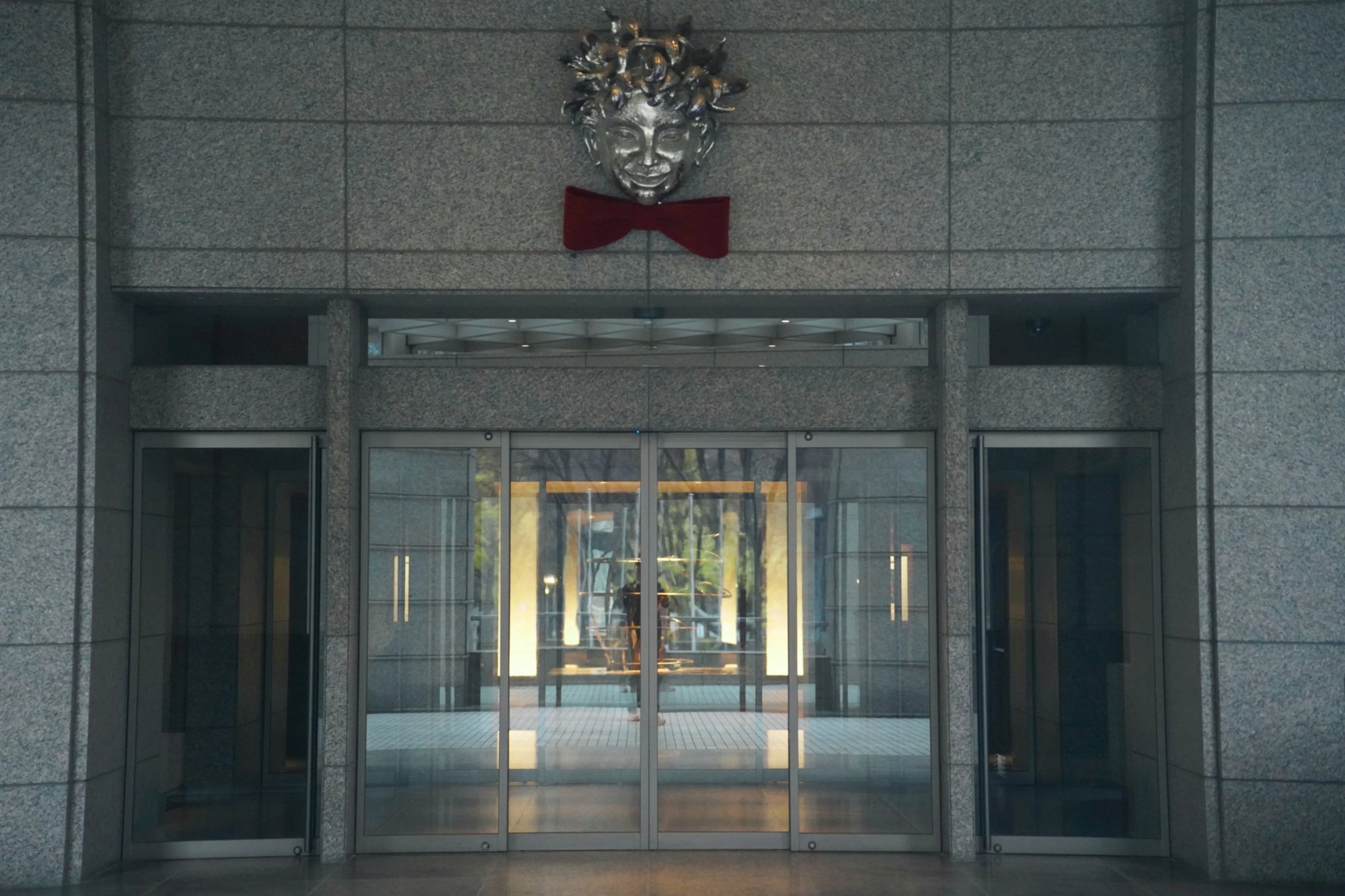
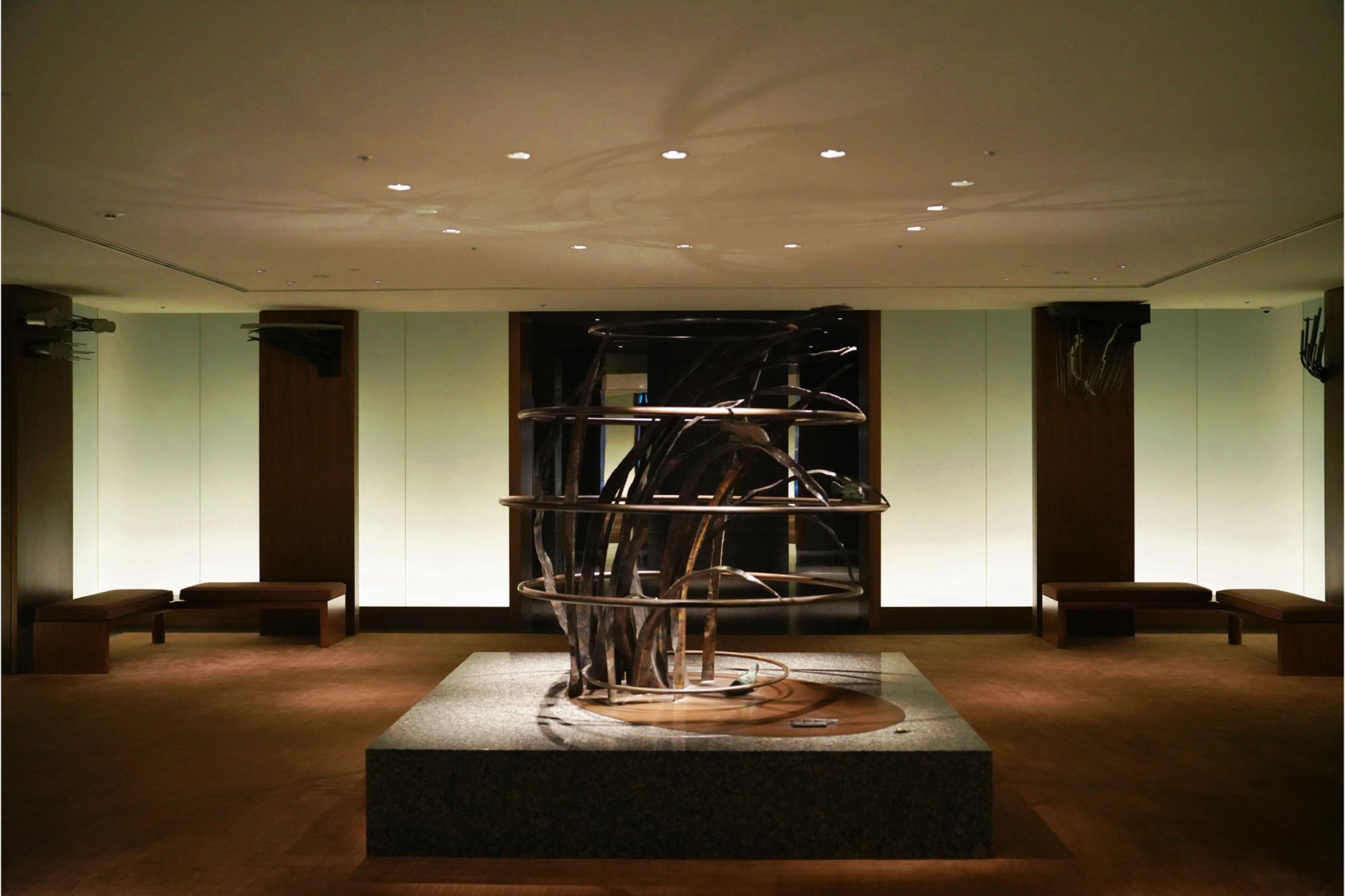
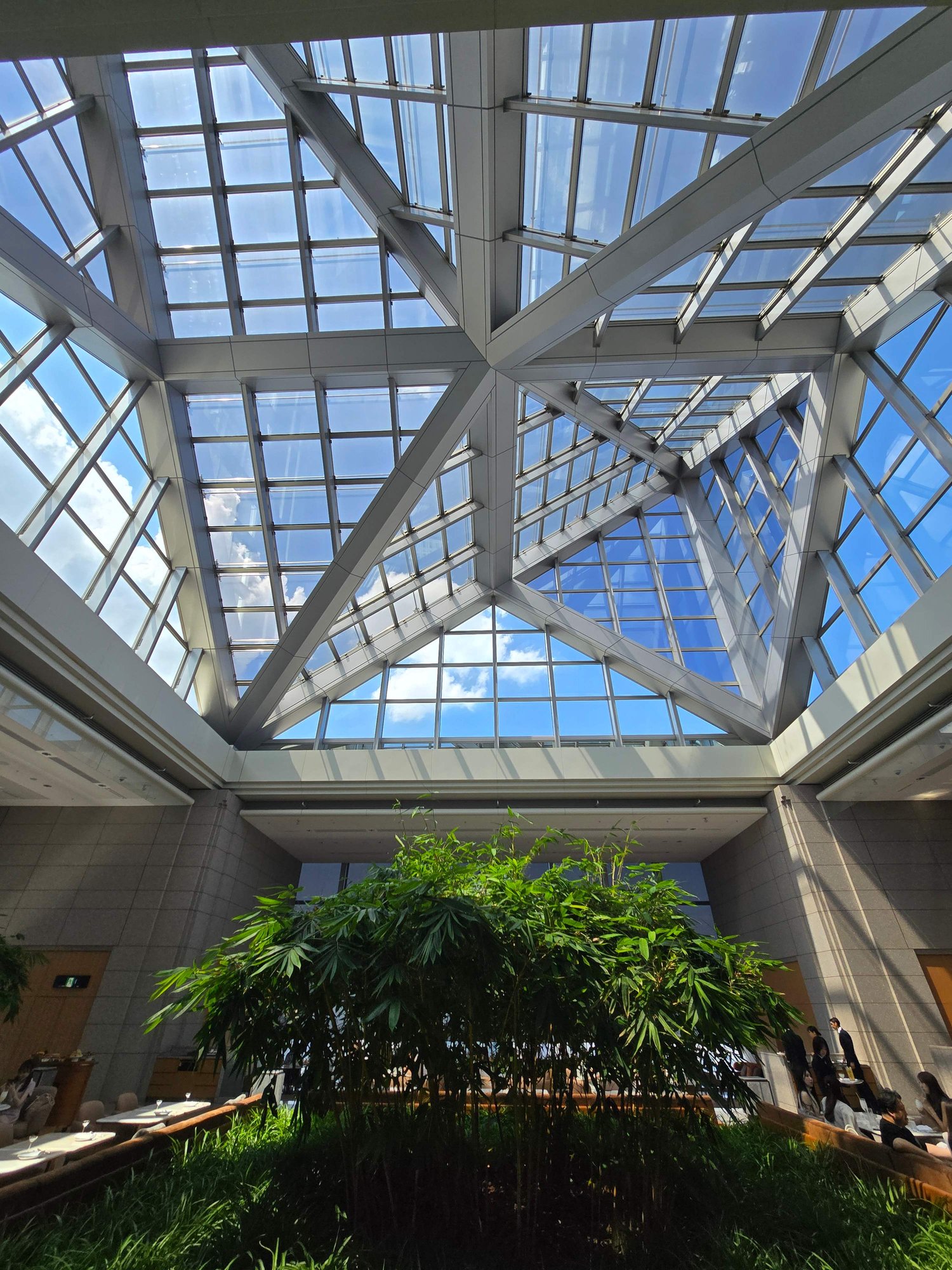
The front door gives nothing away. It's a plain entrance at the foot of the tower that you could easily walk past, but our bags were tagged at the kerb and sent up ahead of us, and the lift carried us to the 41st floor, where the doors open onto a grove of bamboo growing under a glass pyramid. I stood and looked at it for a while before going to find the desk. Check-in is a few steps on, past Girandole and the shelves of the Library, and it was smooth and a little formal.
The staff are good at their jobs. Nobody gushes, but there was always someone around when I needed something, and they sorted it out cheerfully. The most useful thing they did was get us into the New York Bar, which doesn't take reservations. Ask the concierge to put you on the guest list, or email before you arrive, and you'll be shown to a seat when you turn up.
It never felt personal, though. With 171 rooms in a tower it runs like a smart city hotel, and some exchanges felt scripted, the kind of service that does everything right and never learns your name. For a hotel with this name and this price I wanted more warmth than that, and I've had more of it at the Ritz-Carlton across town. When you check in, ask how to book the free shuttle to Shinjuku Station, especially for the day you leave.
Rooms
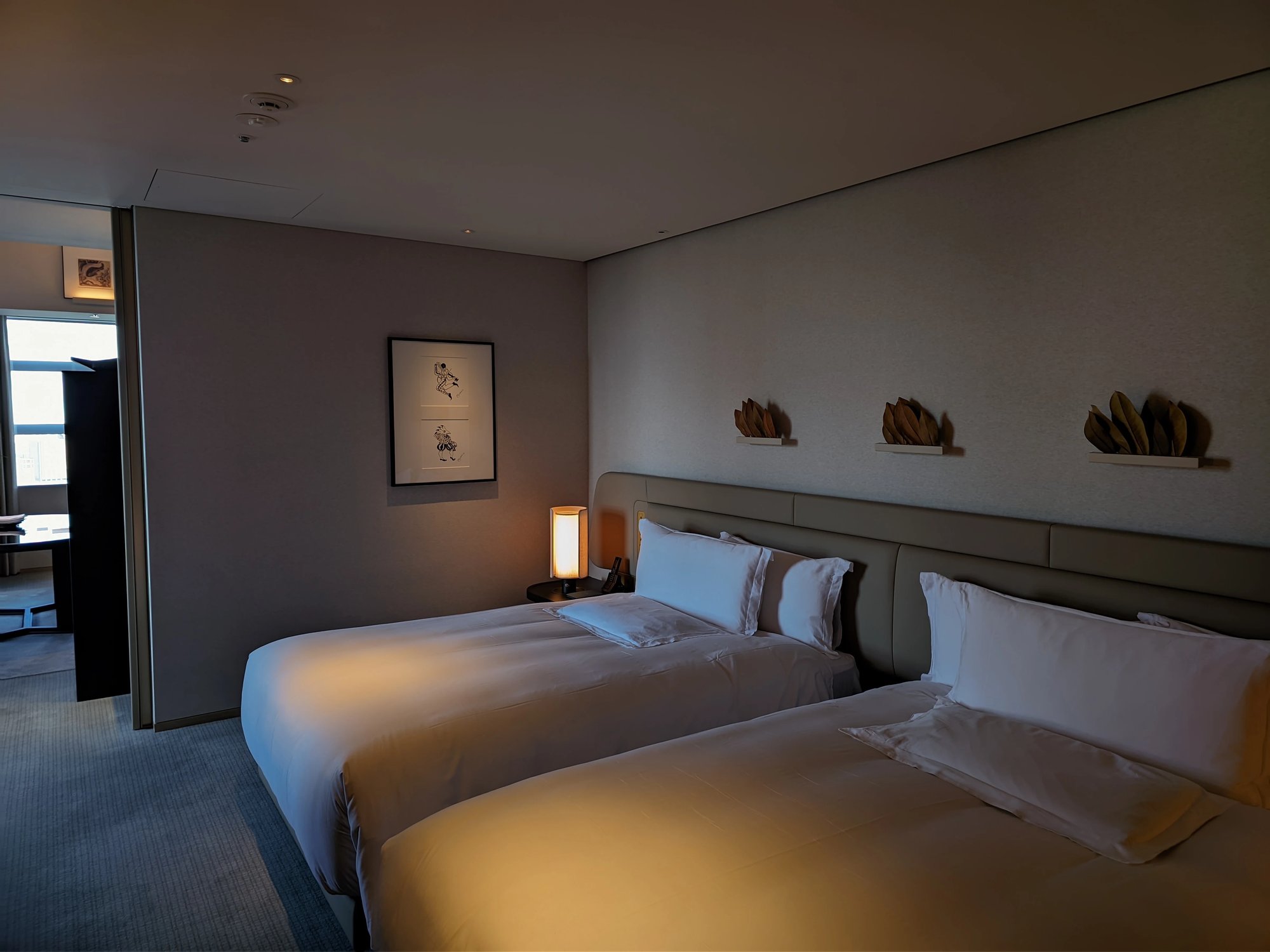
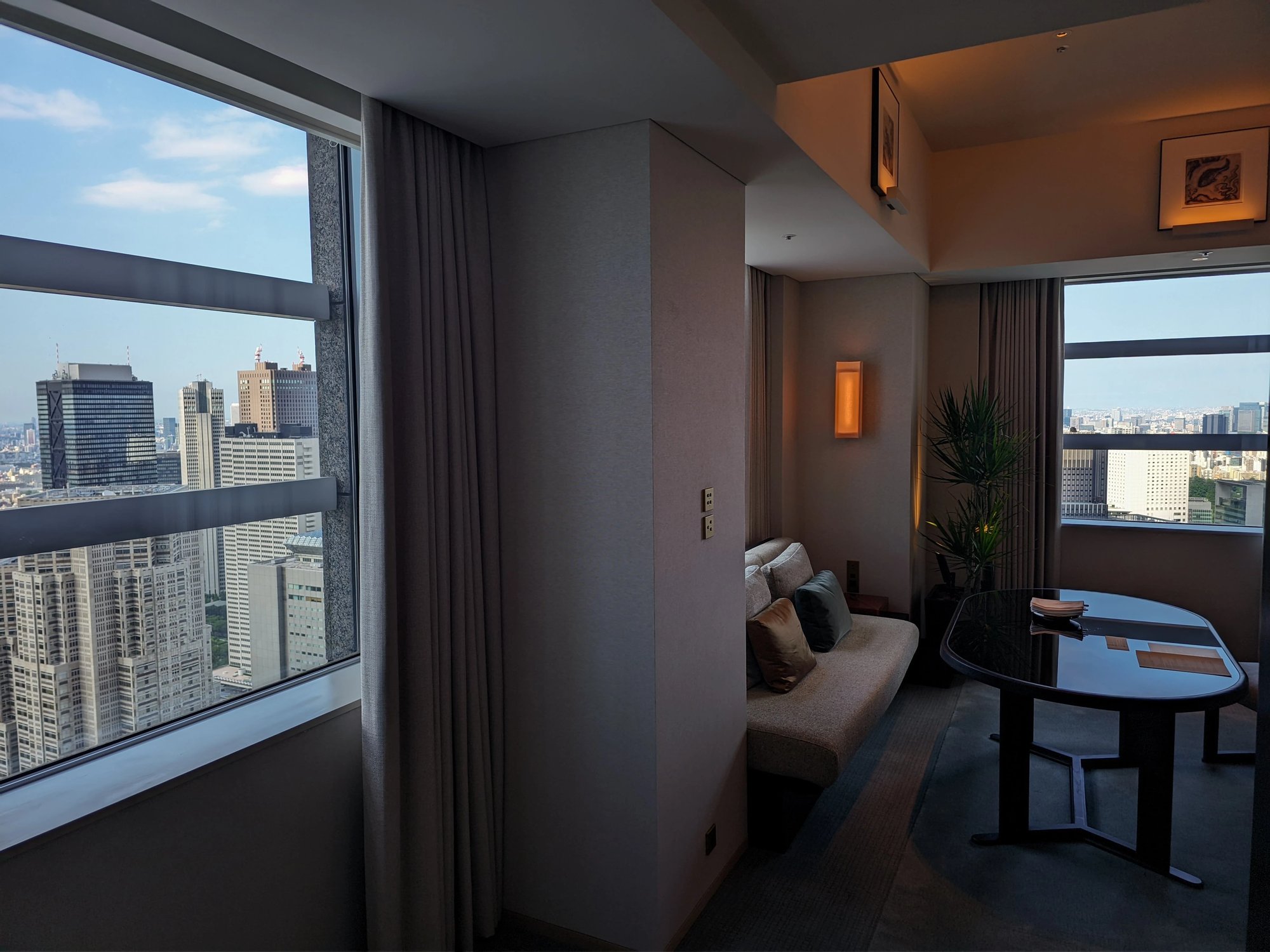
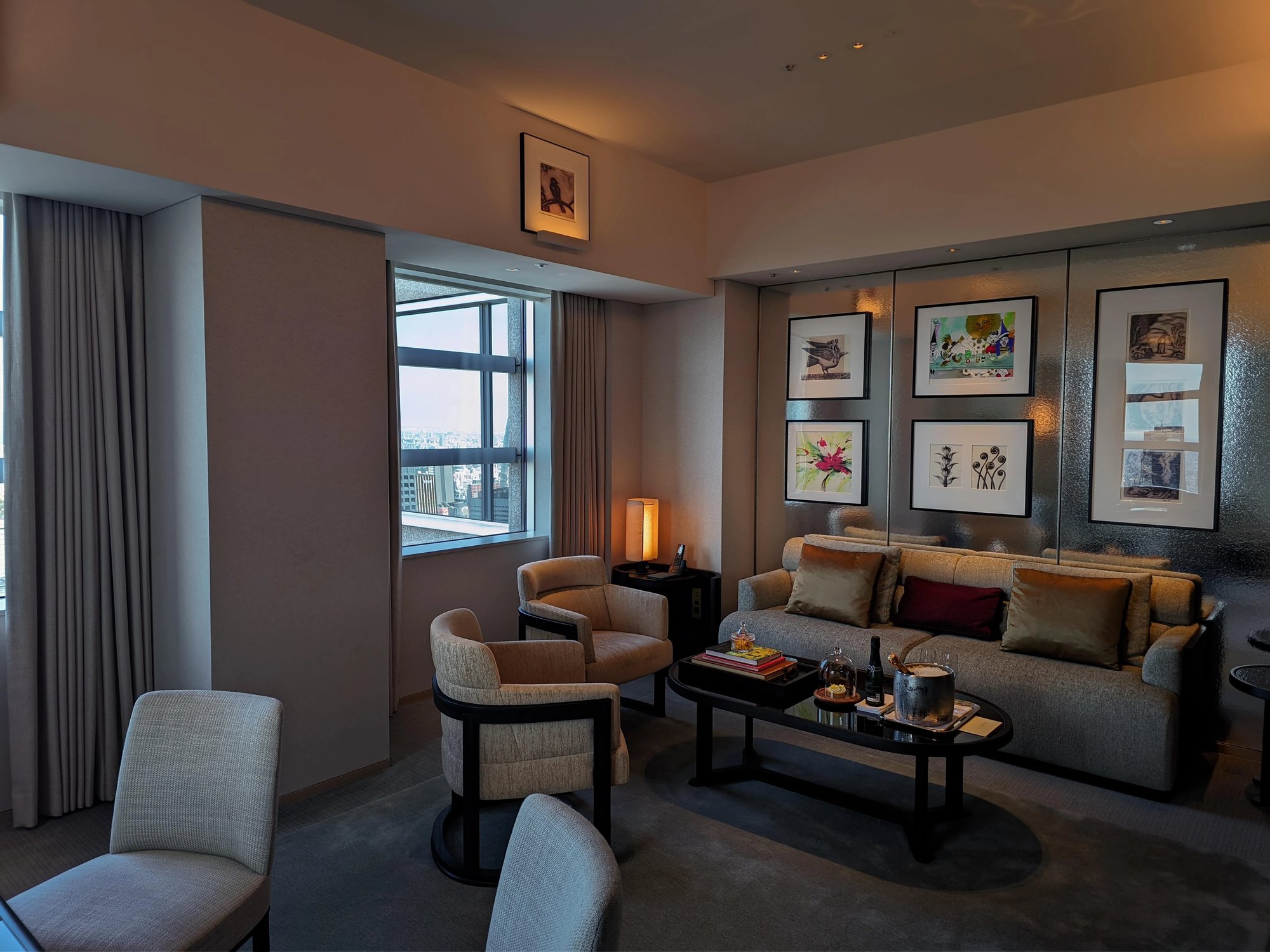
I walked into our suite hoping for a bit of the film's smoky glamour, or at least something that told me I was in Tokyo, and found a pleasant, very bland set of rooms. It was a two-bedded Park Suite of 85 square metres, a long living room at the window end with the bedroom behind it, and it did look nicer in person than in the photos I'd seen. A grey sofa sits under a wall of framed prints on hammered silver panels, with two cream armchairs and a black oval coffee table in front of it, and two window walls meet at the corner, one facing a cluster of grey office towers and the other running out over low-rise Tokyo to a hazy horizon. It's all taupe and black lacquer under warm amber light, and if you'd led me in blindfolded I could have been in a smart business hotel in any city.
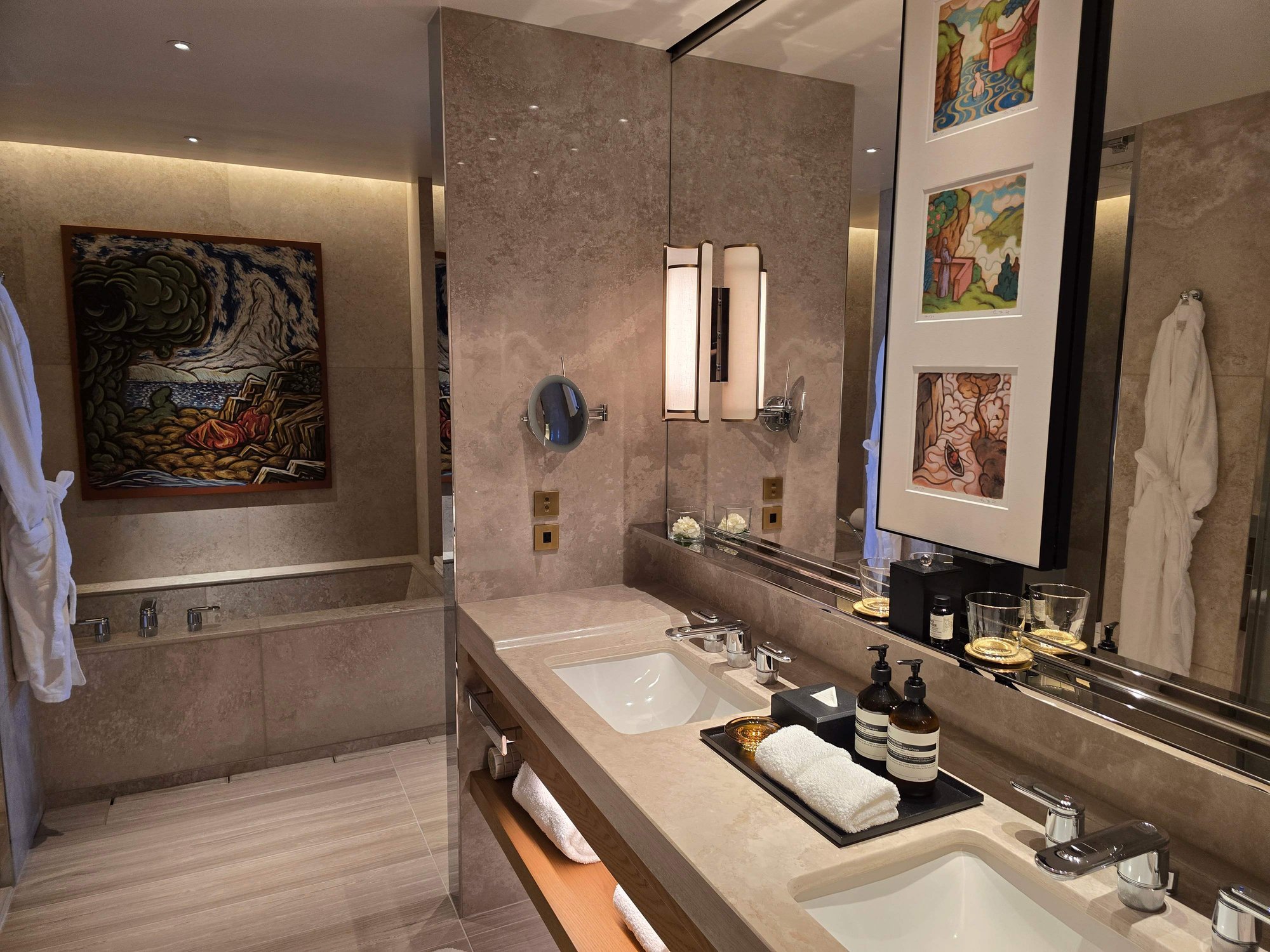
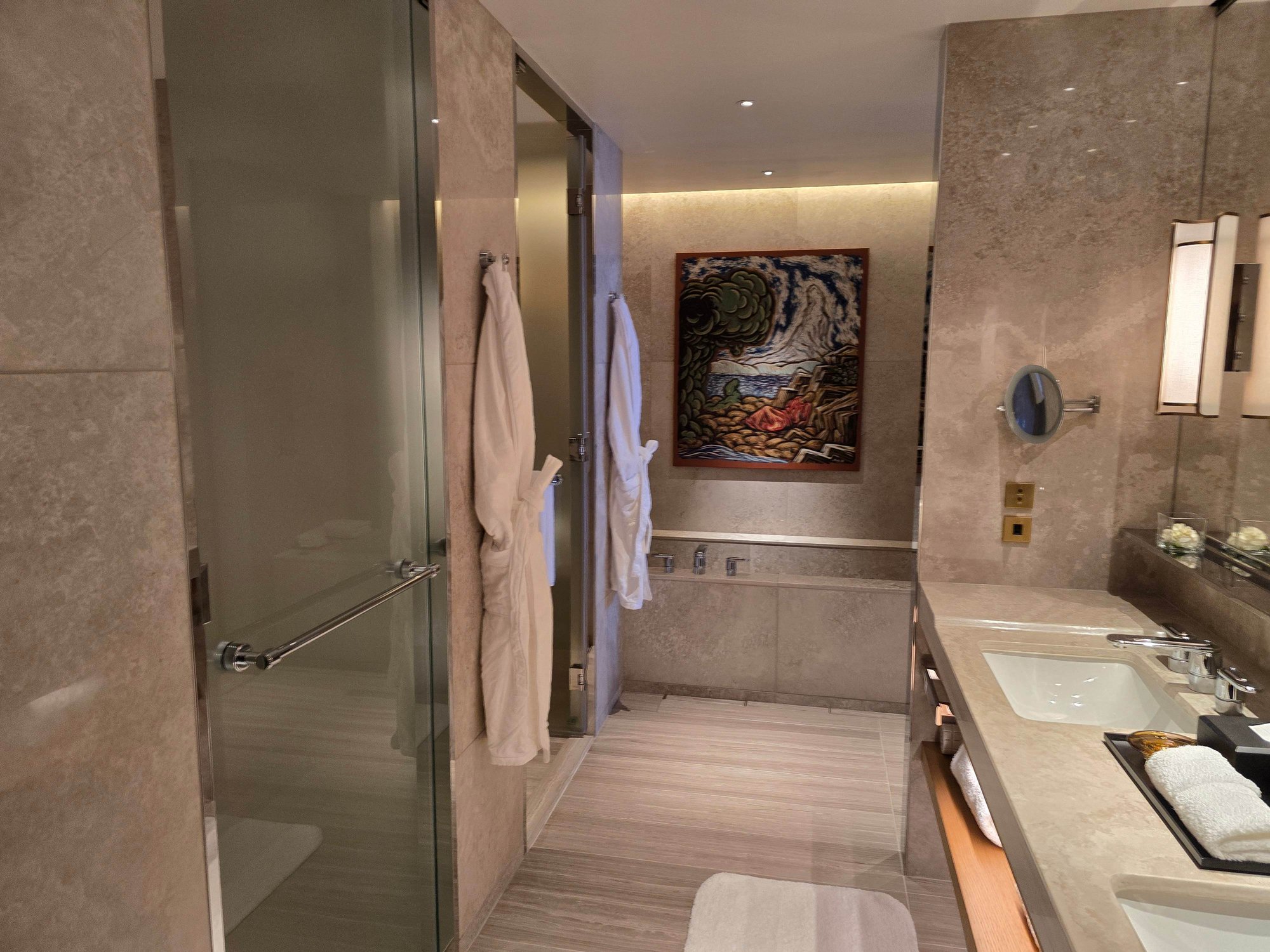
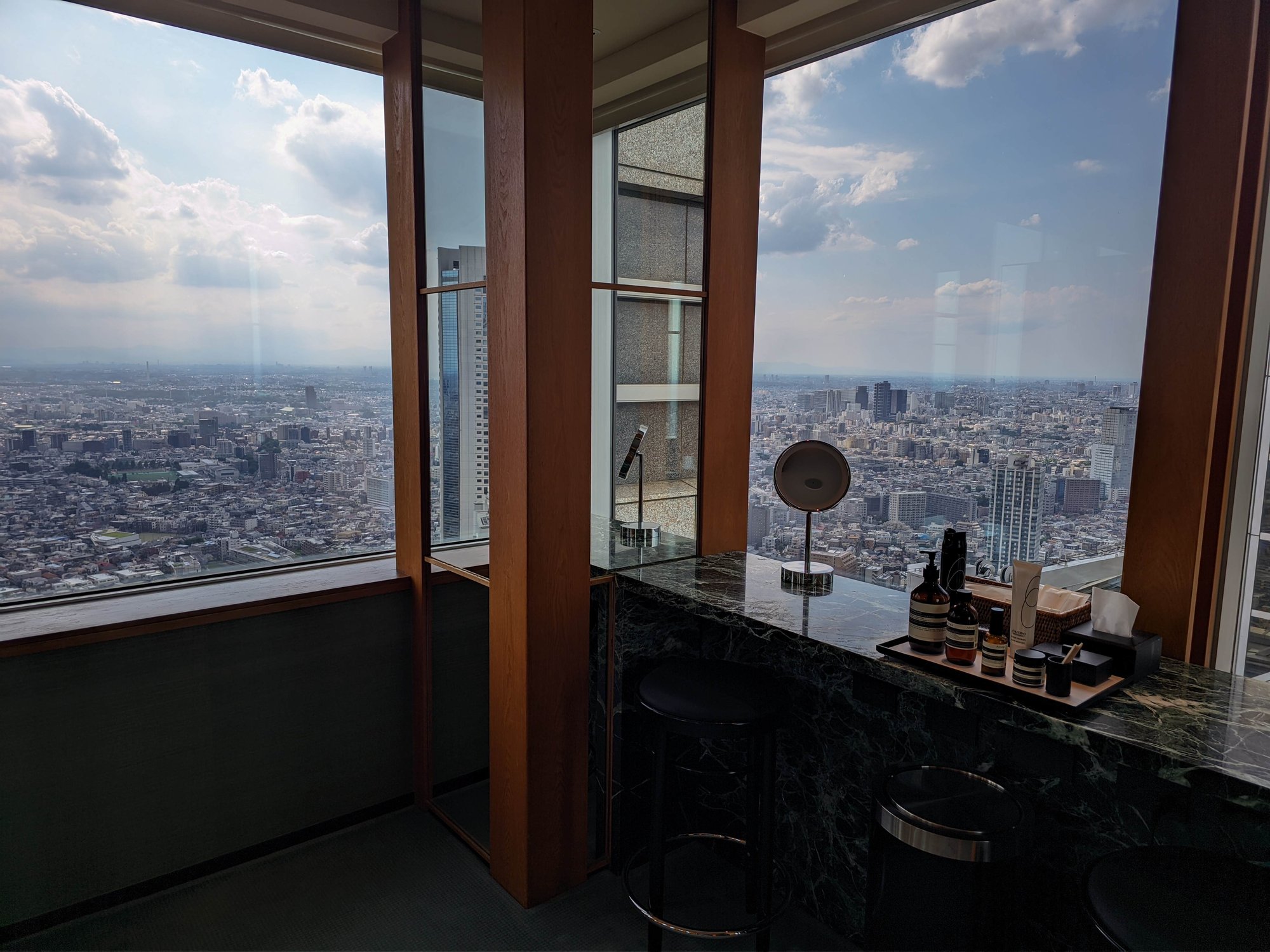
It's easy to live in, I'll give it that. A tall black timber unit stands in for a wall between the living room and the bedroom, with a big screen on each side, a tea shelf with a capsule machine, an iron teapot and two green cups, and a little amber-lit niche with a row of dried citrus. Behind it two big beds stand side by side under one long taupe leather headboard, and I slept beautifully, with the electric curtains shut and the wardrobe and bathroom between us and the corridor. The bathroom is long and lined in sand-coloured stone, with two basins, Aesop by the taps, a separate glass shower and a deep tub under a big painting of a figure lying on rocks by a stormy sea. Apart from a tall paper lamp in the bedroom corner and three little shelves of dried magnolia leaves over the beds, nothing in the suite says Tokyo or Park Hyatt.
That's what disappointed me most, because the renovation was the chance to fix it. Nineteen months of work have left the rooms newer and warmer and no more interesting, and the dark, smoky mood of Lost in Translation has gone from them with nothing in its place. Most people will book the Deluxe Room, which at 55 square metres is big for Tokyo and has the same look and a deep tub, but it has a round table and no proper desk chair, so it's a poor room to work in. If you do stay, ask for a high floor facing Shinjuku for the lights at night, and don't pay extra hoping for Mount Fuji, which we never saw. I wouldn't pay for the suite either, because you get the same taupe rooms with more floor between them.
Food and drink
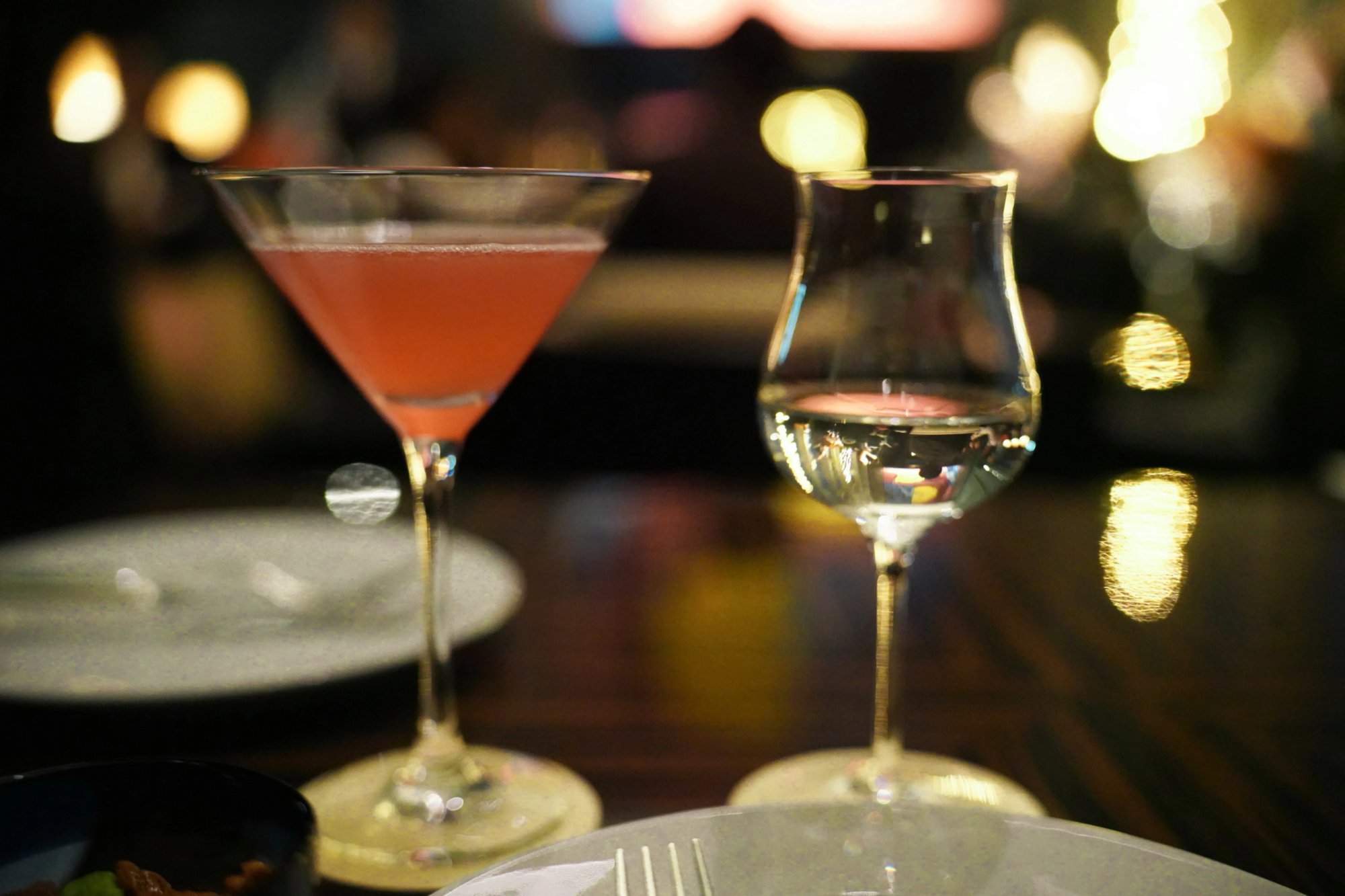
My best hours here were in the New York Bar on the 52nd floor. A band played with a singer out in front, and behind them the windows were full of Shinjuku lit up to the horizon. The bar has been restored to look just as it always did, with black leather chairs, striped wood tables and big murals on the walls, and it felt exactly like the film. I had an old-fashioned and a Manhattan with a bowl of spiced nuts, and honestly the drinks were fine and no better, at about 2,600 yen each, but I'd have gone back up every night for the room and the music.
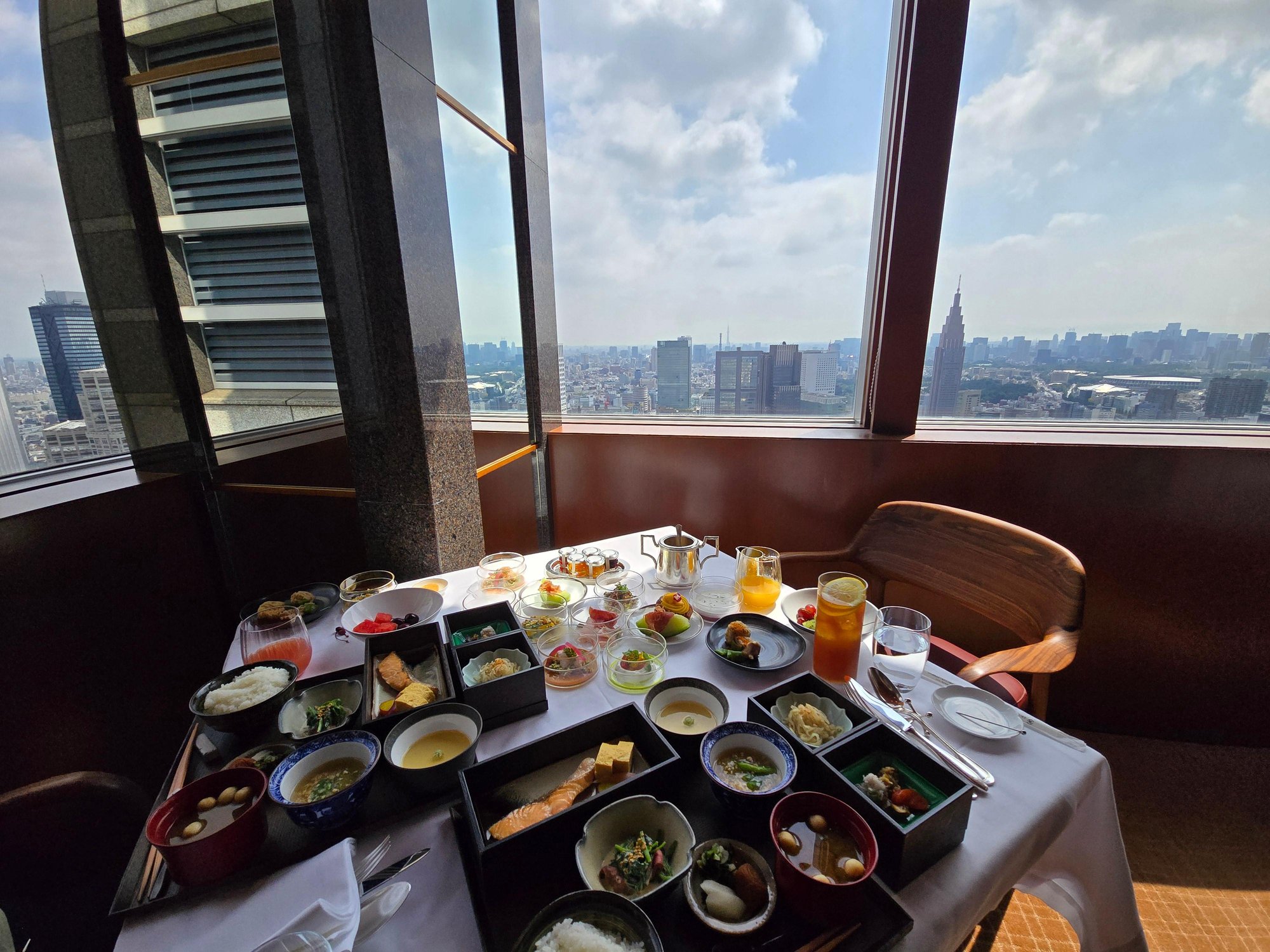
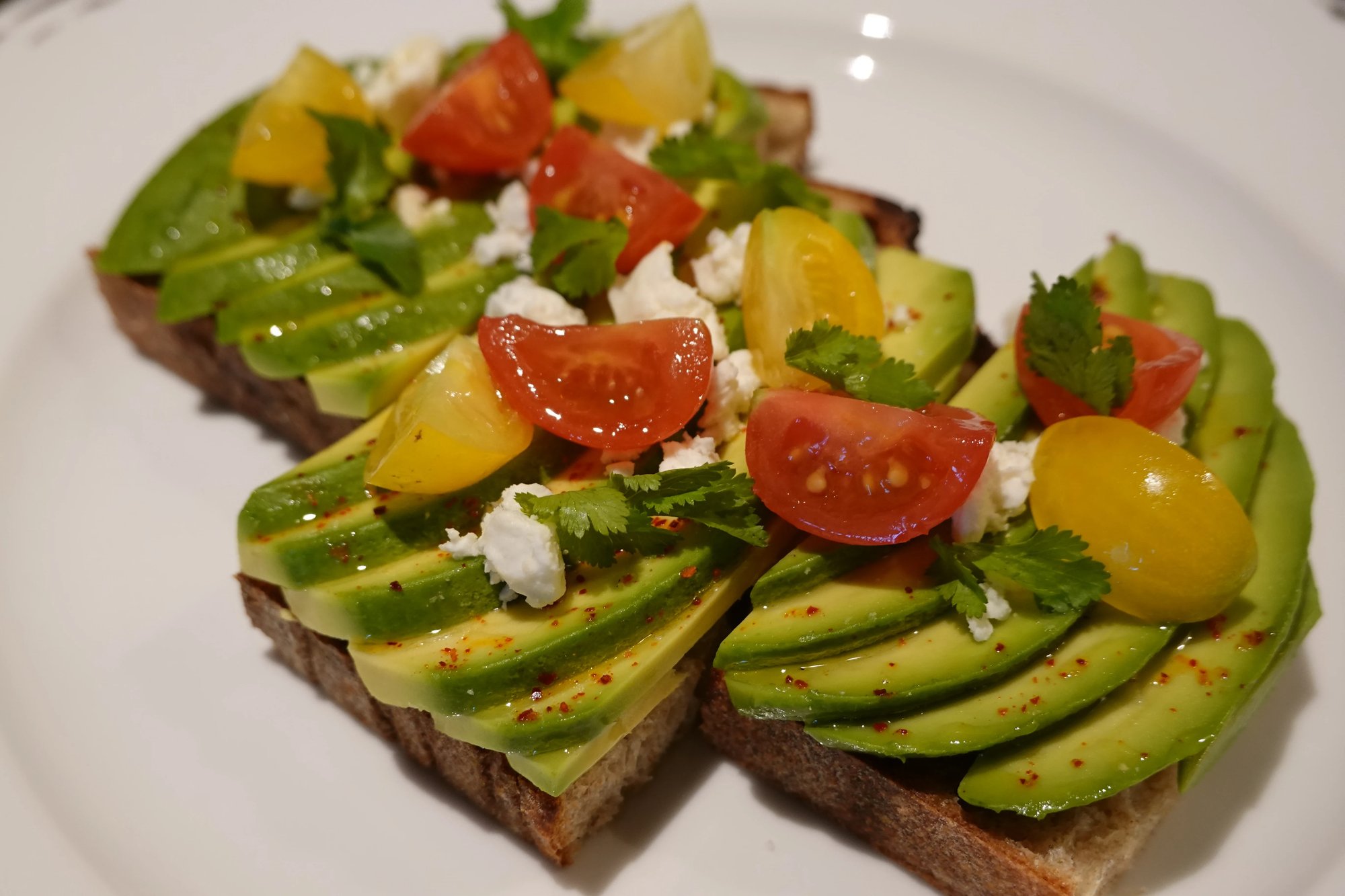
Breakfast is at Girandole, Alain Ducasse's new brasserie beside the lobby, a room of red banquettes, mirrored walls and amber lamps with the Docomo tower in the window. You pick one set, Japanese or Western, and both come with a row of little glass cups of cold starters. My eggs Benedict arrived in a copper pan with truffle on top, next to melon wrapped in Parma ham and four little jars of jam, and the Japanese set was grilled salmon, a thick slab of tamagoyaki, rice, miso in a red lacquer bowl and pickles with an umeboshi. It all looked lovely and tasted ordinary, and the bread and pastries were the best of it. If you want the Japanese set, order it the night before.
For dinner I'd book Kozue, the Japanese restaurant, a walnut room with ceramics and lacquerware on the table and a menu that follows the seasons, from snow crab and bluefin toro to beef shabu-shabu. The New York Grill beside the bar is the place for a big steak night, with Kobe sirloin and an Akagi tomahawk on the menu, and afternoon tea is still served under the bamboo in the Peak Lounge.
Setting
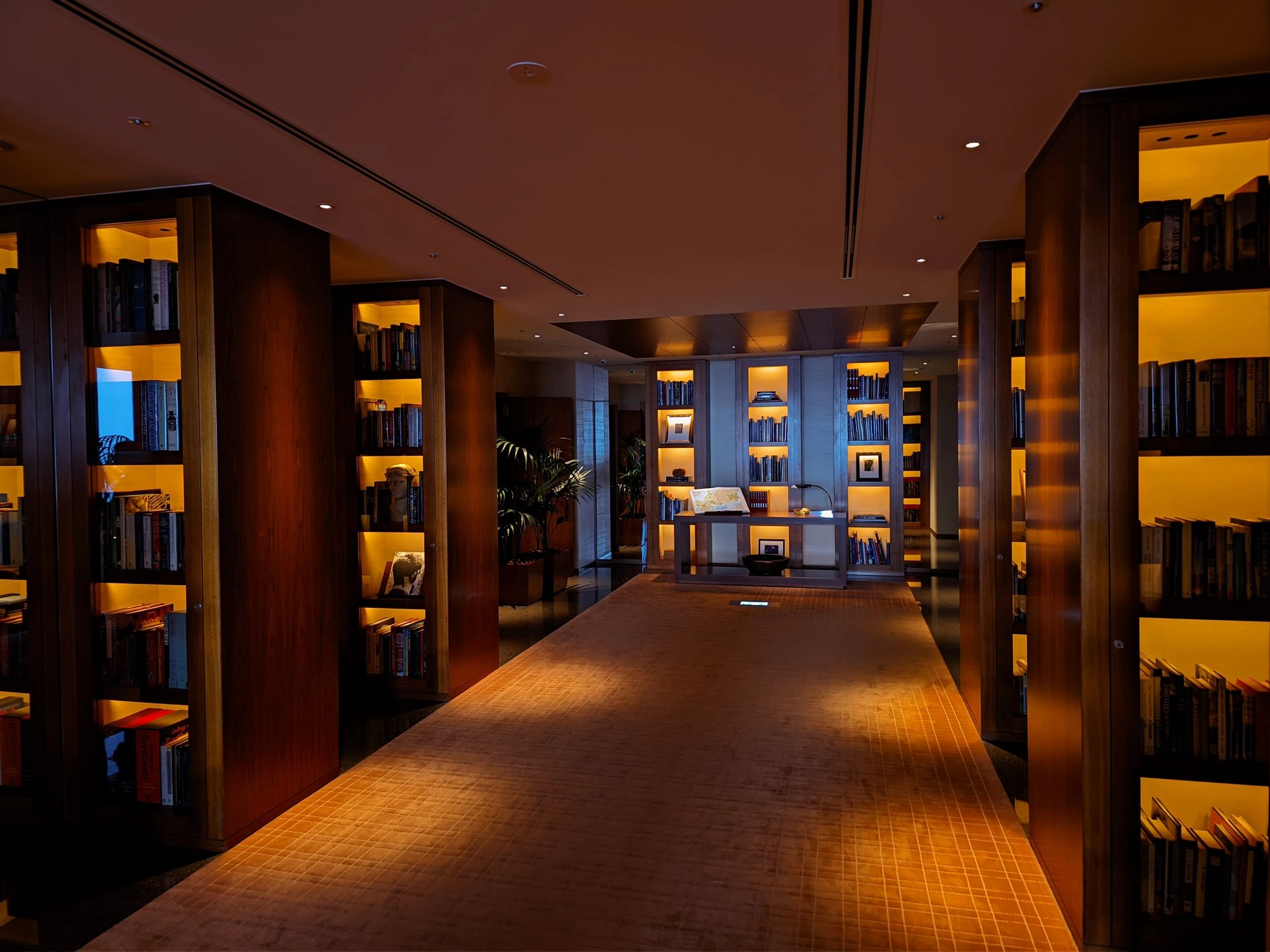
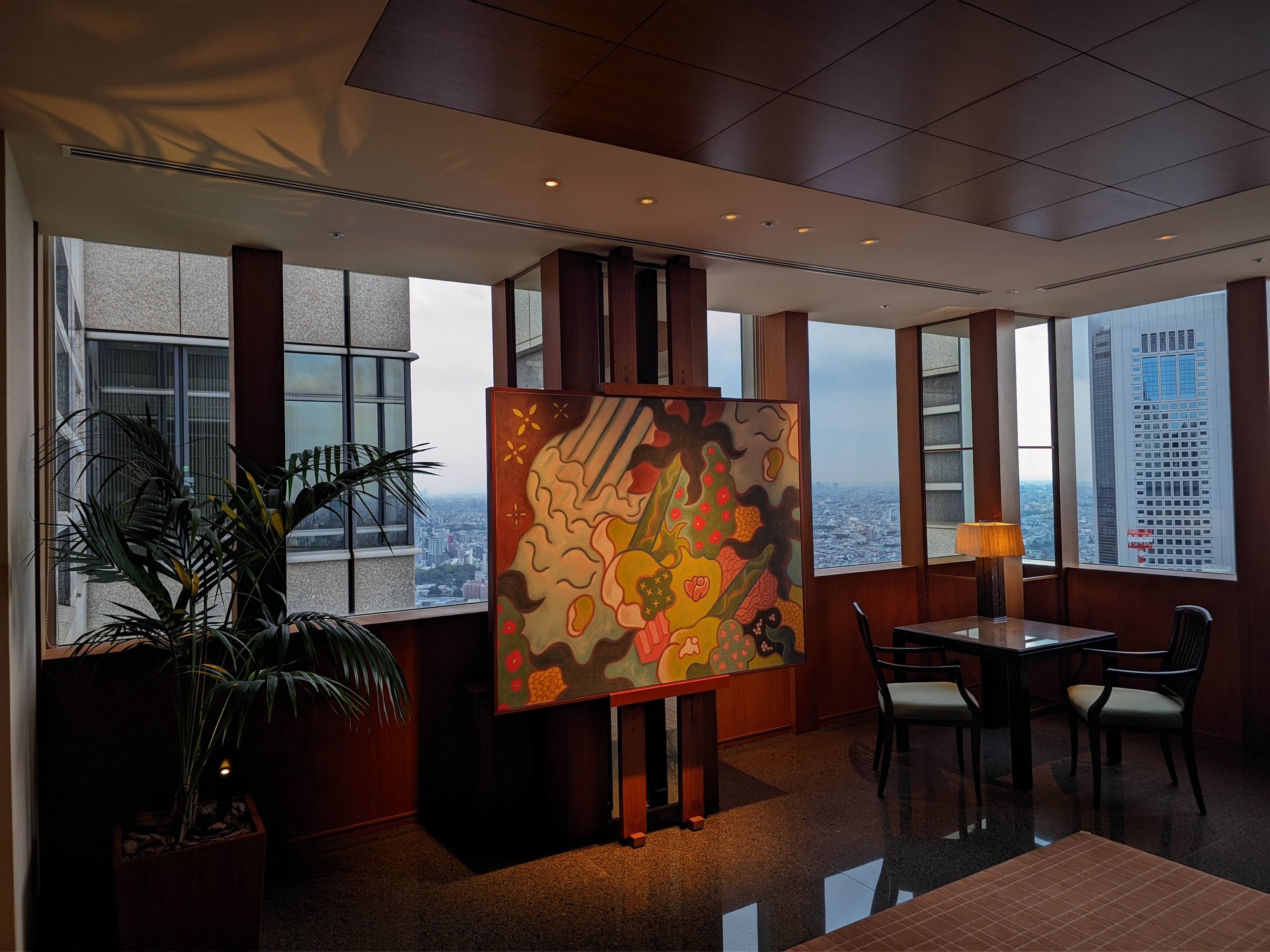
My favourite place in the hotel is the Peak Lounge on the 41st floor. It sits under a glass pyramid around a grove of golden bamboo that has been growing there since 1994, and one evening as the light went, with two guitarists playing at the far end and the tea tables giving way to cocktails, I didn't want to get up. Beyond it the Library holds some 2,000 books under warm lamps, and the guest floors are carpeted in soft green. During the long closure the Paris studio Jouin Manku was asked to refine the place and leave its character alone, and out here they did. The public rooms look almost exactly as I'd pictured them from the film, and the lounge, the Library and the bar upstairs are where the hotel still feels like itself.
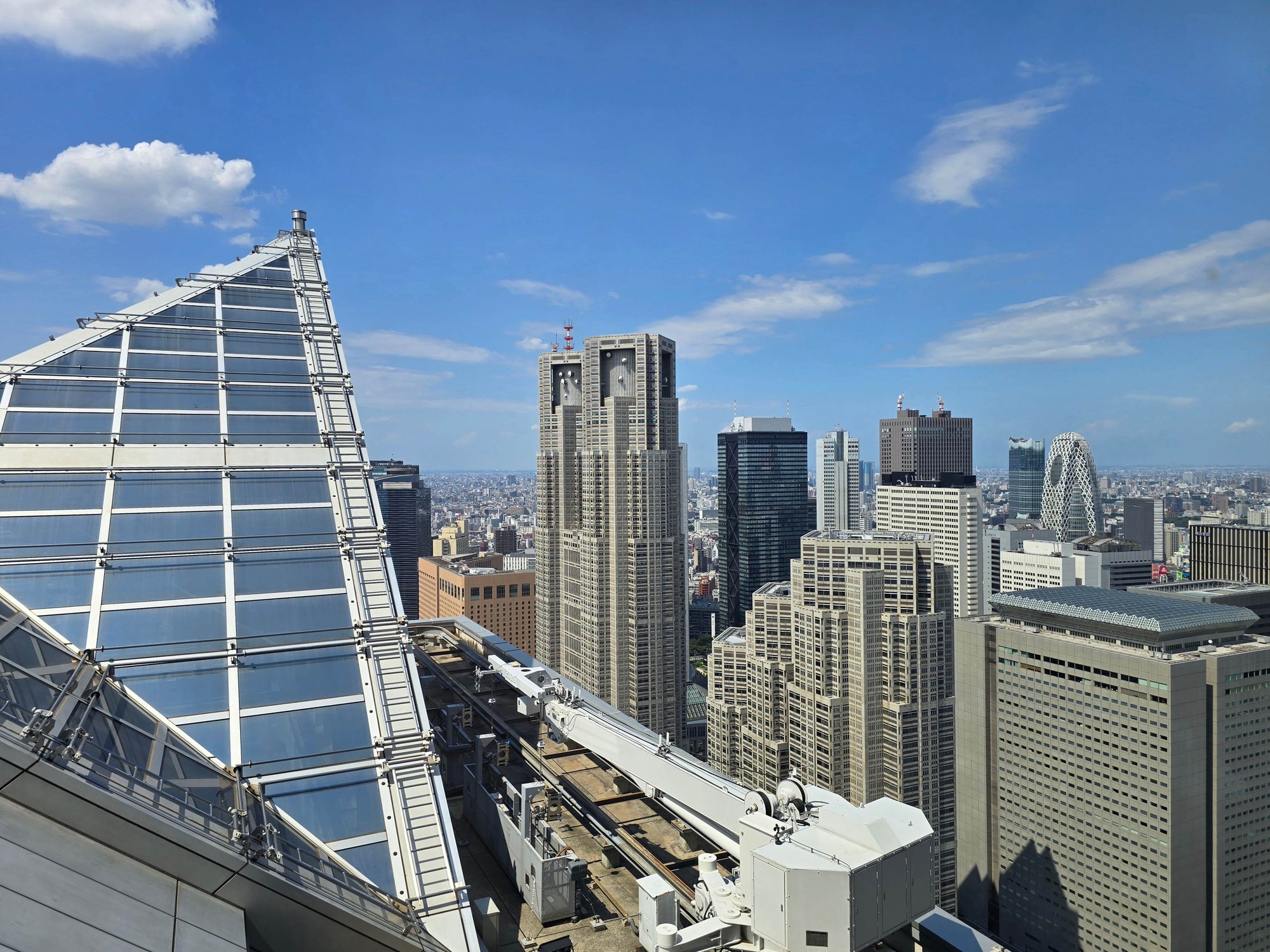
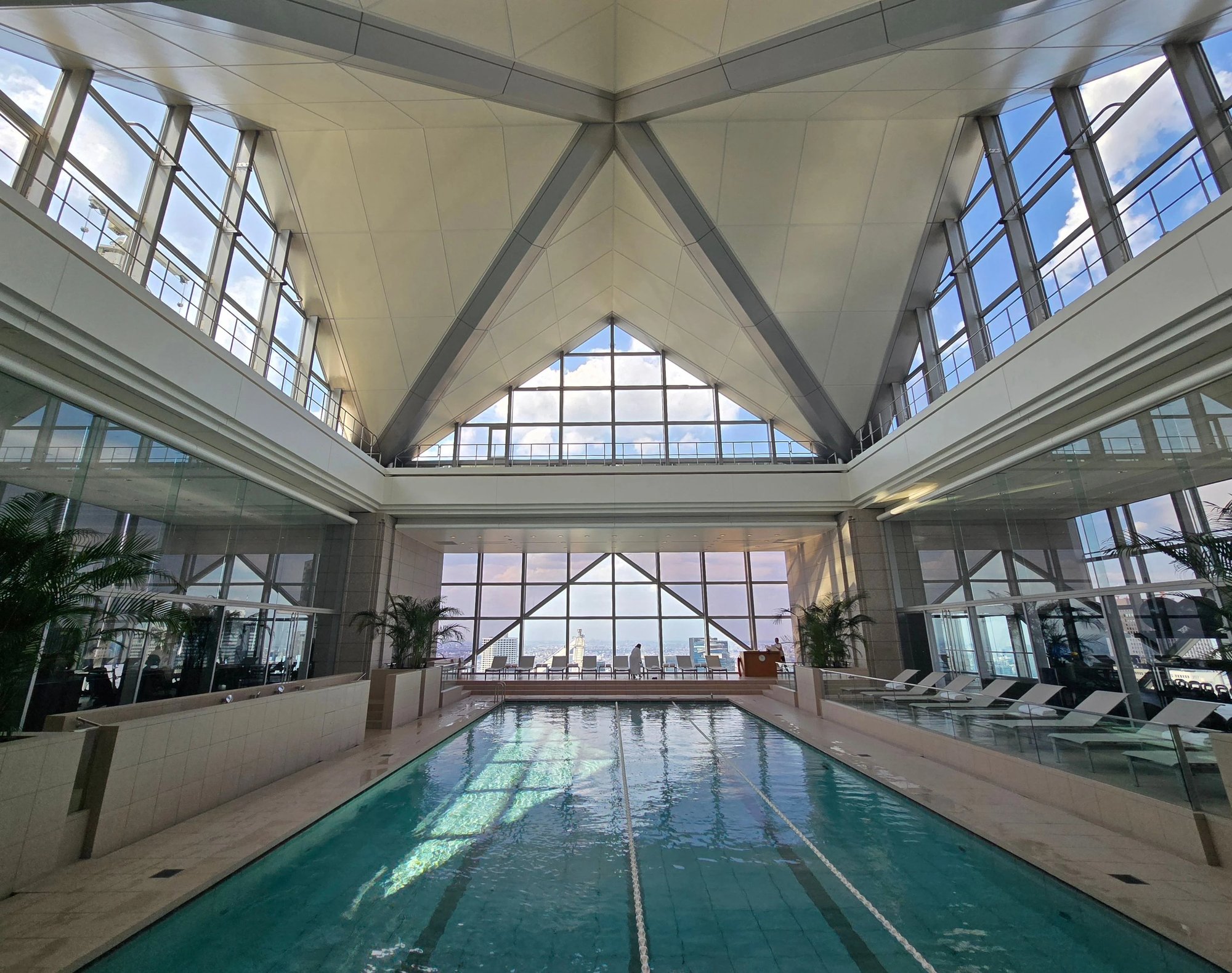
The pool is up on the 47th floor, a 20-metre lap pool under another tall pyramid of steel and glass, and the daylight in there is beautiful. As a pool it's plain, just lanes and loungers, and you have to wear a swim cap, which they lend you. The spa two floors down was better than I expected, with marble baths with strong jets, saunas, a cold plunge and a lounge with free juice and snacks. The baths are single-sex and you go in nude. Access costs about 5,500 yen a person for most guests, and I'd pay it and give it a whole afternoon.
Step outside and it's much less romantic. The tower stands among the government and office blocks of Nishi-Shinjuku, opposite Shinjuku Central Park, and the south side of Shinjuku Station is 10 to 15 minutes' walk away, with Tochomae a little closer. A free shuttle runs to the station every half hour, but it seats only nine and fills up, so we took taxis most of the time. If you like to walk out of the door into the city each morning, this is the wrong address for you.
Value
On our last evening, sitting under the lit bamboo in the Peak Lounge, I tried to work out what I'd tell a friend about the price, and I couldn't make it add up. A Deluxe Room costs about $800 to $1,100 a night, with about $1,000 typical, and the Park Suite starts at about $1,400. That's roughly $250 more than the Ritz-Carlton in Roppongi at about $750, about the same as the Four Seasons at Otemachi at around $1,070, and well above the Palace Hotel at about $650. Aman Tokyo costs about twice as much, at around $2,100 on a typical night.
Spend that money elsewhere in Tokyo and you get more for it. For about the same rate the Four Seasons at Otemachi gives you the Imperial Palace gardens in the window and far easier trains. The Ritz-Carlton's rooms are older and darker than these, but the people there looked after us much more warmly, Roppongi Station connects to it underground, and it's about $250 a night cheaper. If you're going to pay well over the odds for a room, the Aman's is the most beautiful in the city, at twice the price.
So I wouldn't stay here again at these rates. What I loved was the New York Bar and an hour in the Peak Lounge, and you don't need a room key for either of them. I'd go up one evening for a drink and the jazz, maybe come back another afternoon for tea under the bamboo, and sleep at the Four Seasons or the Ritz-Carlton.
Who it suits
It's really only for fans of the film who want to sleep where it was shot and don't mind paying for the name, and for anyone who'll spend every evening in the bar and an afternoon in the spa. It's the wrong pick if you want a room with some character for your money, or a station on the doorstep. For the palace gardens and easy trains at about the same price, I'd book the Four Seasons at Otemachi, and for warmer service at about $250 a night less, the Ritz-Carlton Tokyo. If the room matters most and the budget stretches to twice this, Aman Tokyo has the most beautiful room in the city.
More on the area: Tokyo guide.