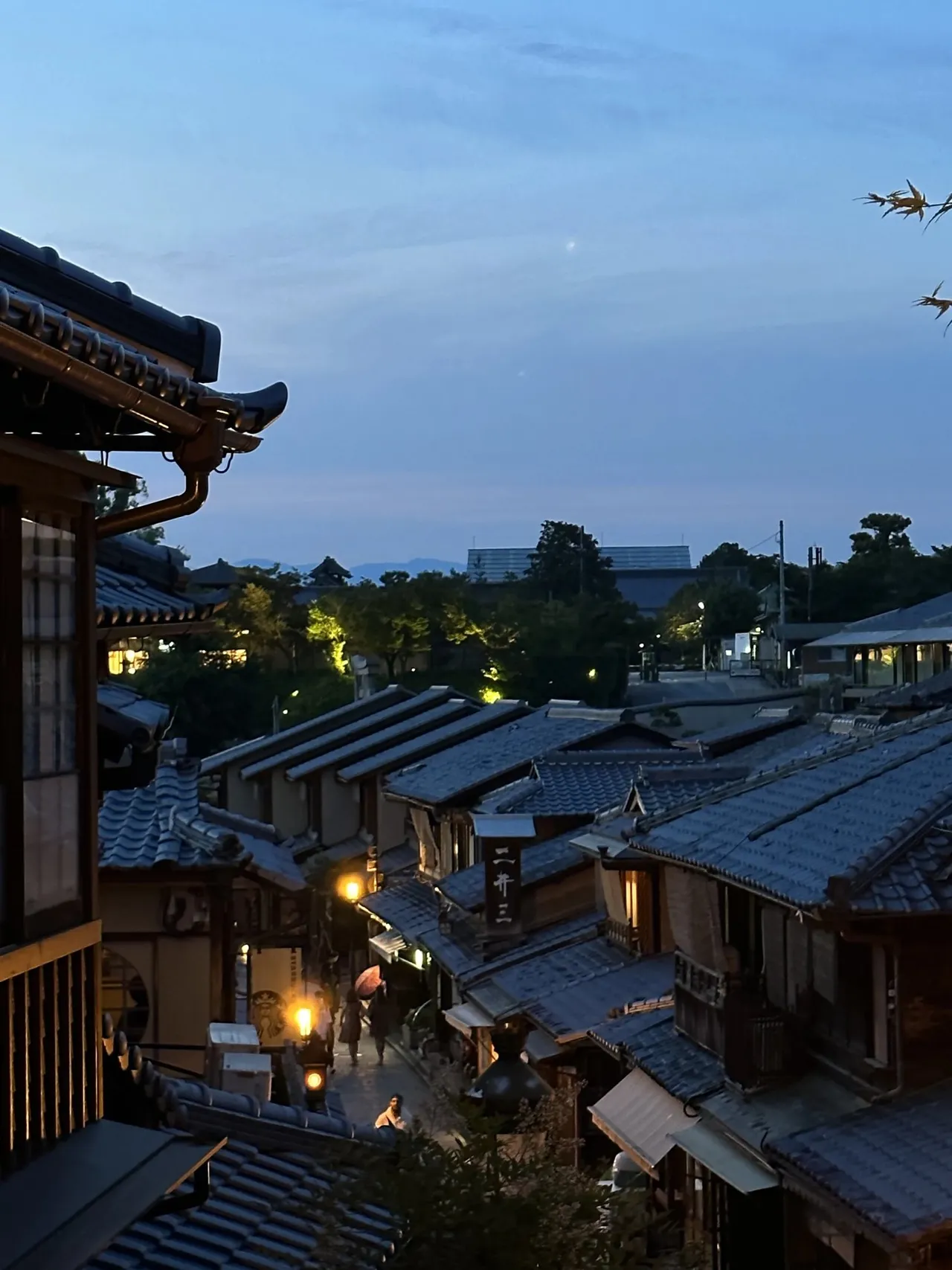
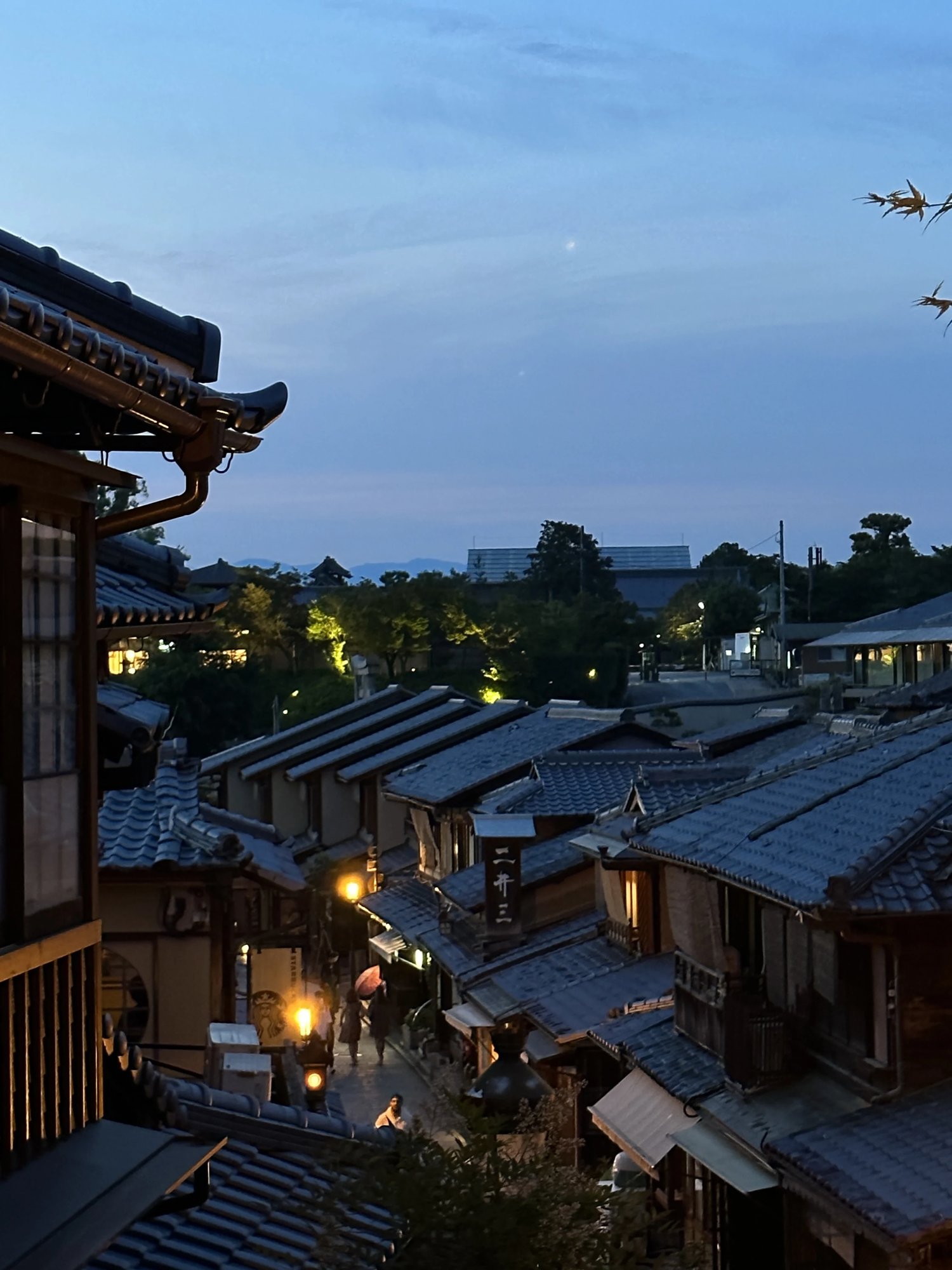
This is where I'd stay in Kyoto, and I wouldn't think long about it. The address on the old lanes of Higashiyama, with the Yasaka Pagoda in the window, beats every pool and spa the rivals can offer, and the staff are some of the best in Japan. It's very expensive though…and in a room without the view, you've wasted your money. See pictures ↓
The Park Hyatt Kyoto is tucked into the hillside of Higashiyama, right at the bottom of Ninenzaka, the old stone lane that climbs up to Kiyomizu-dera. Kodai-ji temple is across the road, the Yasaka Pagoda is just down the hill, and the hotel is so low and so quiet that most people walk straight past it. It only has 70 rooms, and it opened in 2019.
I'd heard about this place for years before I finally booked it. Every Kyoto lover I know says the same thing: it's the location. Kyoto's top hotels are mostly a taxi ride from the old city, and this is the one that puts you IN it. That's a big promise, and I wanted to see if it was worth what they charge.
Because they charge a lot. In the quiet months a room starts at about $1,100 a night, and in cherry-blossom season and the November maple weeks the same room runs $1,800 to $2,500. That's more than the Four Seasons and the Ritz-Carlton, and you don't get a pool. So let me tell you why I'd still book it.
Things I Loved about the Park Hyatt Kyoto
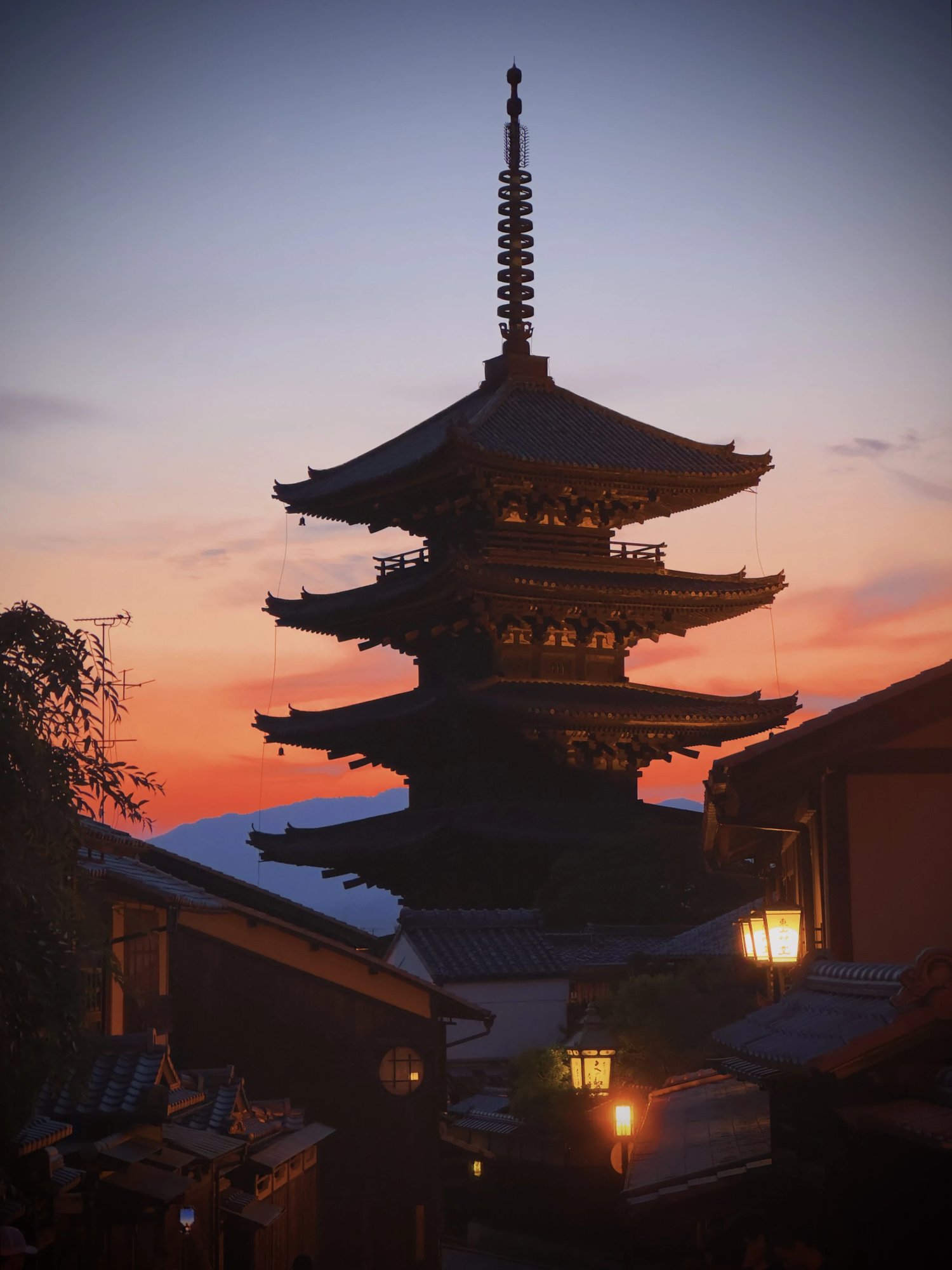
The pagoda in the window.
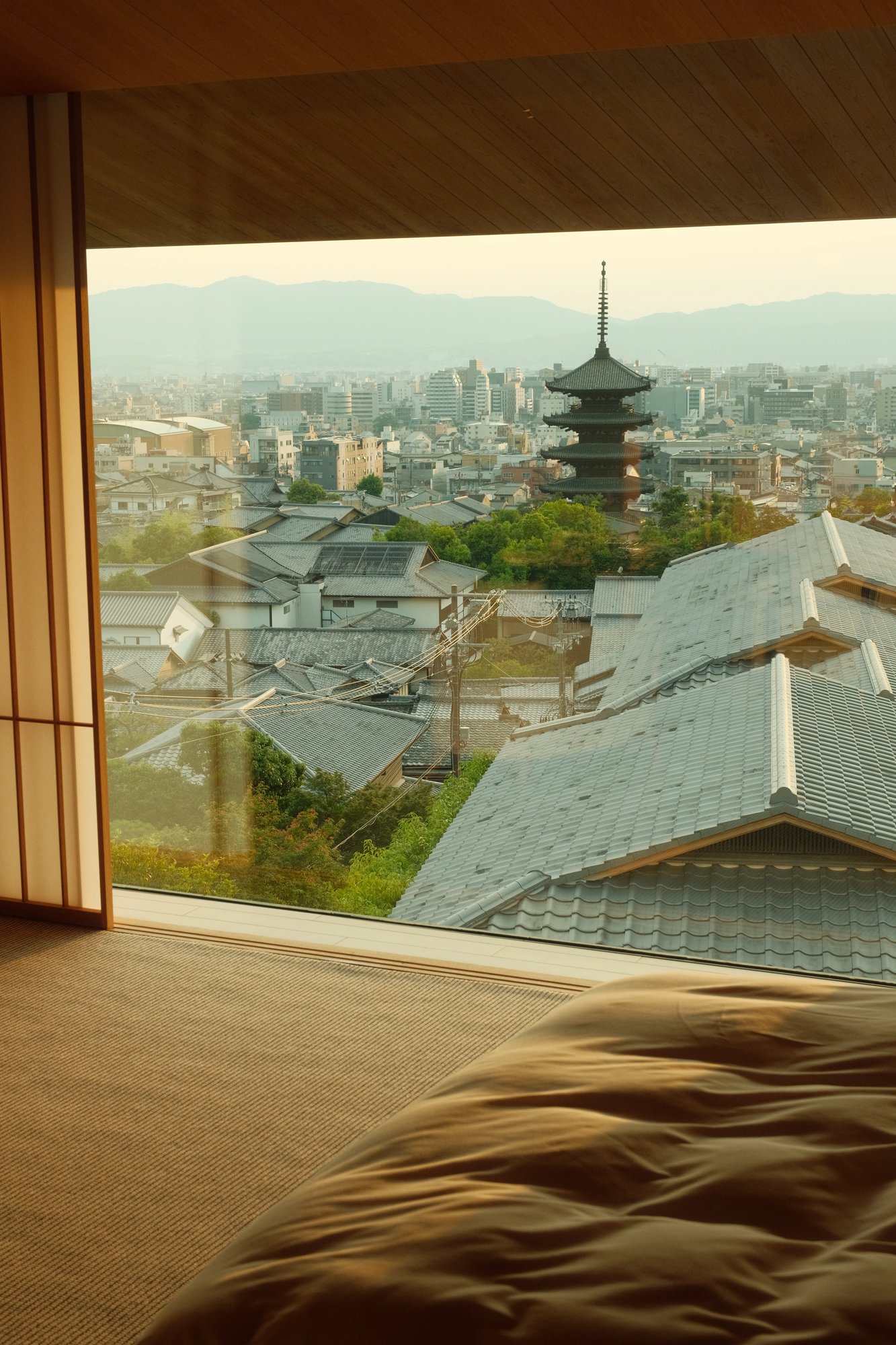
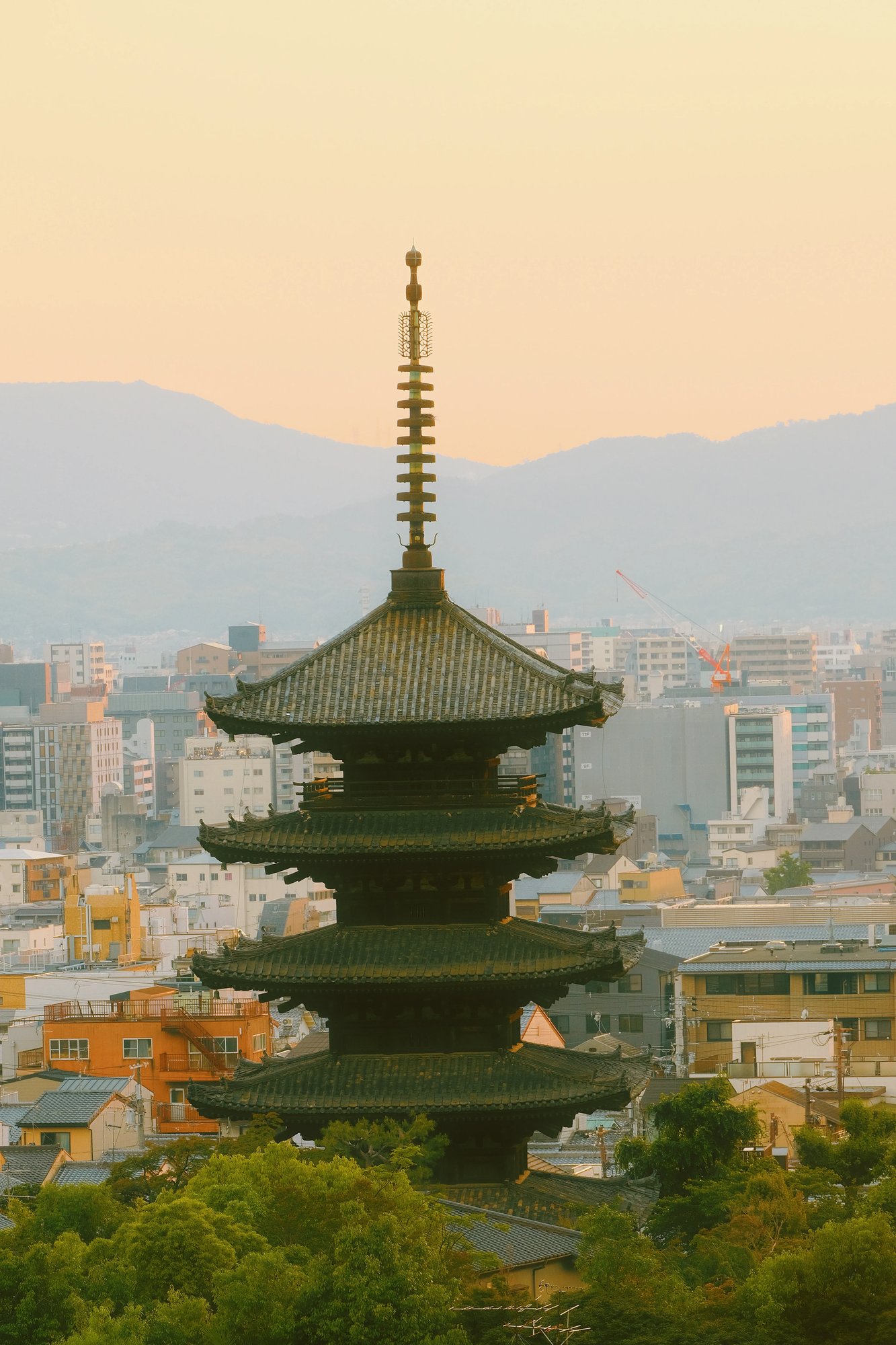
Our room was a view room on a high floor, and when I pulled the curtains back the first morning the Yasaka Pagoda was sitting right there over the blue-grey tiled rooftops, with the hills behind it. I just stood there. And at dusk, when the pagoda lights up, it's even better. Waking up to that is the whole reason to stay here, and I don't think there's a better hotel view in Japan.
The lanes before everyone else.
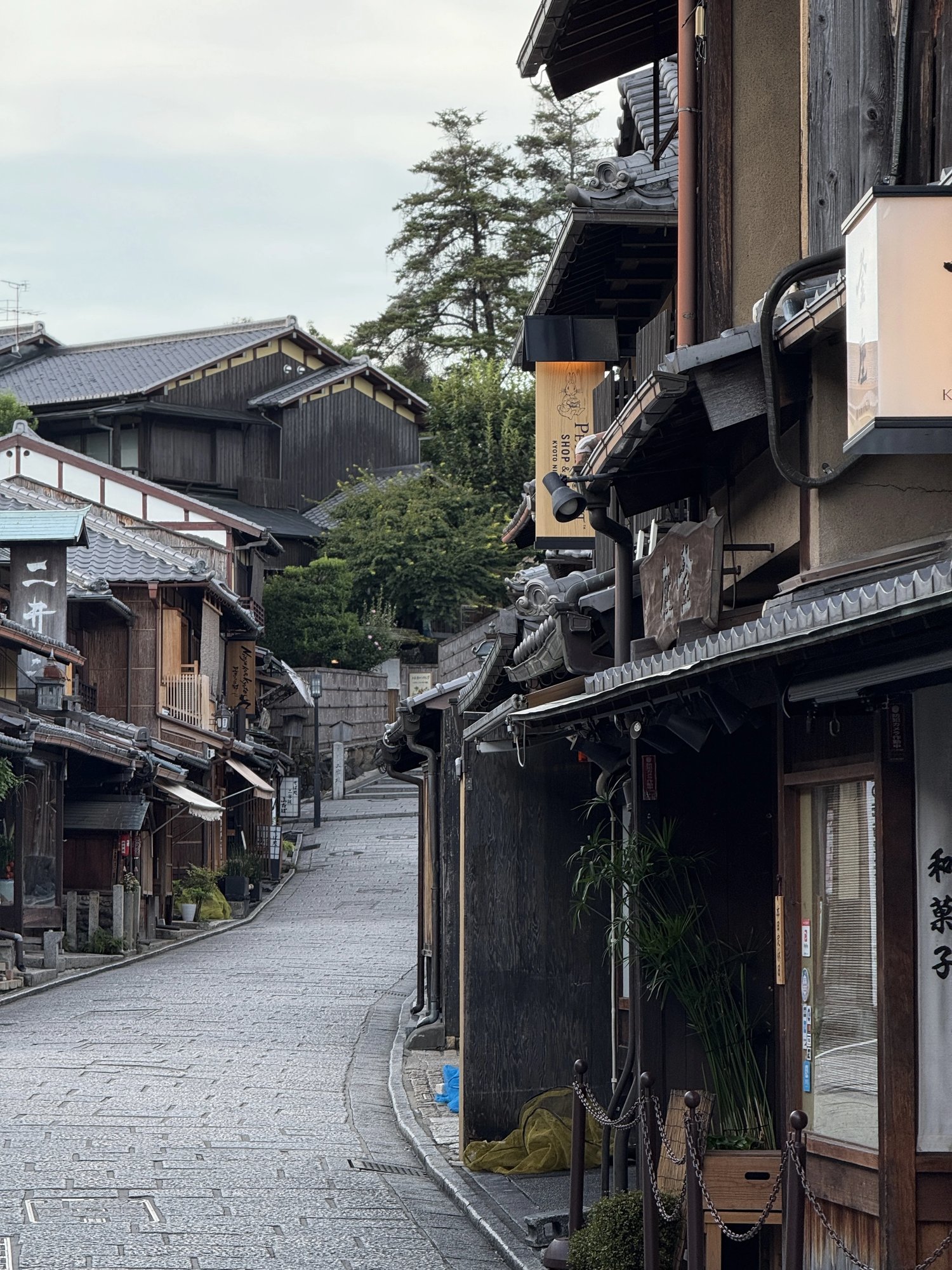
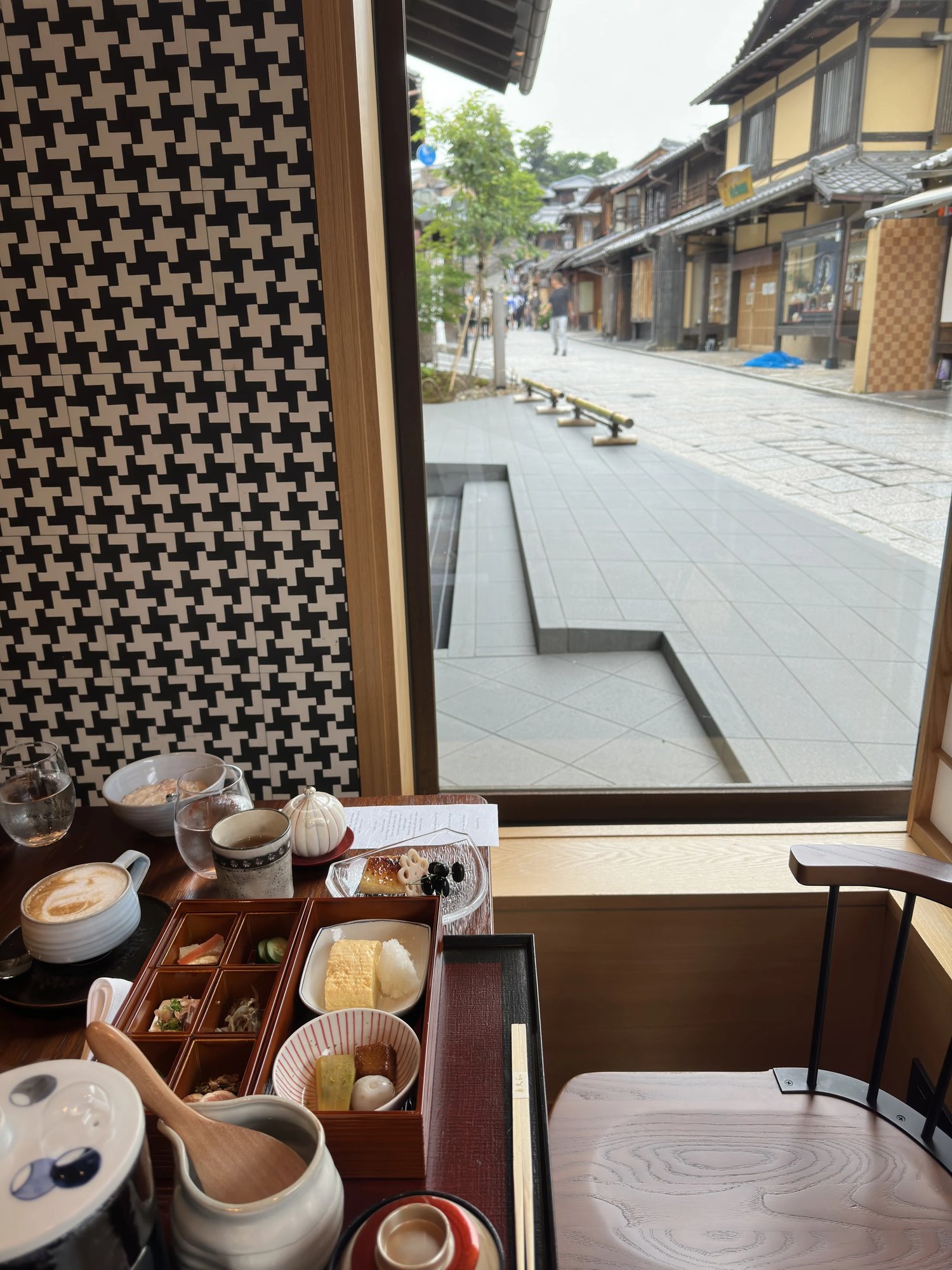
By eleven in the morning, Ninenzaka and Sannenzaka are shoulder to shoulder with tour groups and selfie sticks. But at six in the morning, and again after eight at night, they're completely empty. We walked up to Kiyomizu-dera before it opened, with just the shopkeepers sweeping their doorsteps and the odd monk going by, and then came back for breakfast before the crowds even arrived. I think that's worth more than any hotel facility, and you can only really do it from here.
Walking home after dinner.
It works at night, too. We'd eat in Gion, wander back up through Yasaka Shrine and along the lanes by lantern light, past the shuttered teahouses with nobody else around, and be in bed ten minutes later. No taxi, no queue, just the sound of our own footsteps on the stones. Of everything we did in Kyoto, those walks home are what I remember most.
The arrival.
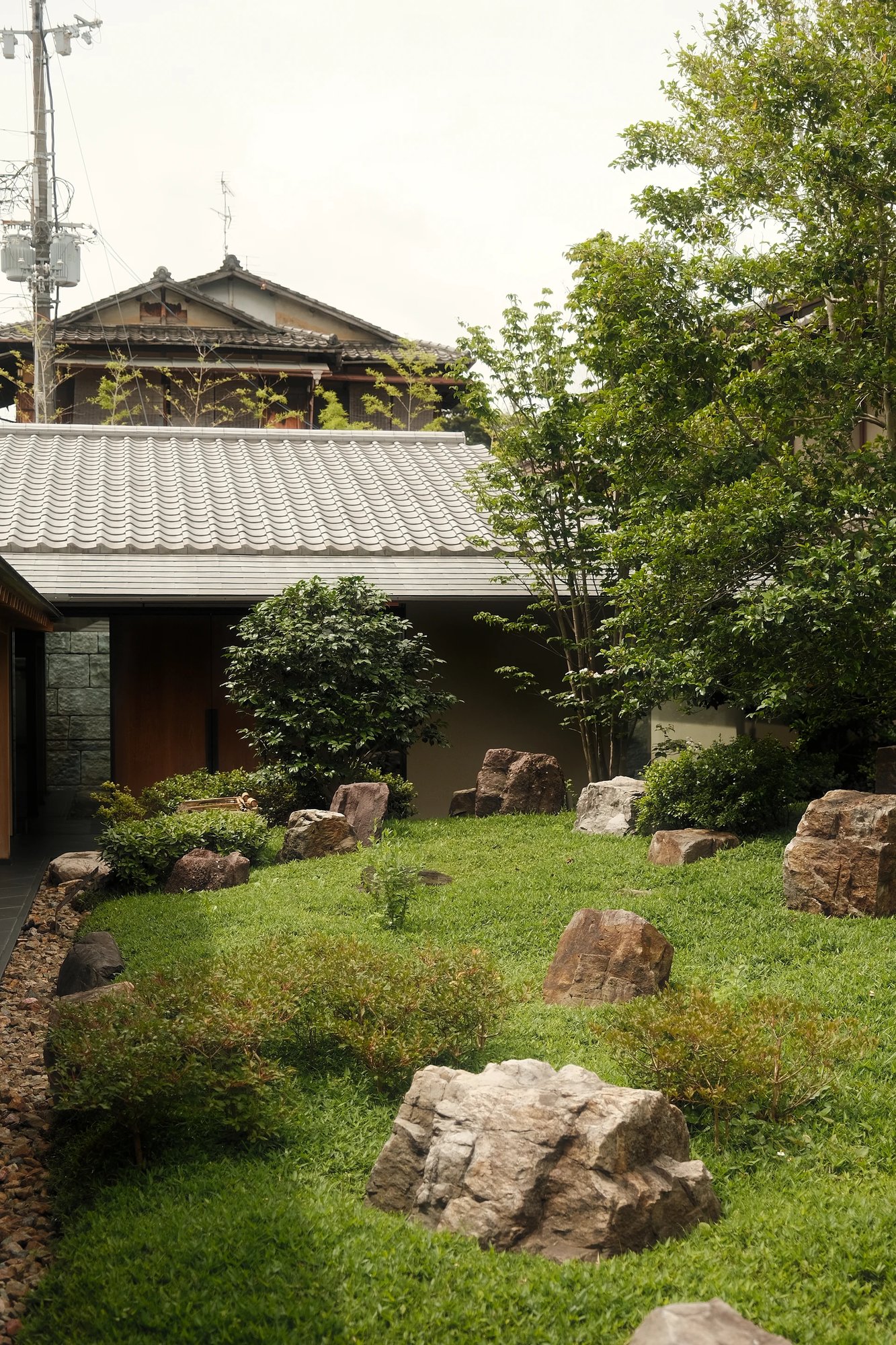
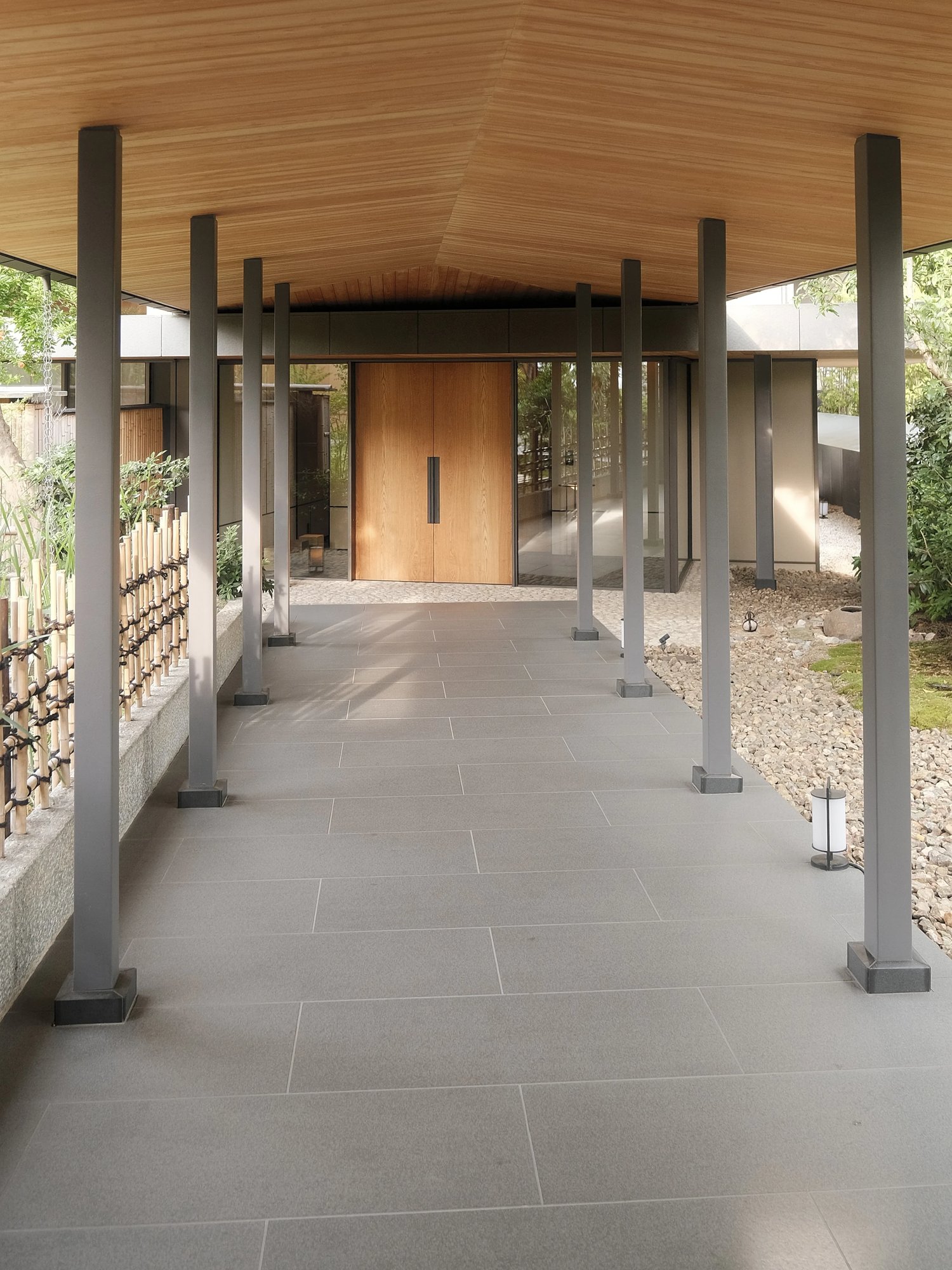
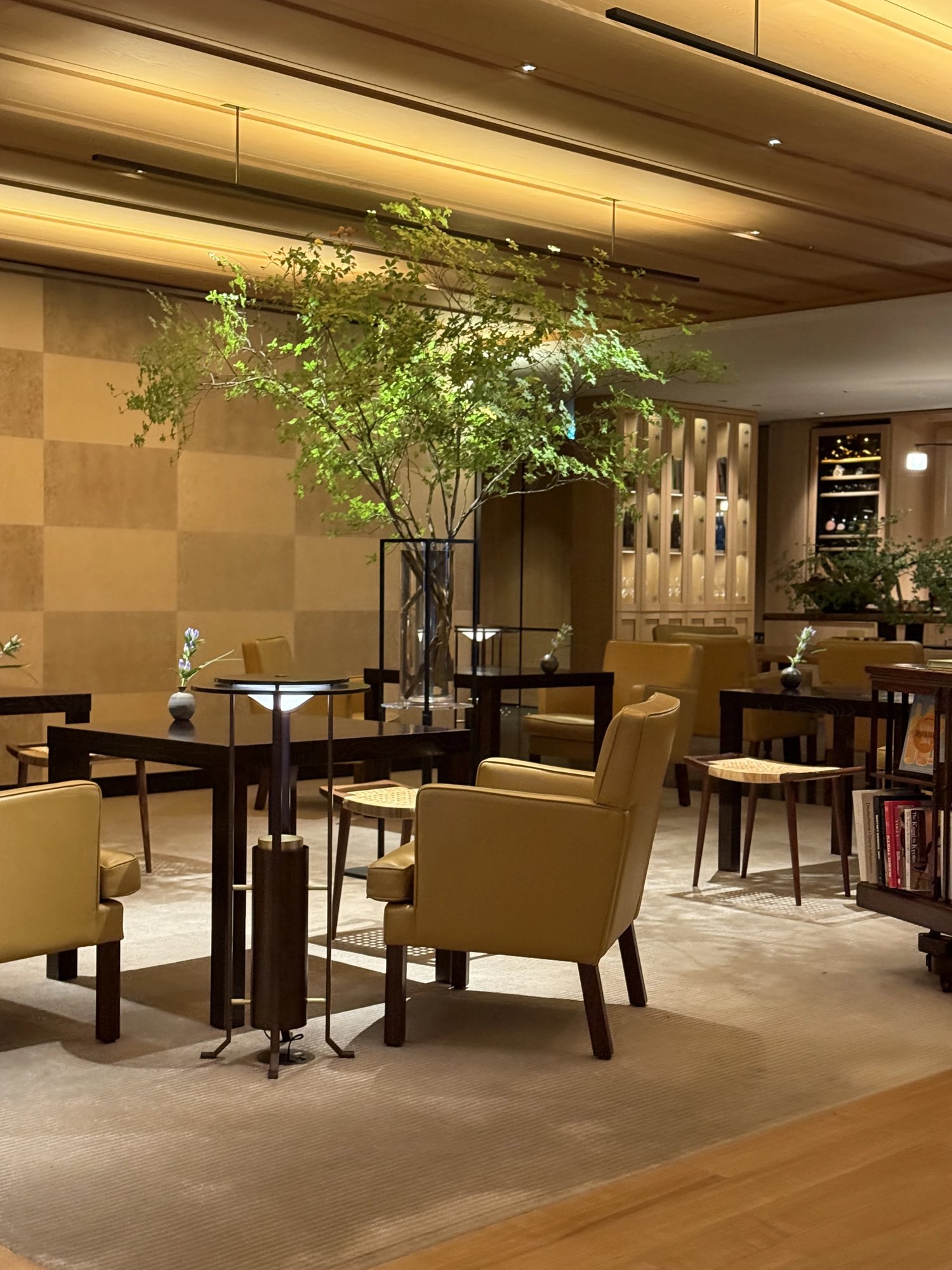
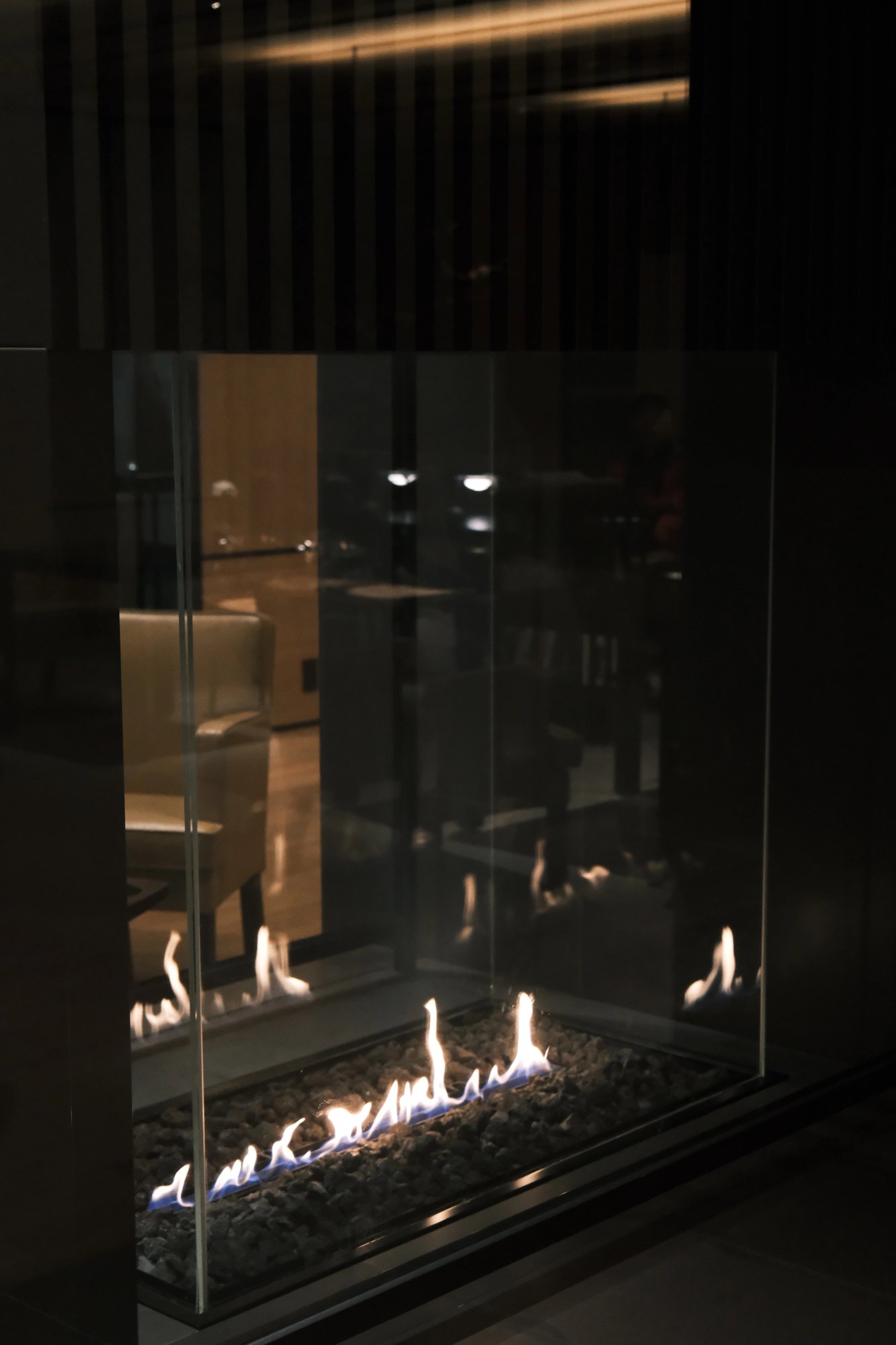
You come in off the street through a quiet garden of big old boulders and running water, and the city just disappears. There's no front desk. You're shown to a sofa in the Living Room, by the fireplace, handed a glass of Champagne, and someone sits down with you to talk through your plans while your bags go up. The whole place smells faintly of wood and the hallways are lit with lanterns. It's one of those arrivals where you can feel your shoulders drop.
The service.
With only 70 rooms, it feels personal from the first minute. By the second morning the staff knew our names and what we'd done the day before. Come back soaked from a rainy day of temples and a shoe dryer appears at your door. Mention an allergy and there's a menu written for you at breakfast. And there's a little list of things you can just ask for, from earplugs and eye masks to instant noodles and heat packs. It's the small, thoughtful stuff, and they get it right over and over.
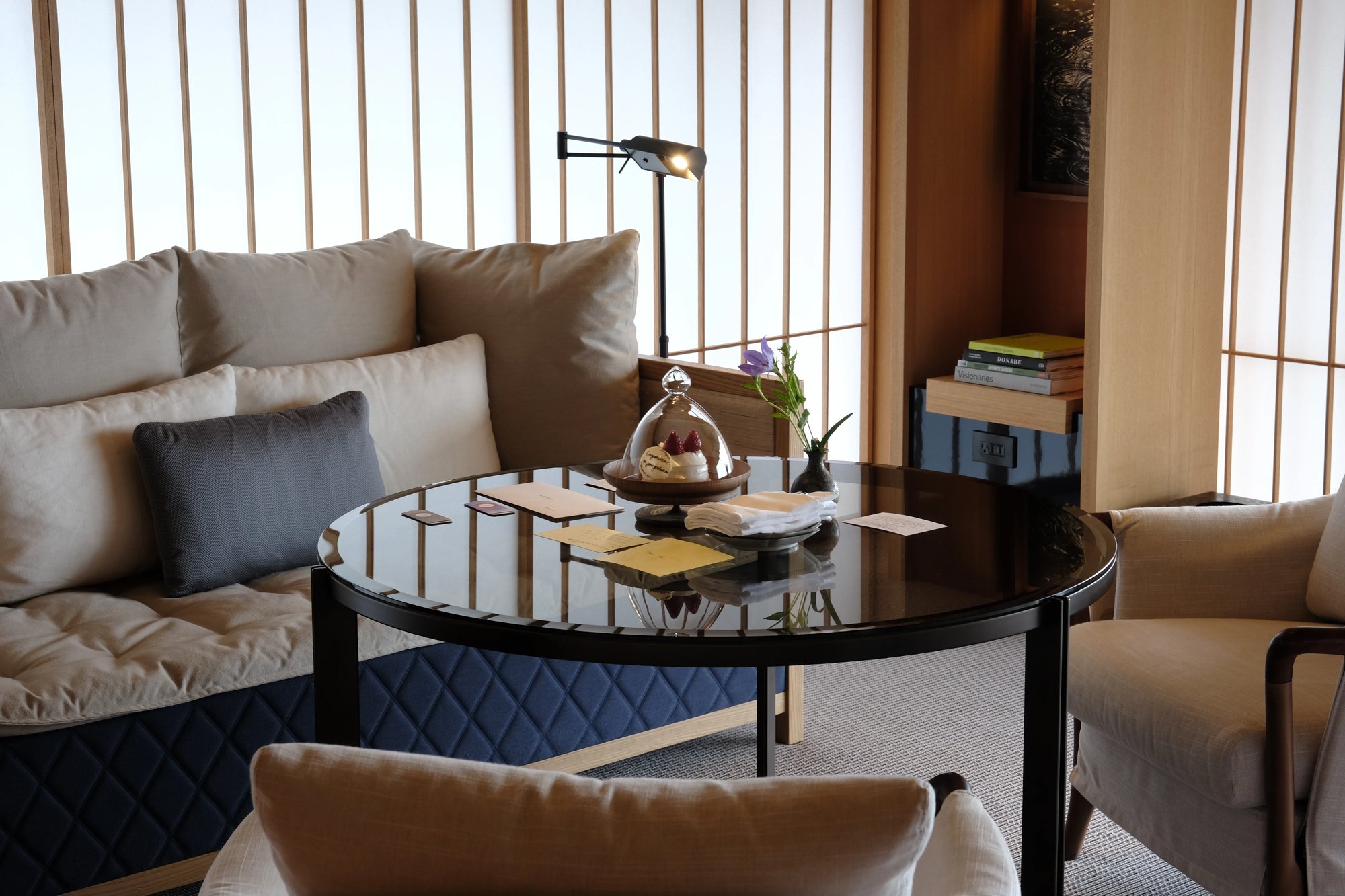
Turndown comes with chocolates and a little piece of origami, which children adore, plus a tiny Japanese gift on some nights. Our slippers were set out on a linen cloth by the bed, with a glass of water beside them. Housekeeping comes twice a day and somehow always while you're at breakfast. If you're celebrating something, tell them when you book…our anniversary came with a bottle of Ruinart and a little chocolate pagoda.
The rooms.
They're calm and REALLY well made. Everything is pale tamo wood and soft amber light, with sloped ceilings that lead your eye to the window and almost nothing on the walls. Even the entry rooms are about 45 square metres, which is generous for Japan. The bathroom is grey granite with two basins, a deep soaking tub that fills in about five minutes, a rain shower in a Japanese wet room, and Le Labo's Santal 33 in a carved wooden box (they made a scent just for the hotel, too).
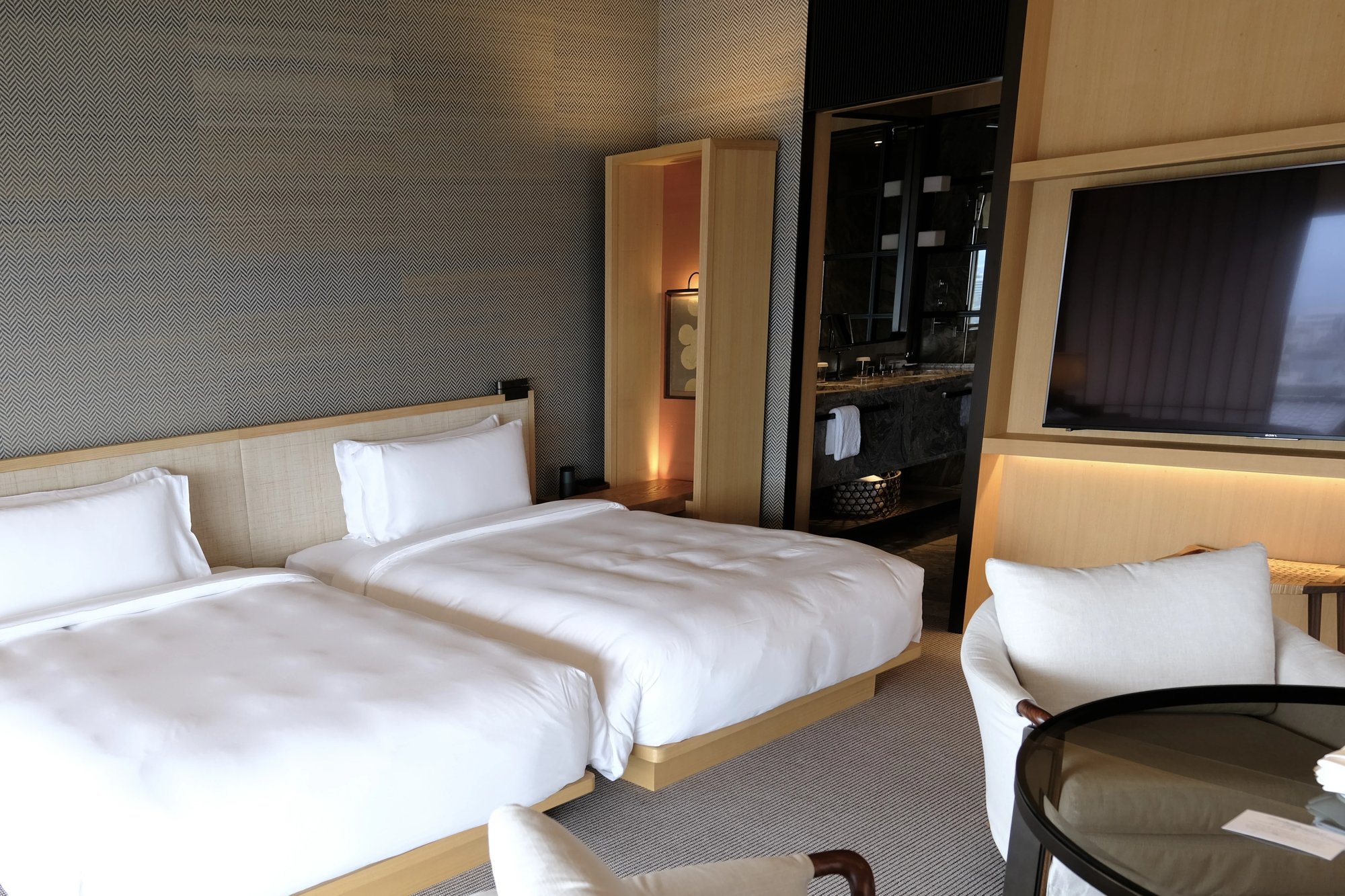
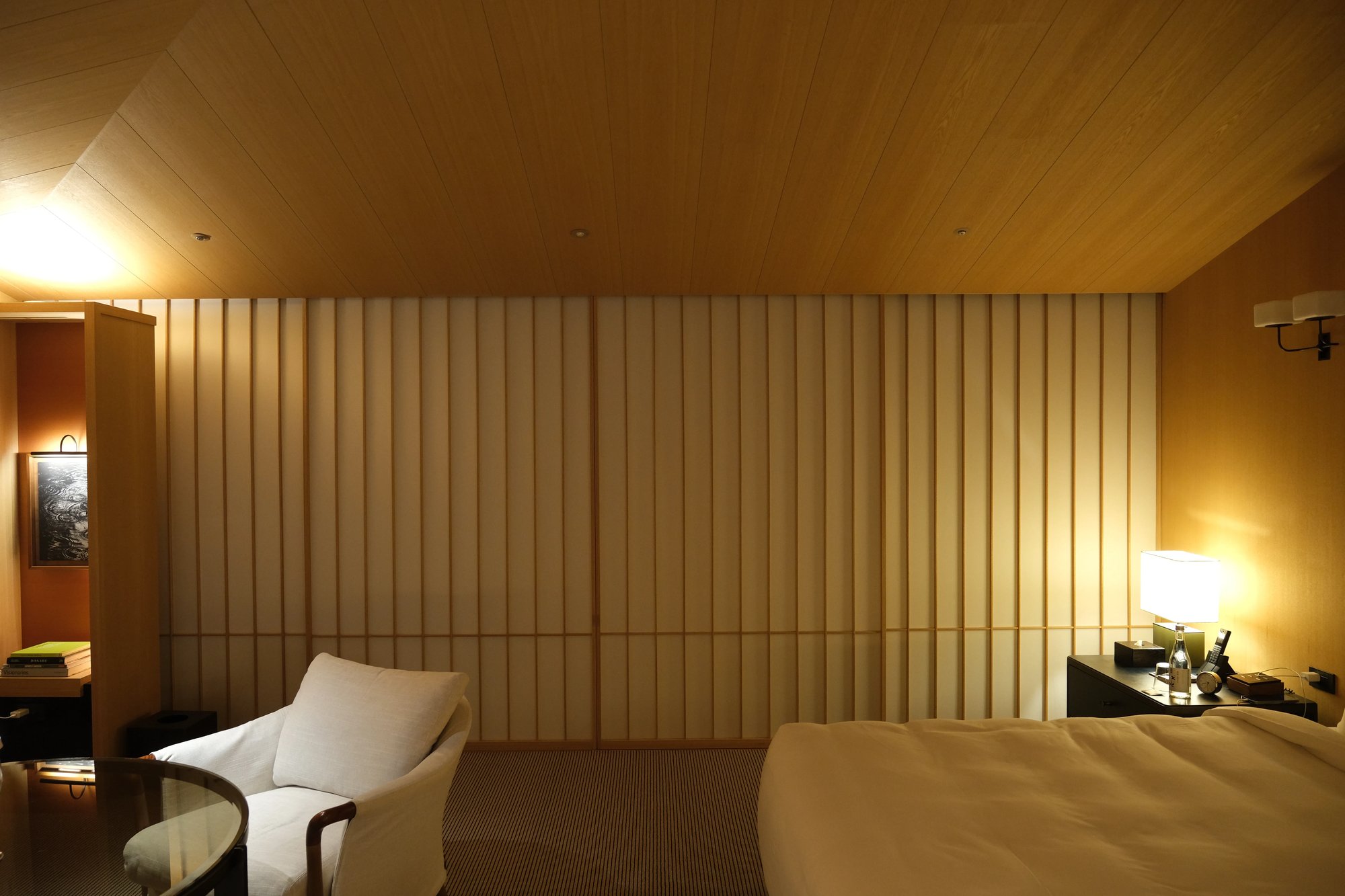
The rooms are so well soundproofed that I slept like a rock here every night. The bed is on the firm side, which I liked, and there's a Dyson hairdryer, which I always notice. Bring an adaptor, though, because the sockets are Japanese.
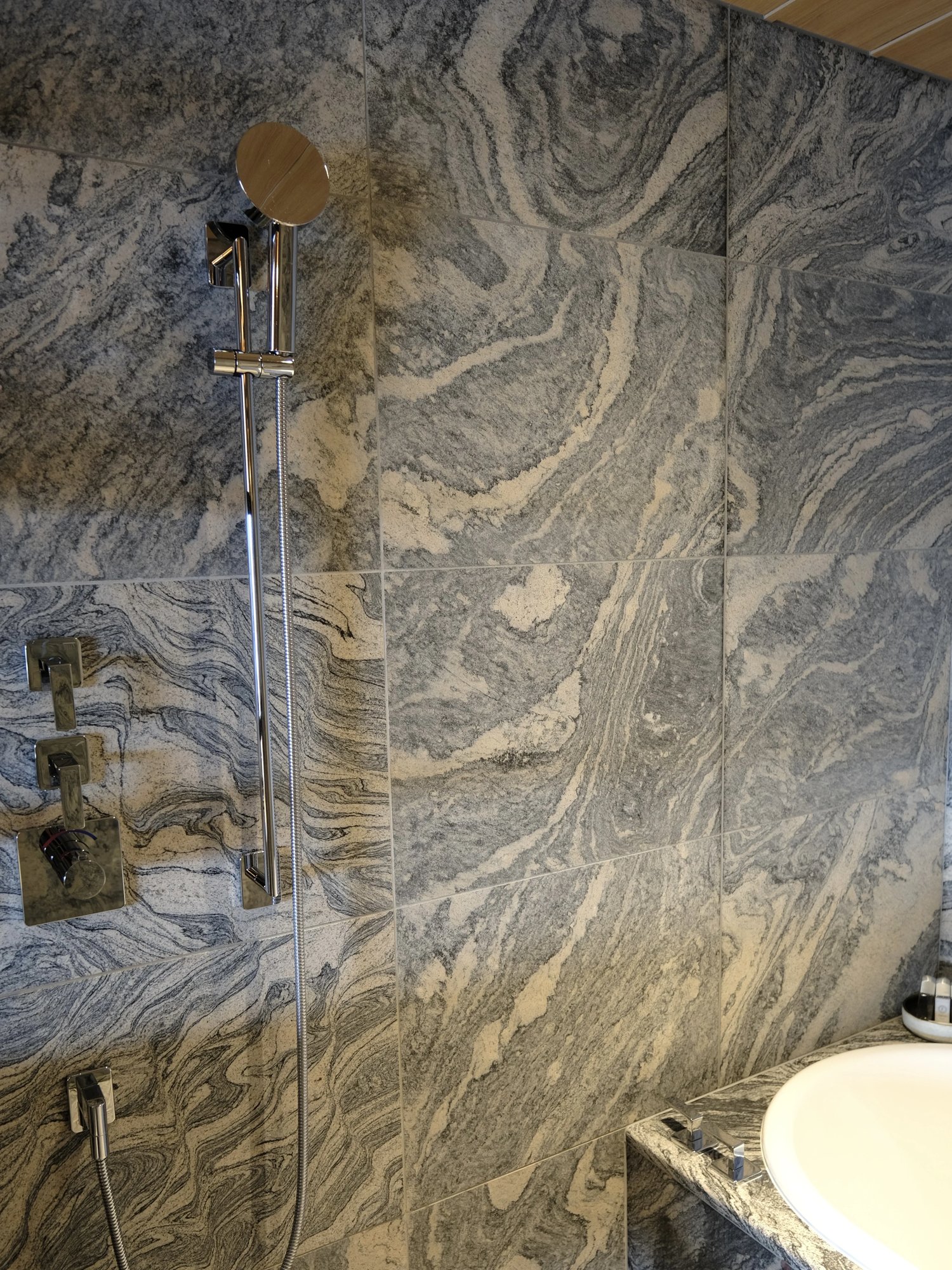
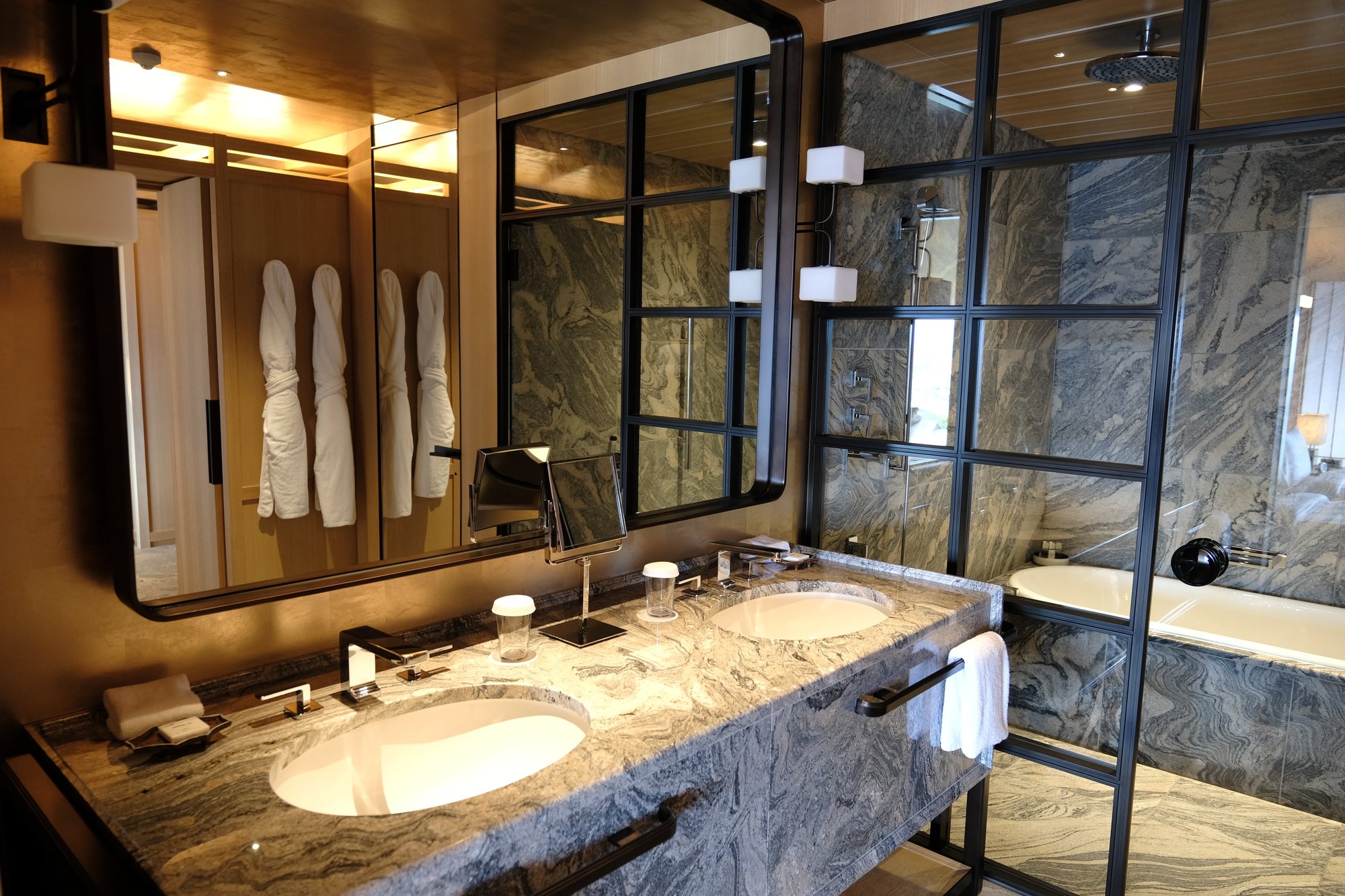
My one tip on rooms…book the view. This is a low building stepped up a hillside, so some of the standard and garden rooms look at a retaining wall or a roof. The Garden Terrace rooms have their own tiny Japanese garden, which is lovely and silent, but there's no long view. The room I'd book is a View room on a high floor, facing the pagoda, and not every view room faces it squarely, so ask for one that does.
The Japanese breakfast.
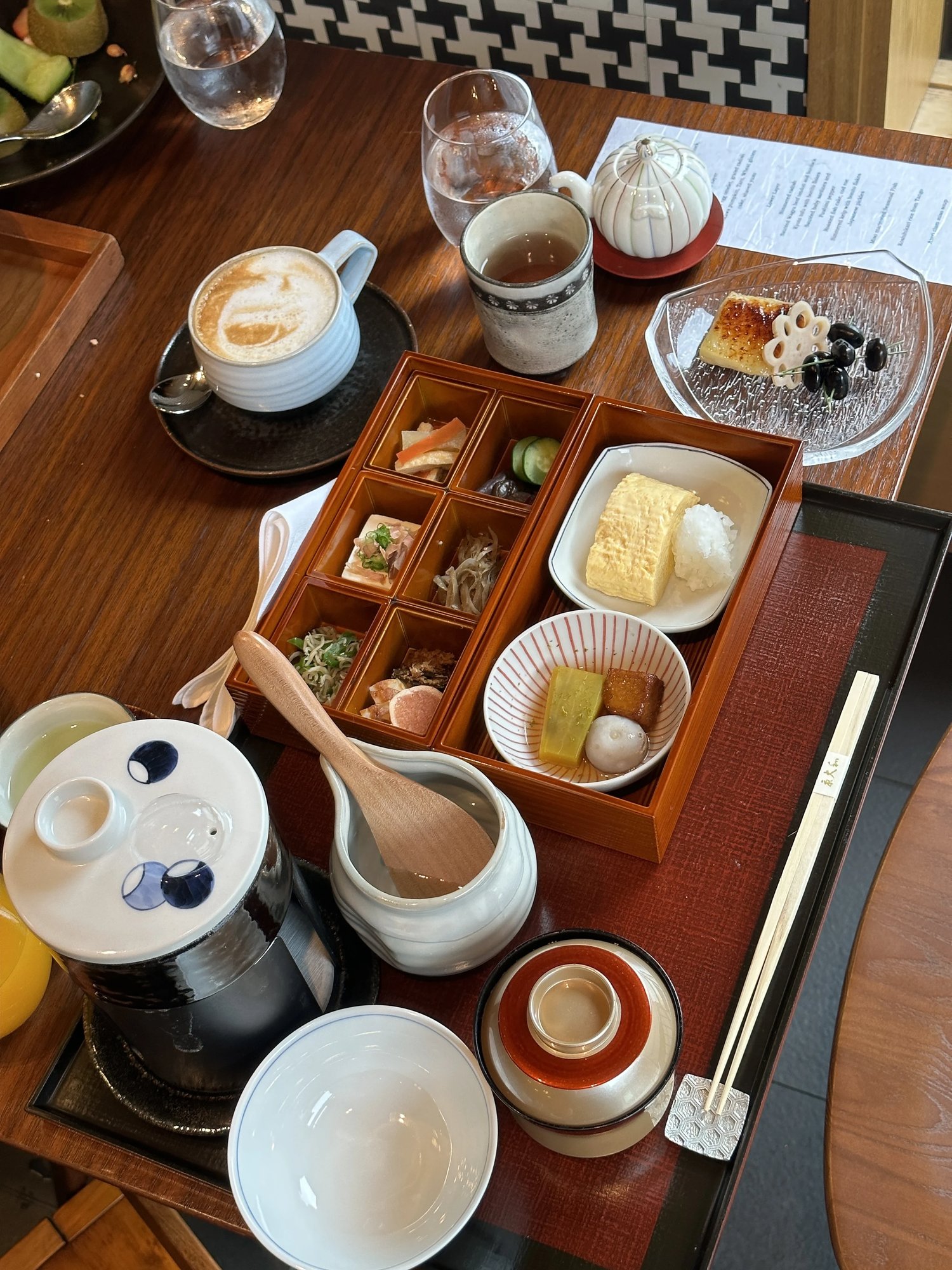
Plan your mornings around it. It's made by Kyoyamato, the old kaiseki restaurant that shares the grounds, and it arrives as a set of lacquer boxes with grilled miso-marinated fish, pickles, tofu, a dozen small perfect things, and a little pot of rice that's still cooking on a flame when they bring it (you wait for the flame to go out, then it's ready). It has to be reserved the day before and it does sell out, so book it as soon as you arrive. On the other mornings, the French toast is excellent.
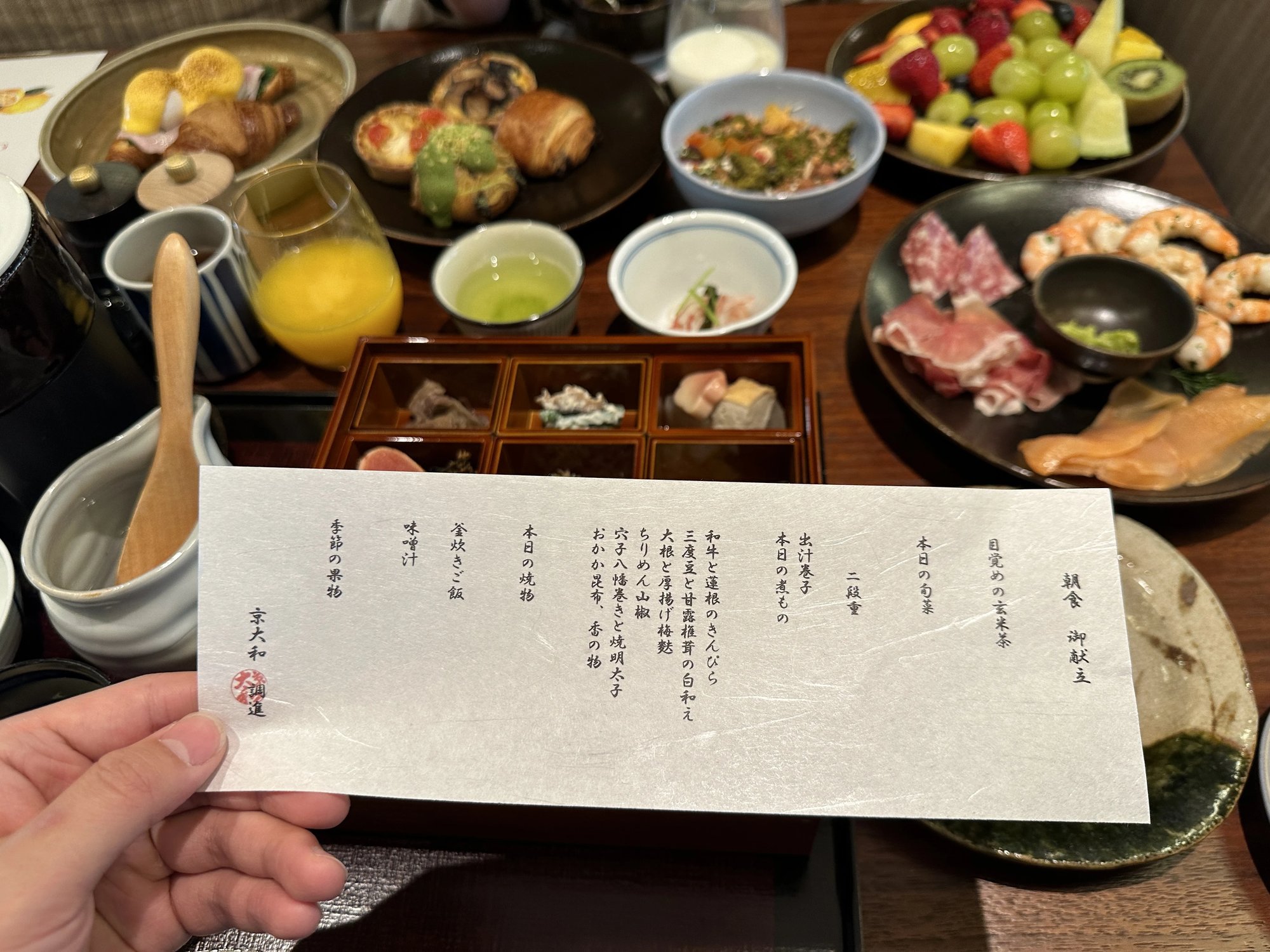
Dinner at Yasaka.
This is one of the best hotel dinners in Kyoto. It's a teppanyaki counter cooked with French technique, with the pagoda framed in the window right behind the chef. We had buckwheat crêpes with caviar, Kyoto rice with tiny sakura shrimp, and wagyu that I'm still thinking about. The seven-course dinner is about ¥33,000 a person (roughly $220), and they send you home with a little wooden box of canelés. Book the early seating so you catch the sunset.
A drink at Kohaku.
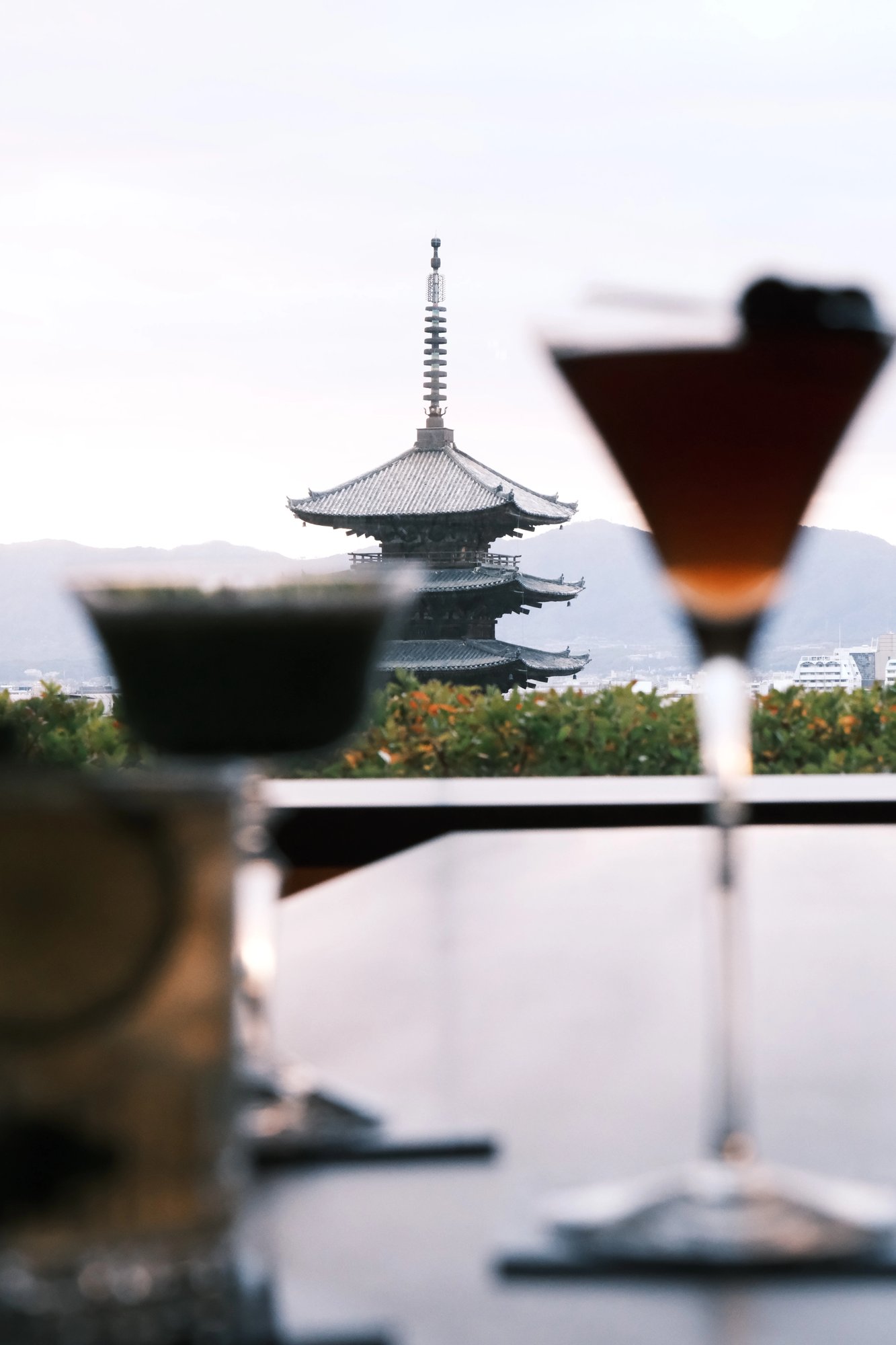
Kohaku is the bar next door to Yasaka, with the same view and only about ten seats. Go at sunset and order the Pagoda Martini, which comes with a little bowl of popcorn. It's very hard to get into, and staying at the hotel doesn't get you a seat, so reserve it when you book your room.
The bathhouse.
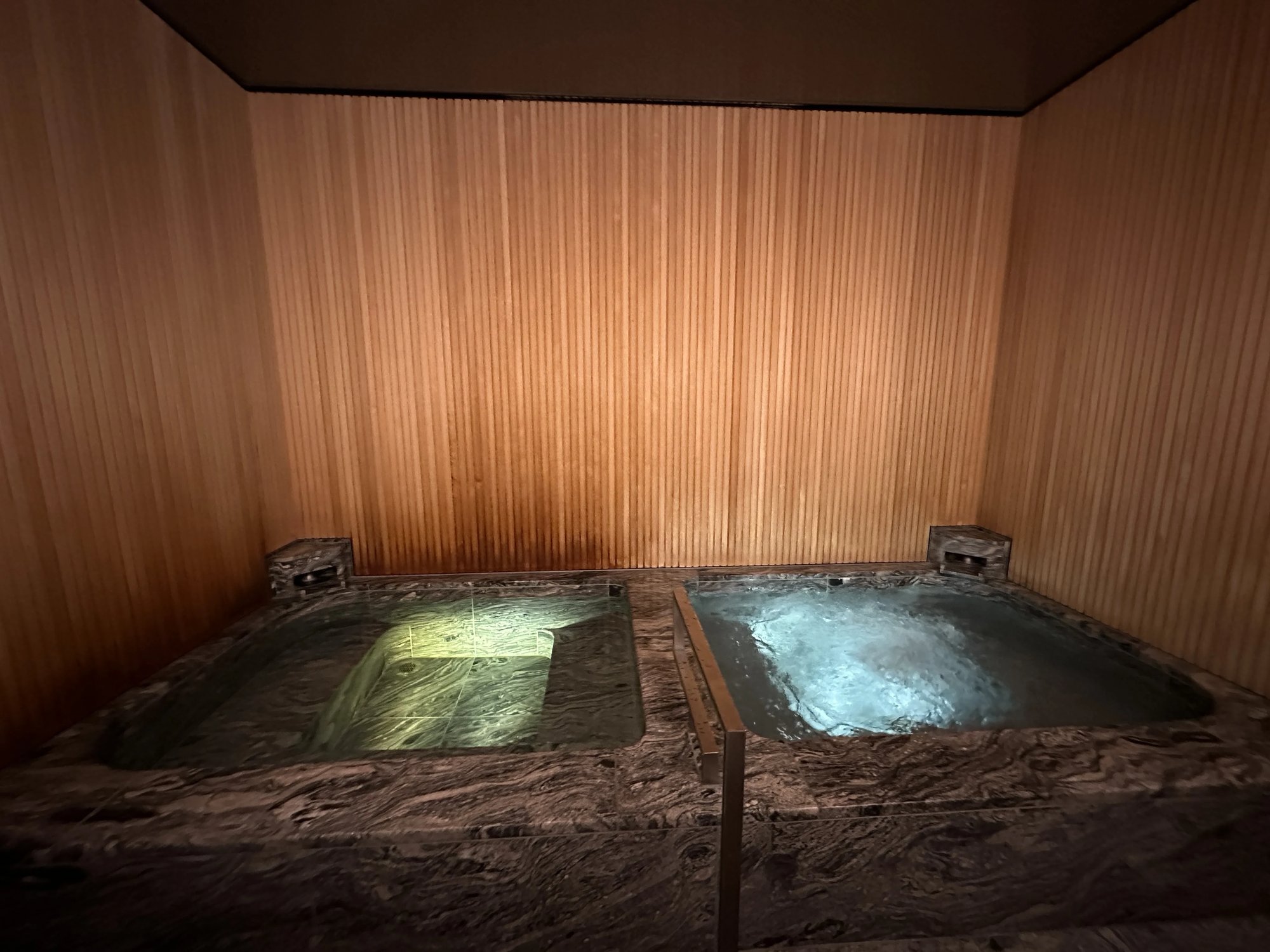
There's no pool (more on that below), but there's a little bathhouse with a hot bath, a cold plunge, a sauna and a steam room, and after a day of climbing up and down hills, it's exactly what you want. The Kotoshina products in there are even nicer than the ones in the room.
The quiet corners.
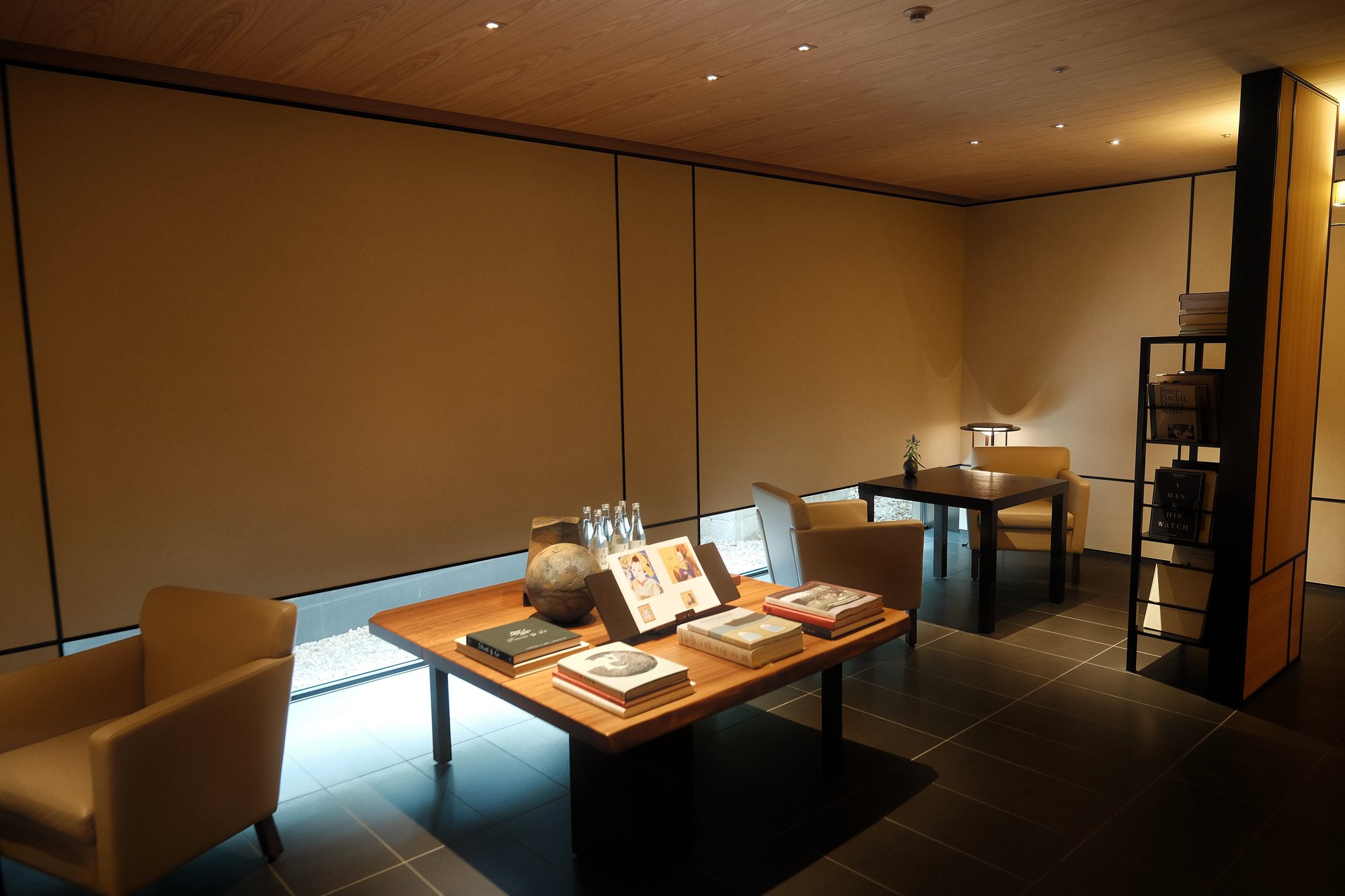
Up on the fifth floor there's a little library with books in English and Japanese where I hardly ever saw another person, and the corridors are full of tiny gardens and ikebana. Across the grounds, the old Soyotei teahouse dates back to the Edo period, and if you want a splurge, the hotel can arrange a private tea ceremony and kaiseki there.
Things That Could Be Better
The price.
This is one of the most expensive hotels in Japan, and you're paying for the address and the view far more than the facilities. A pagoda view adds a few hundred dollars on top. It isn't good value, and I won't pretend it is.
No pool, and not much space to spread out.
There's no pool, no real outdoor space to sit in, and the bathhouse and gym are small. With four or five people in the bathhouse at once, it feels crowded. If a pool matters to you, especially with kids, this isn't the place.
The hills.
The hotel climbs the hillside, so getting to some rooms means changing lifts and a fair walk along corridors, and it's a bit of a maze at first. Outside, everything is up or down a steep stone lane. If anyone in your group has trouble with stairs, or you've got a stroller, think hard about it.
The Western breakfast is just okay.
The bistro does a small buffet plus dishes cooked to order. The pastries are lovely, but the hot dishes can be slow on a busy morning, and the whole thing doesn't come close to the Japanese breakfast. When the hotel is full (which is most of the time), service at breakfast can drag.
The bistro and the getting around.
For everyday meals the Kyoto Bistro is fine and no more, so I'd eat out…Gion is a ten-minute walk down the hill. There's no subway nearby, and taxis can be slow to reach the door when the lanes are busy, so allow extra time on the day you leave.
Late checkout.
Don't count on one. The hotel is nearly always full, so if you need the room until the afternoon, arrange it before you arrive.
Park Hyatt or Four Seasons?
This is the one people ask me about most, so let me just answer it.
If it's your first trip to Kyoto, you're a couple, and you've got two or three nights, book the Park Hyatt. Walking out of the door onto Ninenzaka, with the pagoda in front of you and the lanes still empty, is the Kyoto most people picture, and you can't get it anywhere else.
If you're bringing kids, or staying four nights or more, book the Four Seasons. It's about $100 a night less, it has the best pool in Kyoto and an 800-year-old pond garden, and children stay free. You'll be in taxis more, but you'll have somewhere to come back to.
And if you'd rather have the river and restaurants on your doorstep, the Ritz-Carlton is about the same price as the Four Seasons and lovely in its own way.
For the full side-by-sides, see my comparisons: Four Seasons Kyoto vs Park Hyatt Kyoto, Park Hyatt Kyoto vs Hotel The Mitsui, Park Hyatt Kyoto vs Park Hyatt Tokyo and Ritz-Carlton Kyoto vs Park Hyatt Kyoto.
Overall
I'd send couples, honeymooners and first-time visitors here, anyone who wants old Kyoto on the doorstep and is happy to spend their days out walking. It's the wrong pick for families who need a pool, and for anyone who wants big spa facilities or a lot of space.
If you want a hot spring bath and a calmer part of town, I'd look at Hotel The Mitsui. For a pool and a garden, the Four Seasons Kyoto. And for a retreat in the forest away from the crowds, Aman Kyoto.
So here's my bottom line. I gave it 8.7 out of 10. The location and the service are the best things about it, the price and the lack of a pool are the worst, and it's my favourite hotel in Kyoto.
If you're booking it
Stay two or three nights, and book a View room on a high floor facing the pagoda. Don't book a room without the view and hope for an upgrade, because the hotel is too full for that. Reserve Kohaku and Yasaka (the early seating) when you book the room, and book the Japanese breakfast the day you arrive. In January, February and the heat of summer, rooms start at about $1,100 a night, and in cherry-blossom season and the November maple weeks they're $1,800 to $2,500. The concierge can book a rickshaw ride or an early guided walk up to Kiyomizu-dera, and both are worth it. Kyoto Station is about ten minutes by taxi, and set an alarm for six at least once…the empty lanes are why you're here.
More on the area: Japan guide.