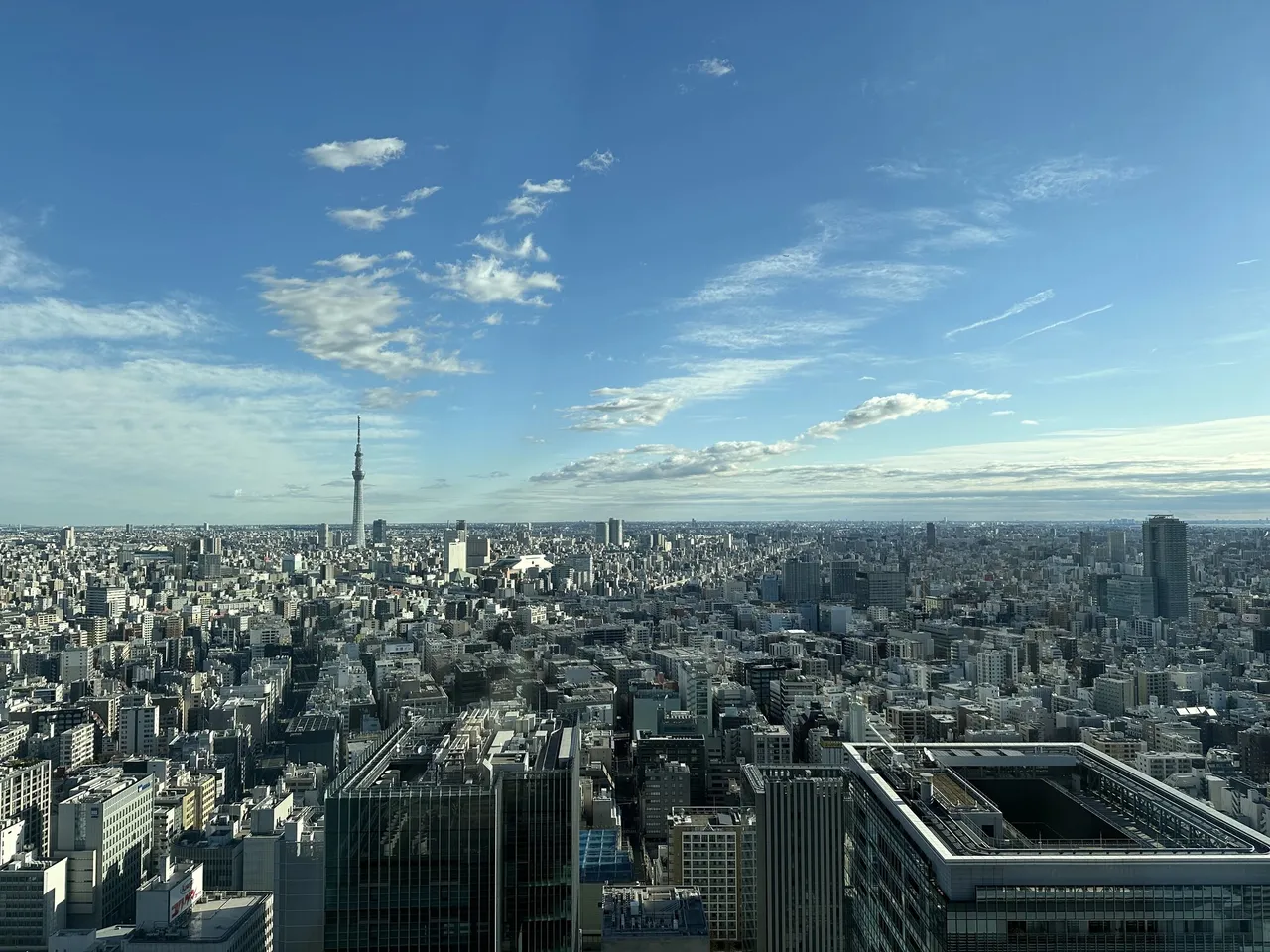
Mandarin Oriental Tokyo is the Tokyo hotel for views, food and lovely, personal service. You're on the 30th floor and up, with the Skytree outside your window and Fuji in silhouette from the lobby at sunset, and the eight-seat Pizza Bar upstairs is one of the best meals in the city. The rooms are well kept but a little plain now, there's no swimming pool, and Nihonbashi goes quiet at night. It isn't cheap, but it usually costs less than the Peninsula or the Four Seasons at Otemachi, and for the food and the night view it's the one I'd book. See pictures ↓
Mandarin Oriental Tokyo opened in 2005 at the top of the Nihonbashi Mitsui Tower, in the old merchant quarter on the far side of Tokyo Station. It was the group's first hotel in Japan. There are 179 rooms and suites on floors 30 to 36, and the lobby, restaurants and spa sit above them on 37 and 38. All the rooms were redone in 2019, with fabrics woven in Nihonbashi and a lot of wood and washi paper.
I booked it for a few reasons. Everyone who's stayed here talks about the view, and I'd wanted to eat at the Pizza Bar on 38th for years. I also wanted to know how it stacks up against The Peninsula and the Four Seasons at Otemachi, which are the two hotels I usually send people to in this part of Tokyo.
A typical night is about $770. That's usually a little less than the Peninsula and well under the Four Seasons at Otemachi, for a room that's about the same size. So I think it's fair value for Tokyo, as long as you don't need a pool.
Things I Loved about Mandarin Oriental Tokyo
The sky lobby.
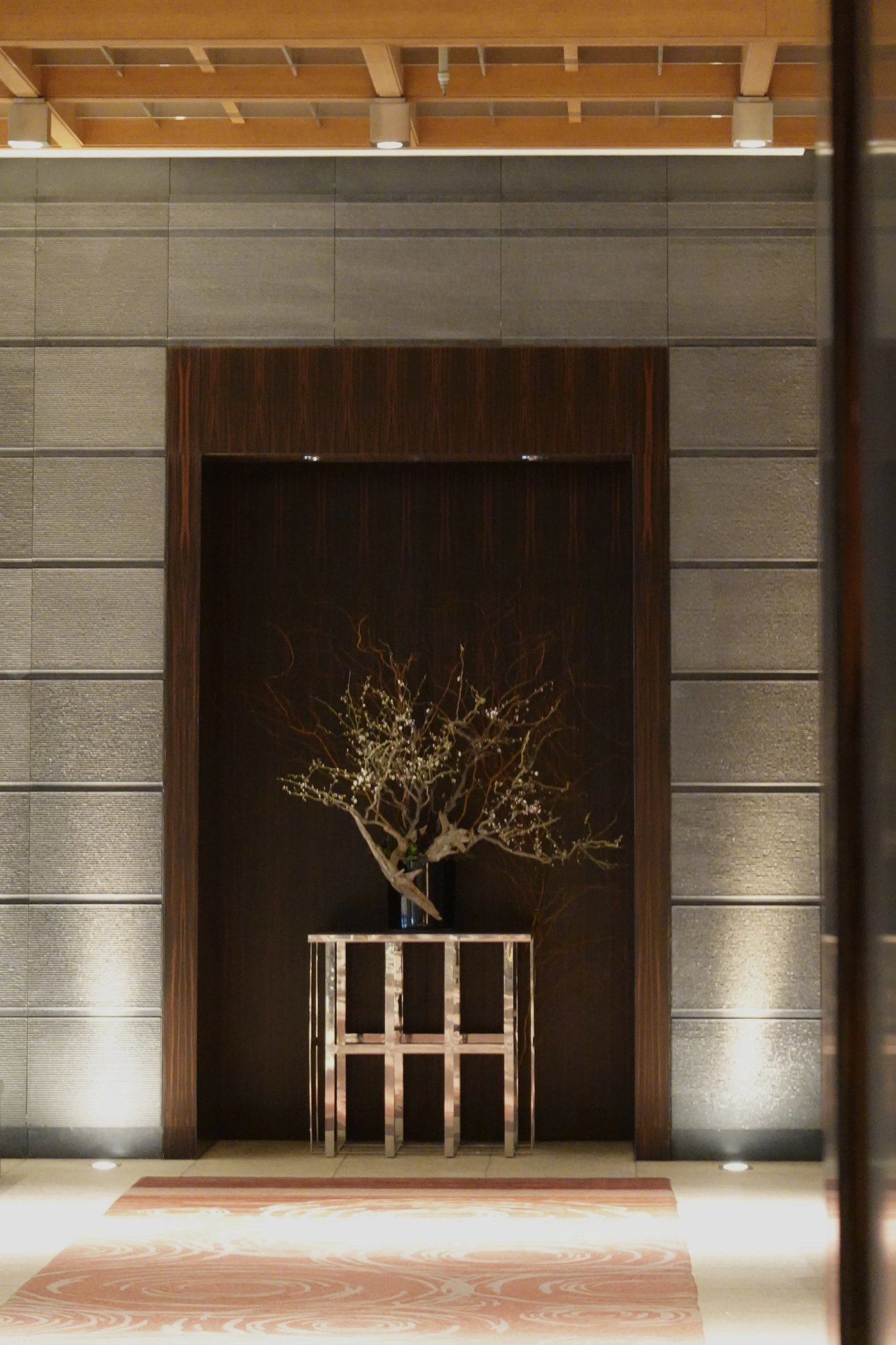
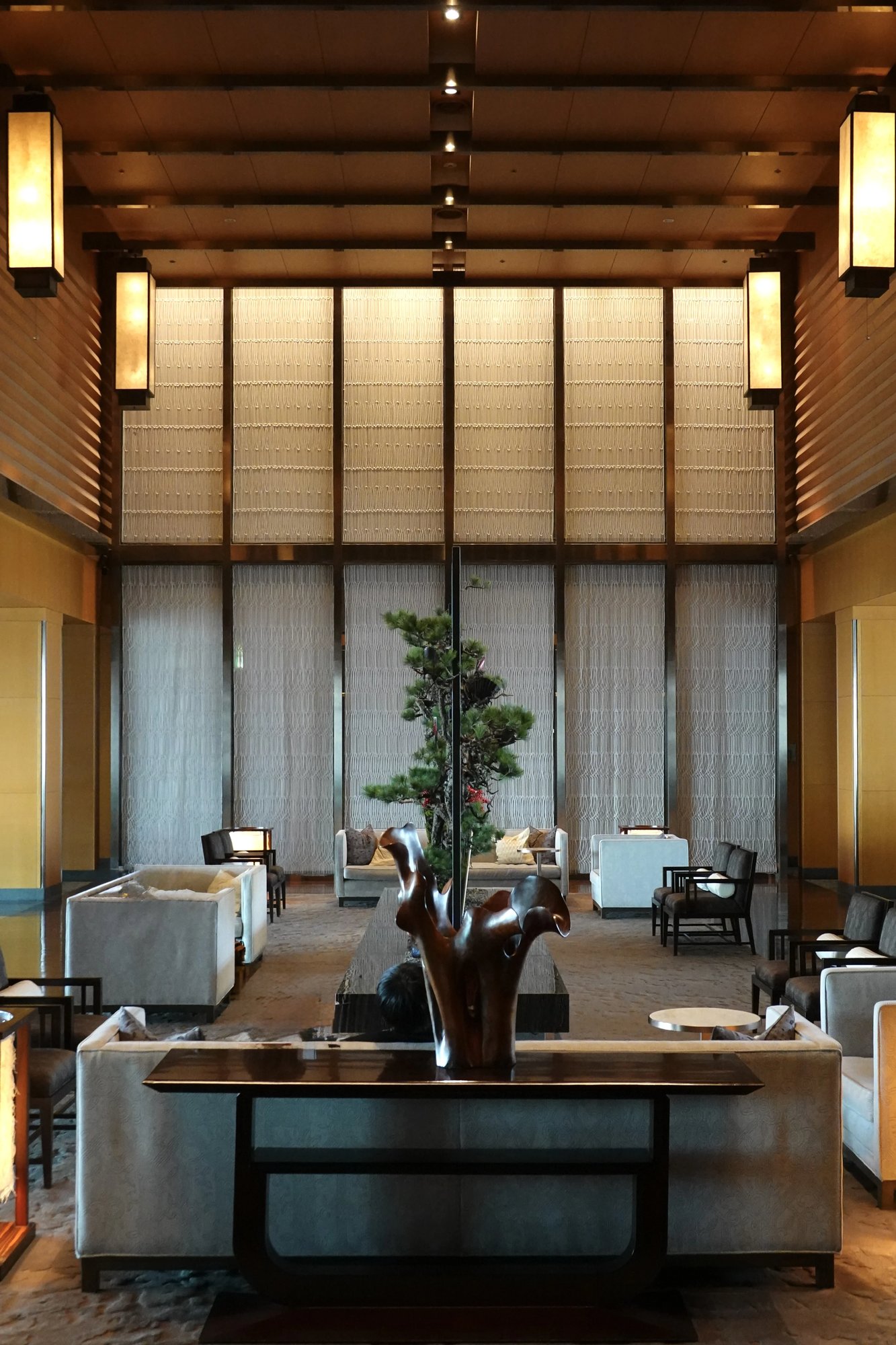
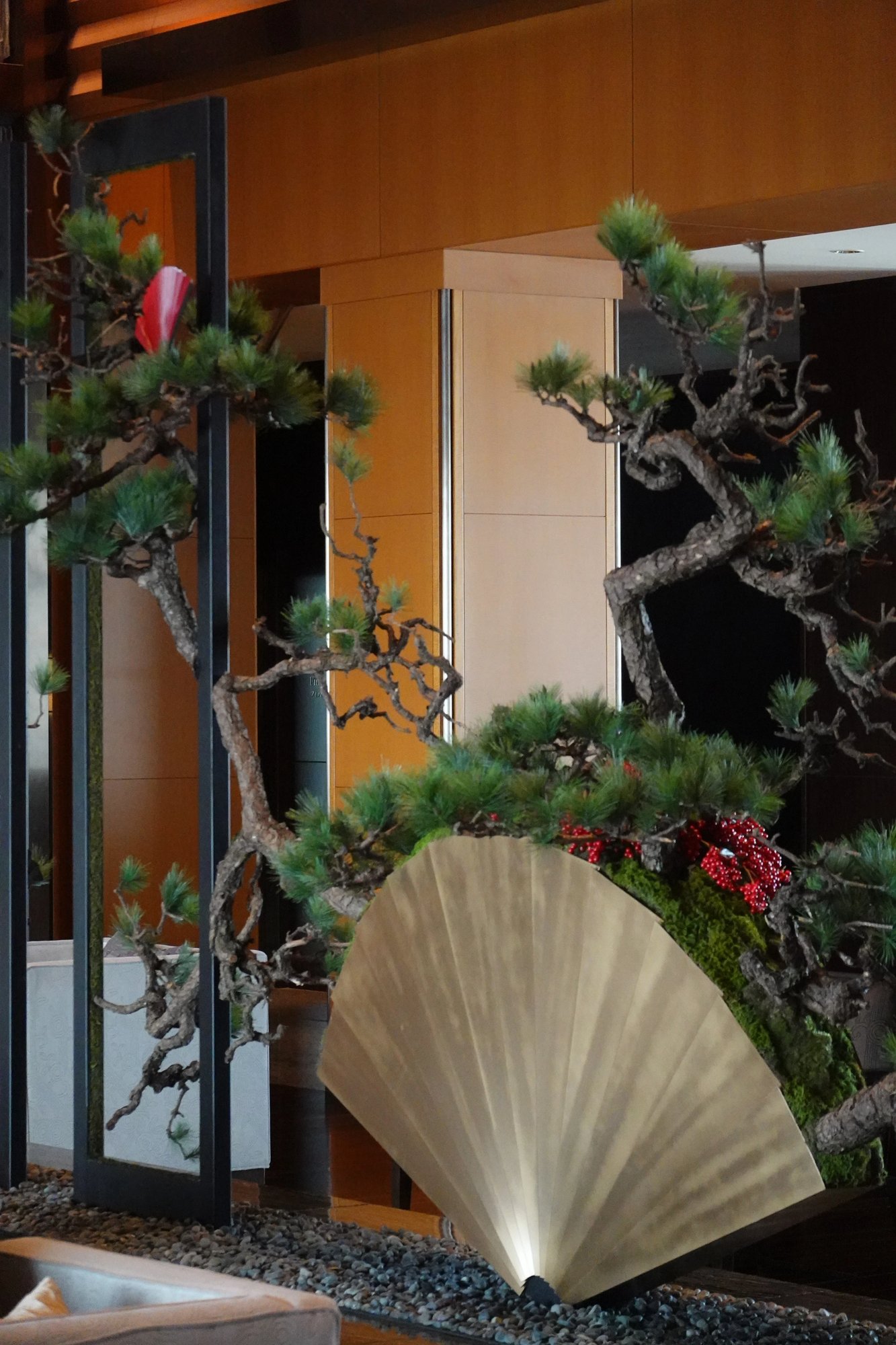
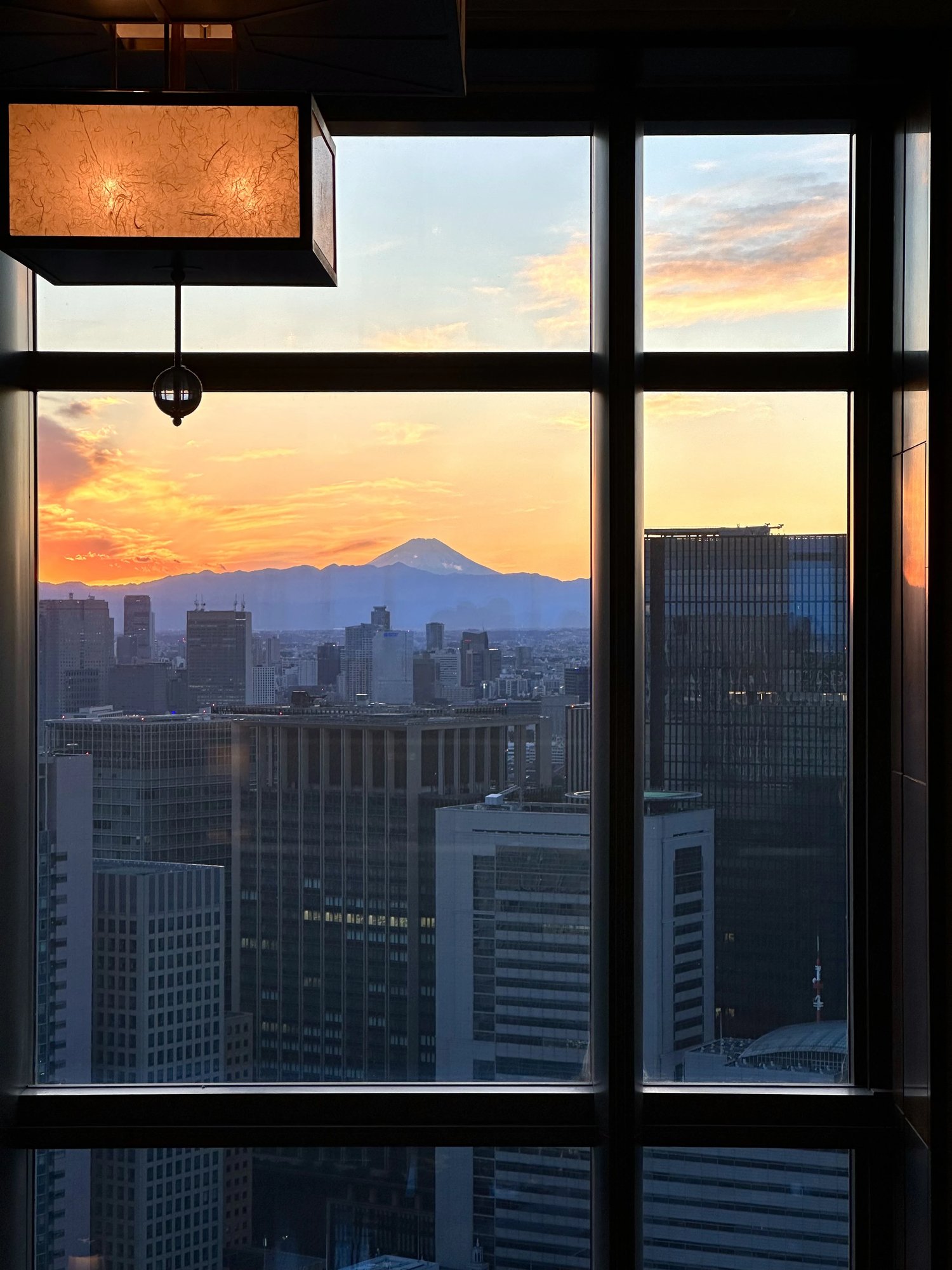
You step into a lift at street level, next to the hotel's gold fan logo, and when the doors open on the 38th floor you're in a double-height lobby lined with dark wood and washi screens, with a pine bonsai in the middle and the whole city falling away through the glass. They hand you an oshibori towel while you wait. The gold fan is the hotel's logo, and you'll spot it everywhere, even tucked into a bonsai. The original, from Ibaso, a Nihonbashi fan shop that goes back to the Edo era, hangs by the lifts. On a clear evening, go and stand at the west windows at sunset. We saw Mount Fuji turn black against an orange sky, and I didn't want to leave. Even the men's toilets have a view.
The view from the room.
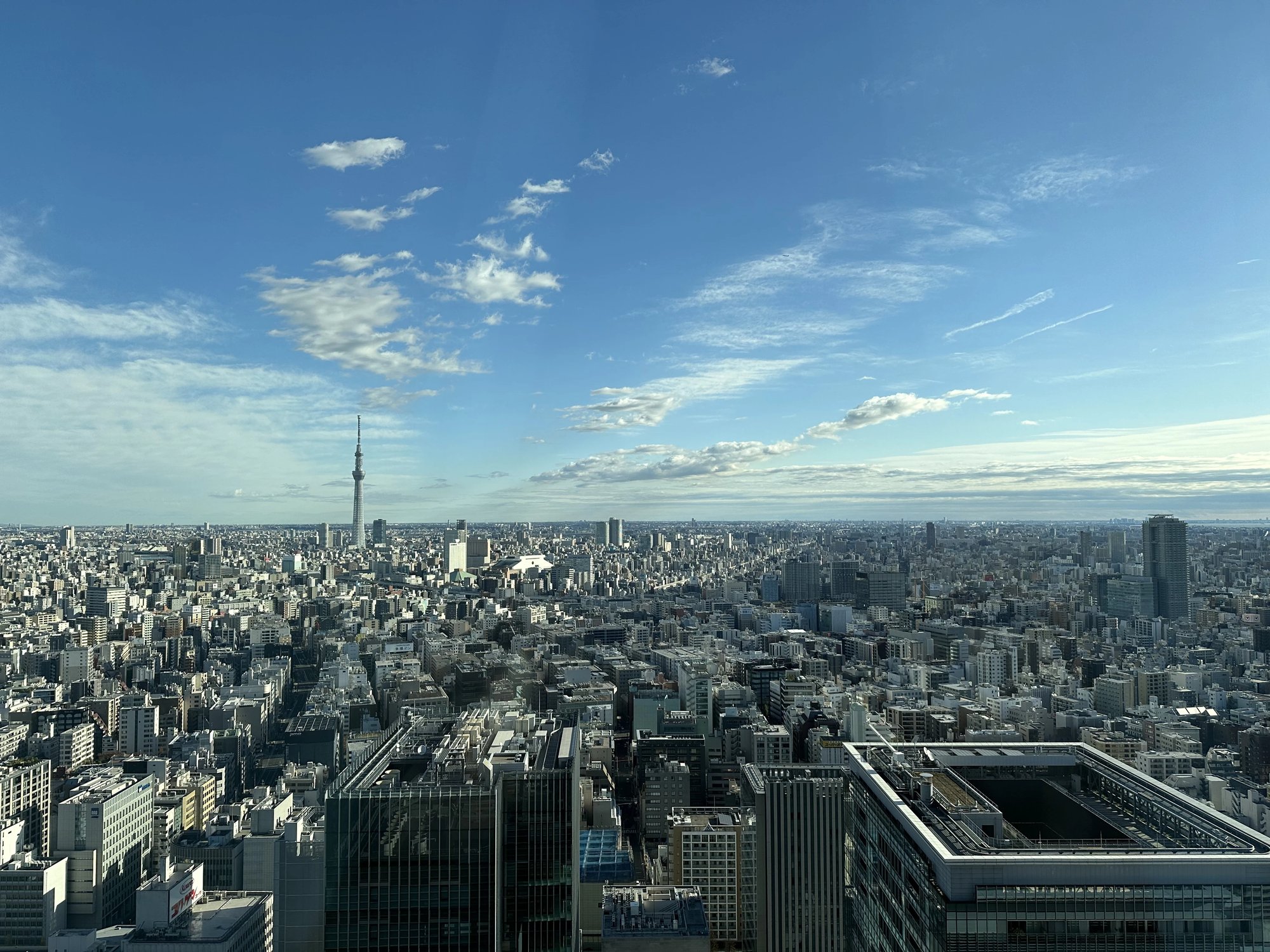
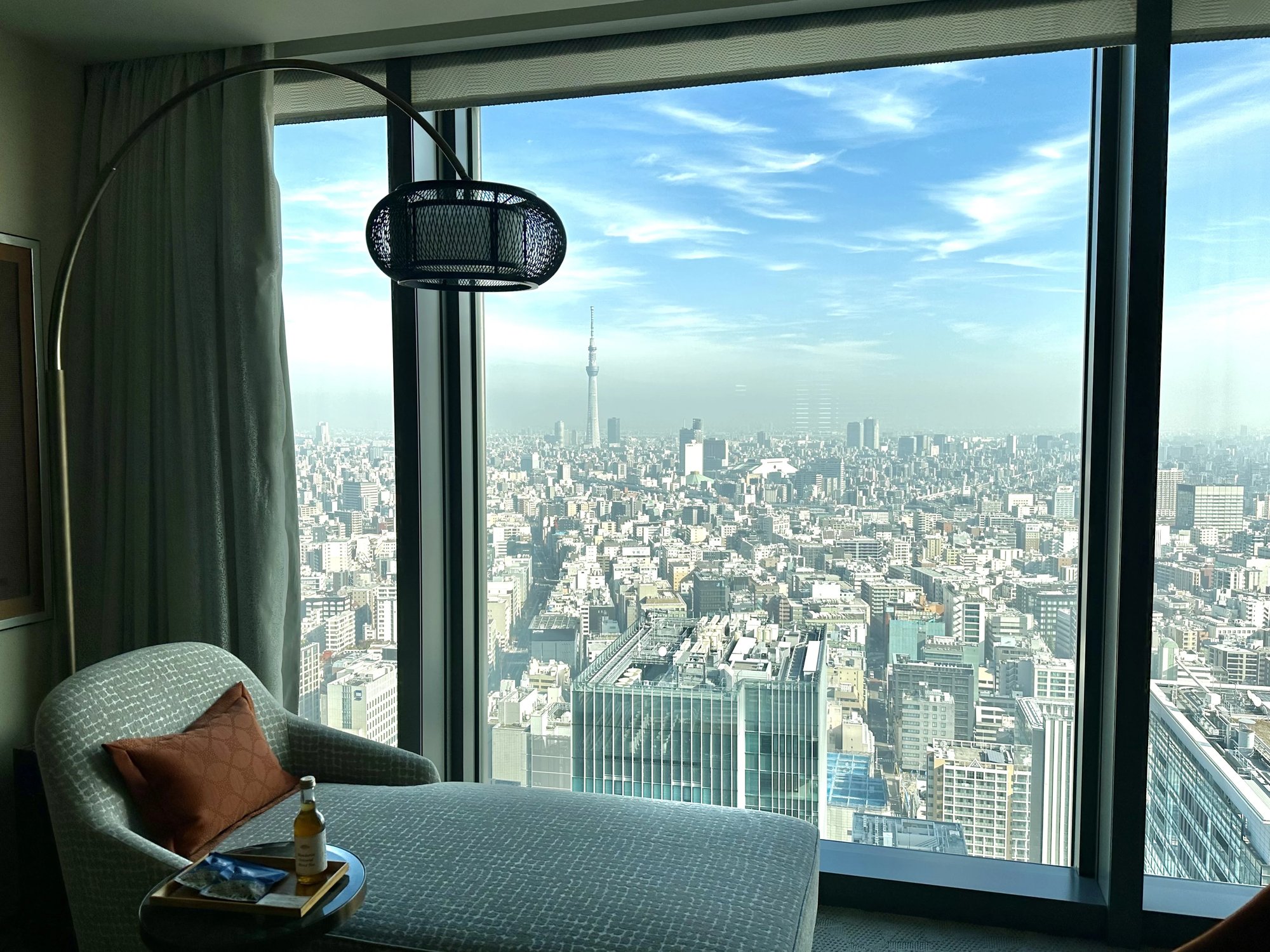
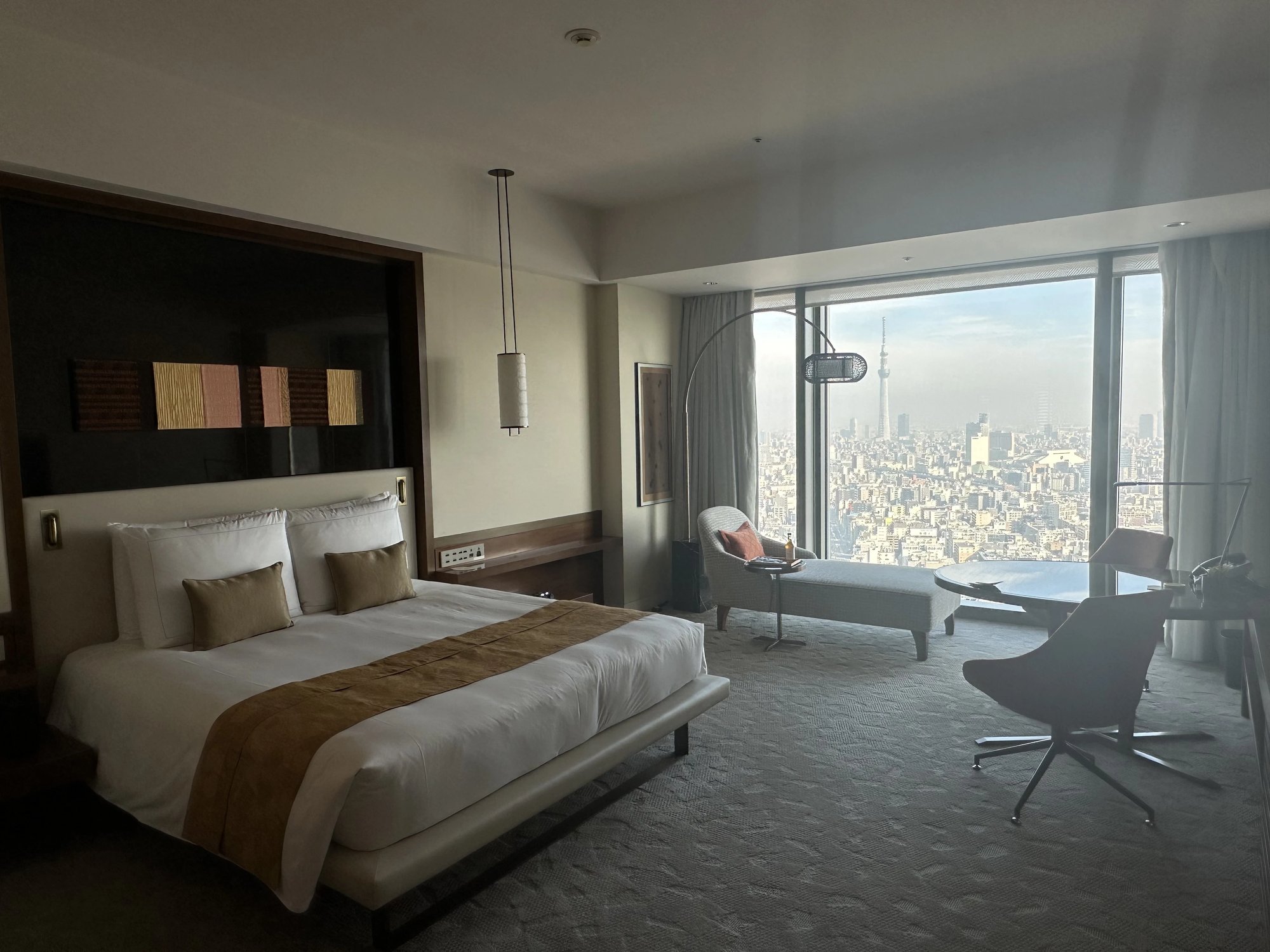
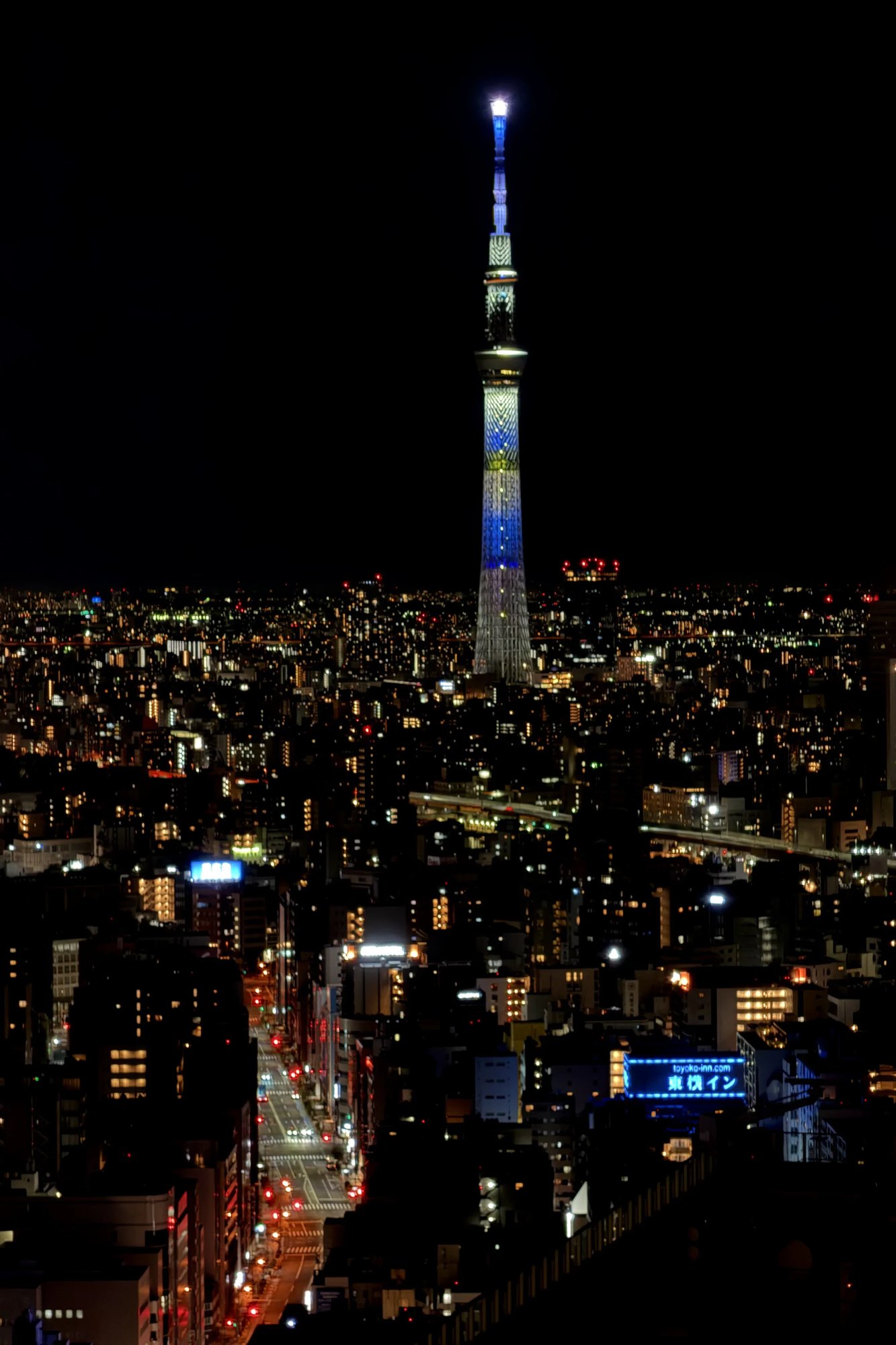
Our room faced the Skytree, and the view was the best thing about it. There was nothing tall between us and the tower, just low roofs running out towards Asakusa and a slice of Tokyo Bay off to one side. There's a long daybed under the window with an arc lamp curving over it, and that's where I spent every sunrise and every evening, with a cup of tea, watching the Skytree light up. The room itself has its issues (more on that below), but I'd book it again for that window.
The service.
The staff here are lovely in a very human way. Every time we came back the room had been tidied. Turndown came with a drop of aroma oil, a little gift and a cloth for my glasses, and the welcome was a bottle of house tea from the pastry kitchen, a couple of cookies and a box of sweets from Eitaro, the old Nihonbashi sweet shop. They're attentive without fuss, and they let us keep the room until 2pm on the last day.
The Pizza Bar on 38th.
This is the meal I'll remember. It's eight seats at a marble counter tucked into a corner of K'shiki, with the pizzaiolo working the oven right in front of you, and dinner is a run of eight different pizzas with a starter and dessert. The dough is fermented for 48 hours, so the crust is light and airy, and the toppings follow the seasons in Japan. The Cinque Formaggi with truffle honey was the best pizza I've had in my life (and I've eaten a LOT of pizza). It came second in the world on the 50 Top Pizza list in 2025, and the waiting list is enormous. Hotel guests get a few seats held back for each dinner sitting, so ask for them when you book the room.
Dinner at K'shiki.
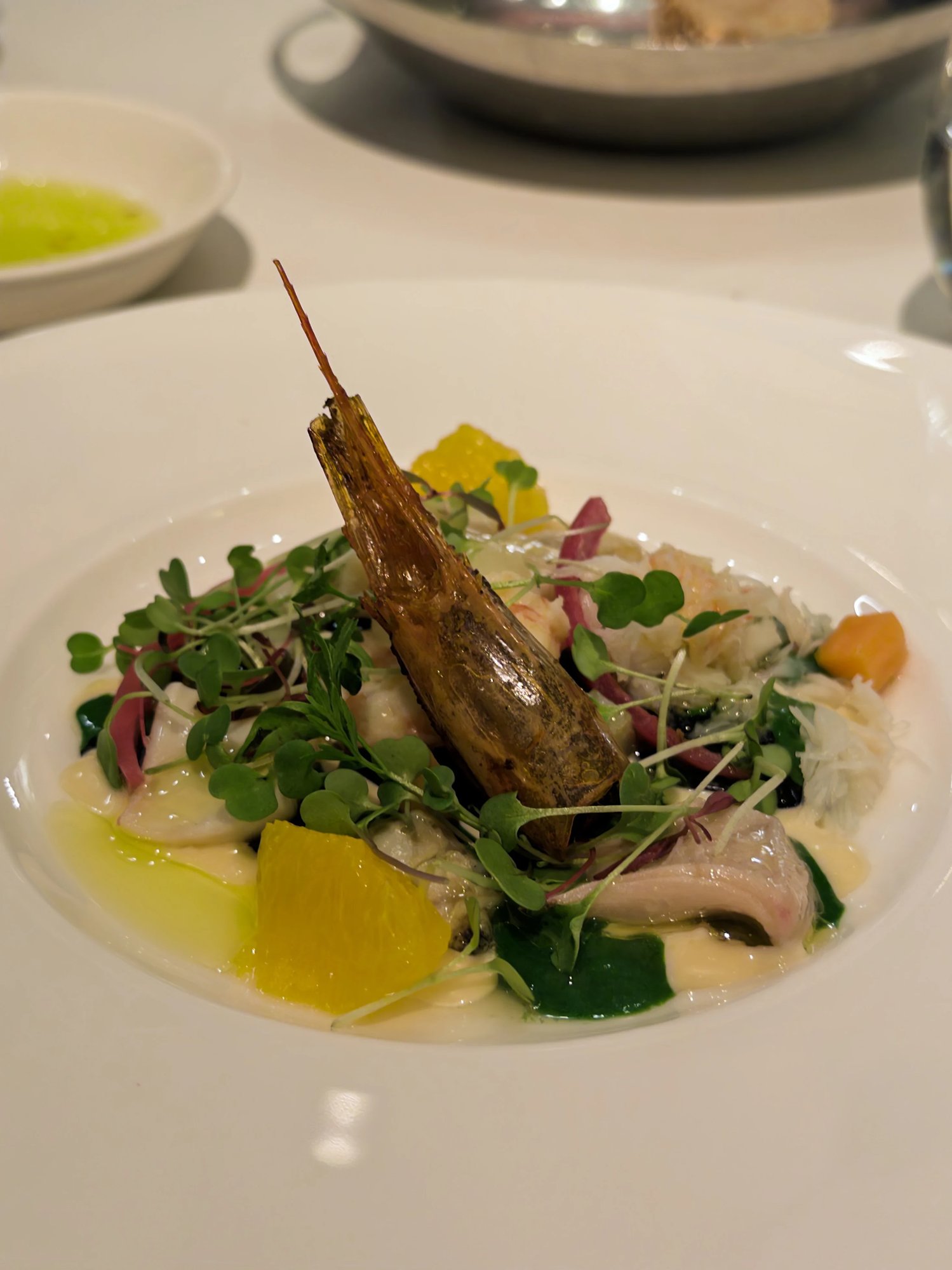
K'shiki is the all-day Italian restaurant on 38, under a soaring ceiling with the city all around, and the dinner set menu is very good value, far better than you'd expect from a hotel's all-day restaurant. We had a prawn crudo with citrus that was one of the best plates of the trip. The pastries in the morning are lovely too, and downstairs the Gourmet Shop does a "cloud cake", a white-chocolate shell with seasonal fruit mousse inside (yuzu when we were there), that's worth a stop on your way out.
The other restaurants.
There's a lot here…the hotel counts twelve restaurants and bars. Sushi Shin by Miyakawa is the Tokyo branch of a famous Sapporo sushi house. Tapas Molecular Bar is a long tasting menu at a tiny counter. Sense does Cantonese, with dim sum at lunch. Book the counters before you fly. You could eat in the building for a week and not get bored.
Getting around.
The building sits right on top of Mitsukoshimae station, so on a rainy day you can go from the lift to the Ginza line without an umbrella, and four subway lines meet underneath. Tokyo Station is about ten minutes' walk, which makes bullet-train day trips easy. Mitsukoshi, the grand old department store next door, has a little opening ceremony every morning, and it's worth going down to watch.
The spa, early in the morning.
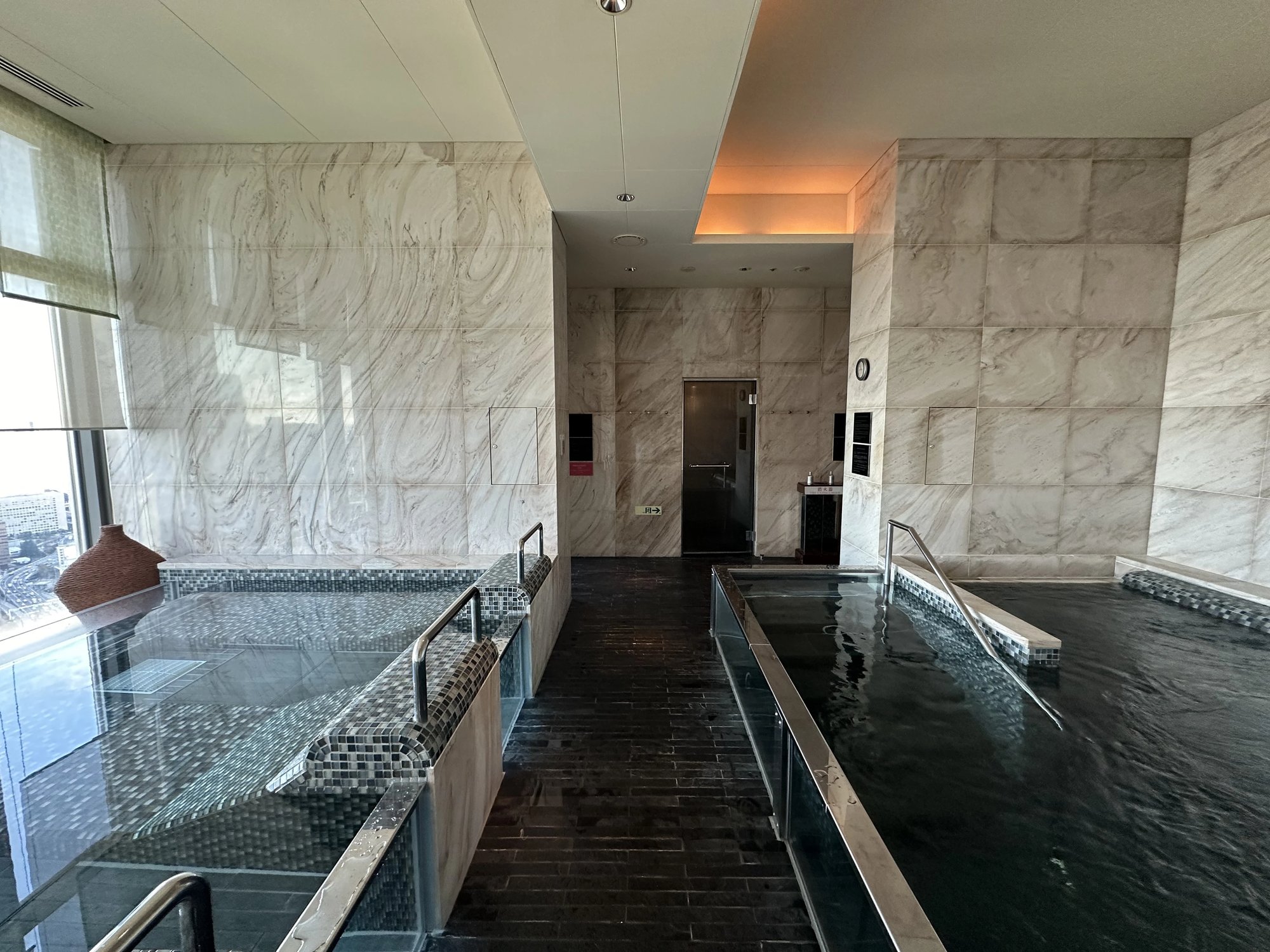
The spa is on the 37th floor, and it's beautiful. There's a marble hall with two soaking pools facing the city, an amethyst steam room and a sauna with a view. Hotel guests can use the pools and sauna free from about 6:30 to 9am, and at seven in the morning it was nearly empty, with Fuji on the horizon. It felt like a hot-spring hotel in the sky. I went every morning after that.
Evenings up top.
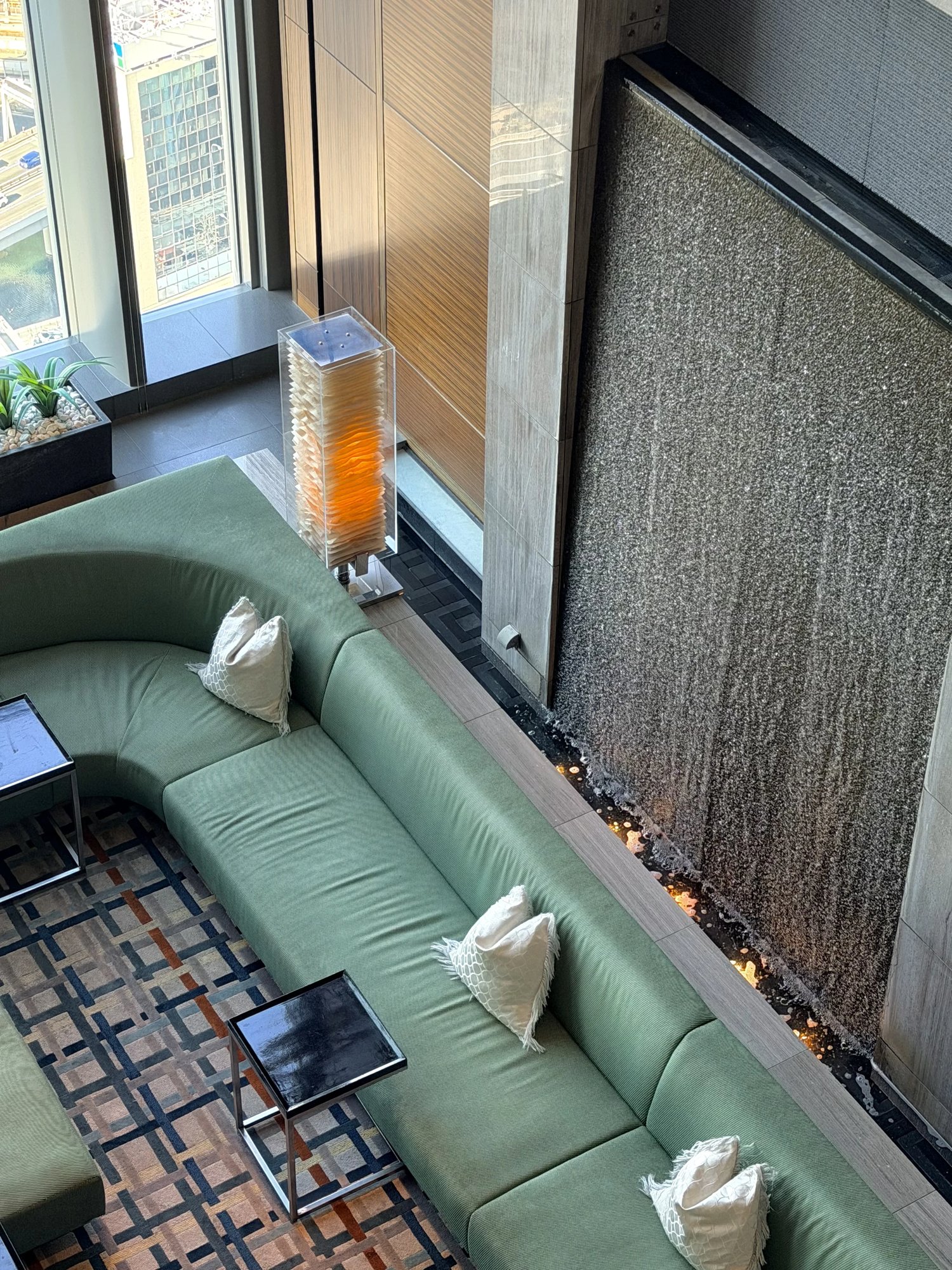
The Mandarin Bar sits under the lobby, beside a waterfall that runs down the stairwell, and it's buzzing by 10pm with jazz and good Japanese whisky. Have one nightcap there, then go back to your window and watch the Skytree change colour. The night view from up here is the best of any hotel I've stayed at in Tokyo.
Things That Could Be Better
The room is a little plain now.
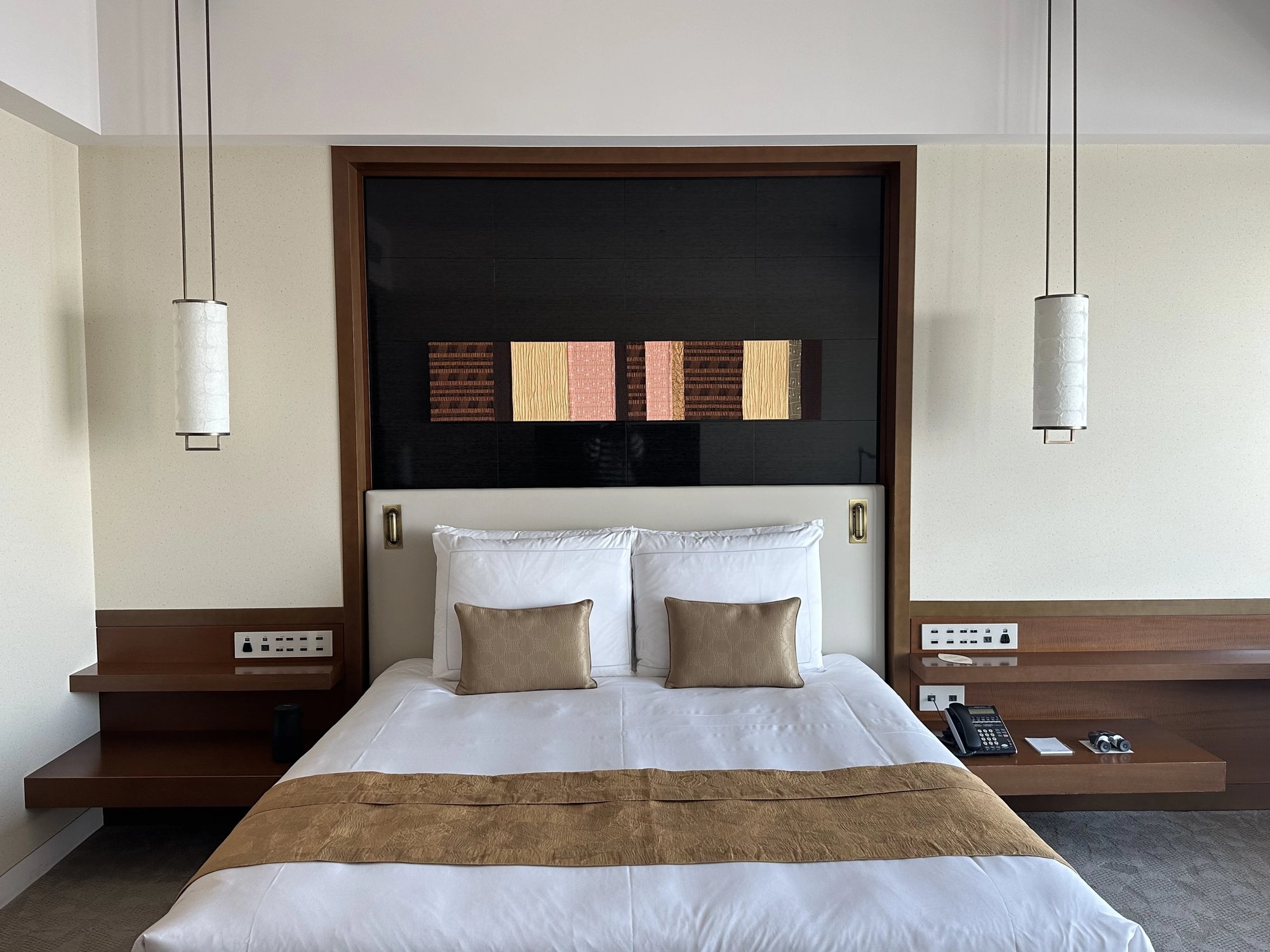
Our room was 50 square metres, which is big for Tokyo, and it was spotless and very well kept. But the 2019 refresh already looks a bit dated. The wood and washi are nice, the bed is very comfortable and it's quiet, but there isn't much character, and the hallways and doors are starting to show their age. If you're coming from the Four Seasons or the Bulgari, it feels a step behind. A refresh is coming, space by space, but there are no dates yet.
To be fair, the room is easy to live in. There's a big walk-in closet with a valet cupboard you can fill from inside and staff empty from the corridor, so your laundry and shoes come and go without anyone knocking, and the yukata were lovely. It just doesn't feel special the way the view does.
One basin.
The bathroom is all grey marble, with a deep oval tub, a walk-in rain shower and Natura Bissé products (the conditioner is excellent). But there's only one basin, which gets old fast when two of you are getting ready. The Mandarin Grand (60 square metres) gives you more room, but it still has one basin.
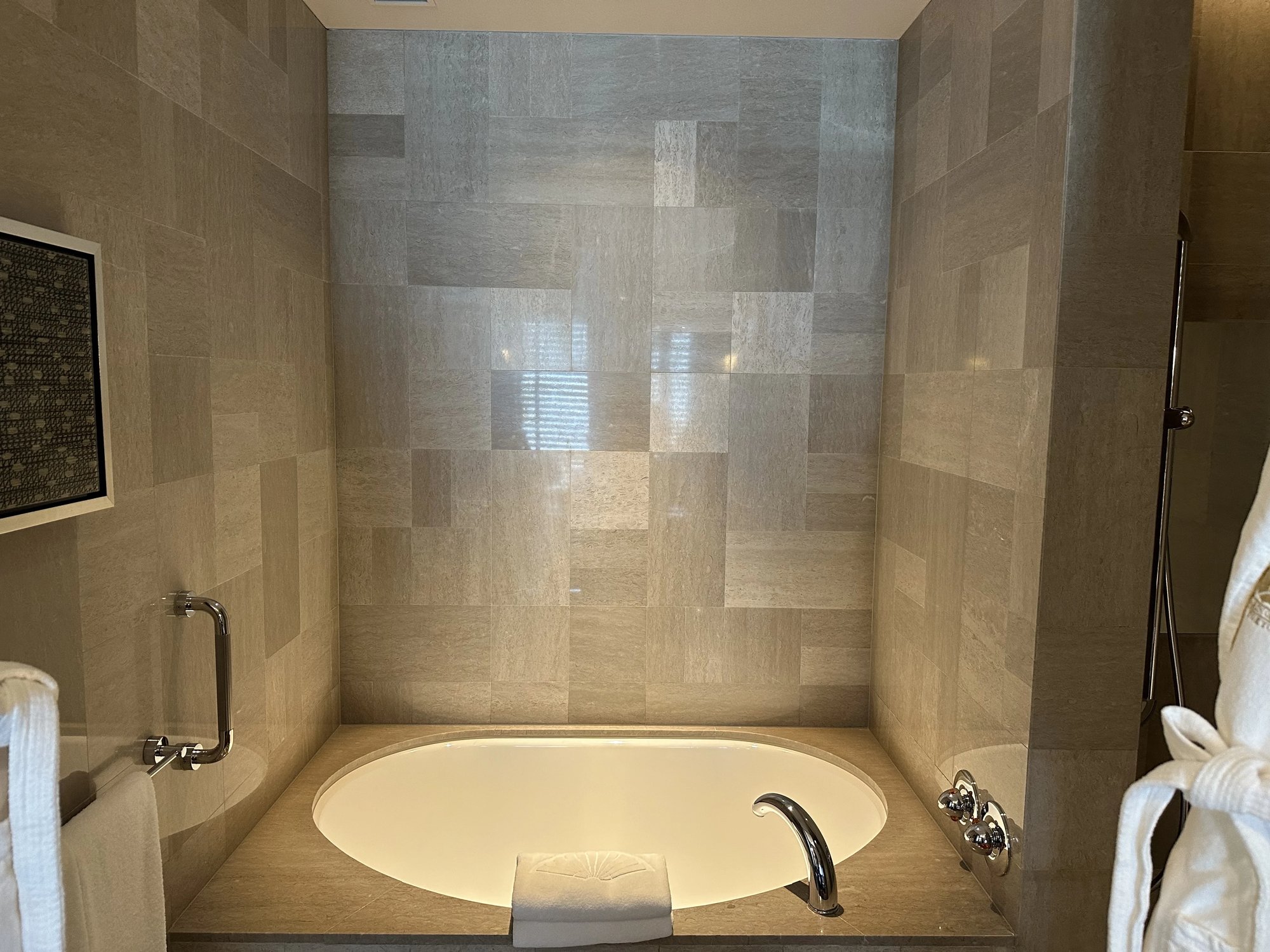
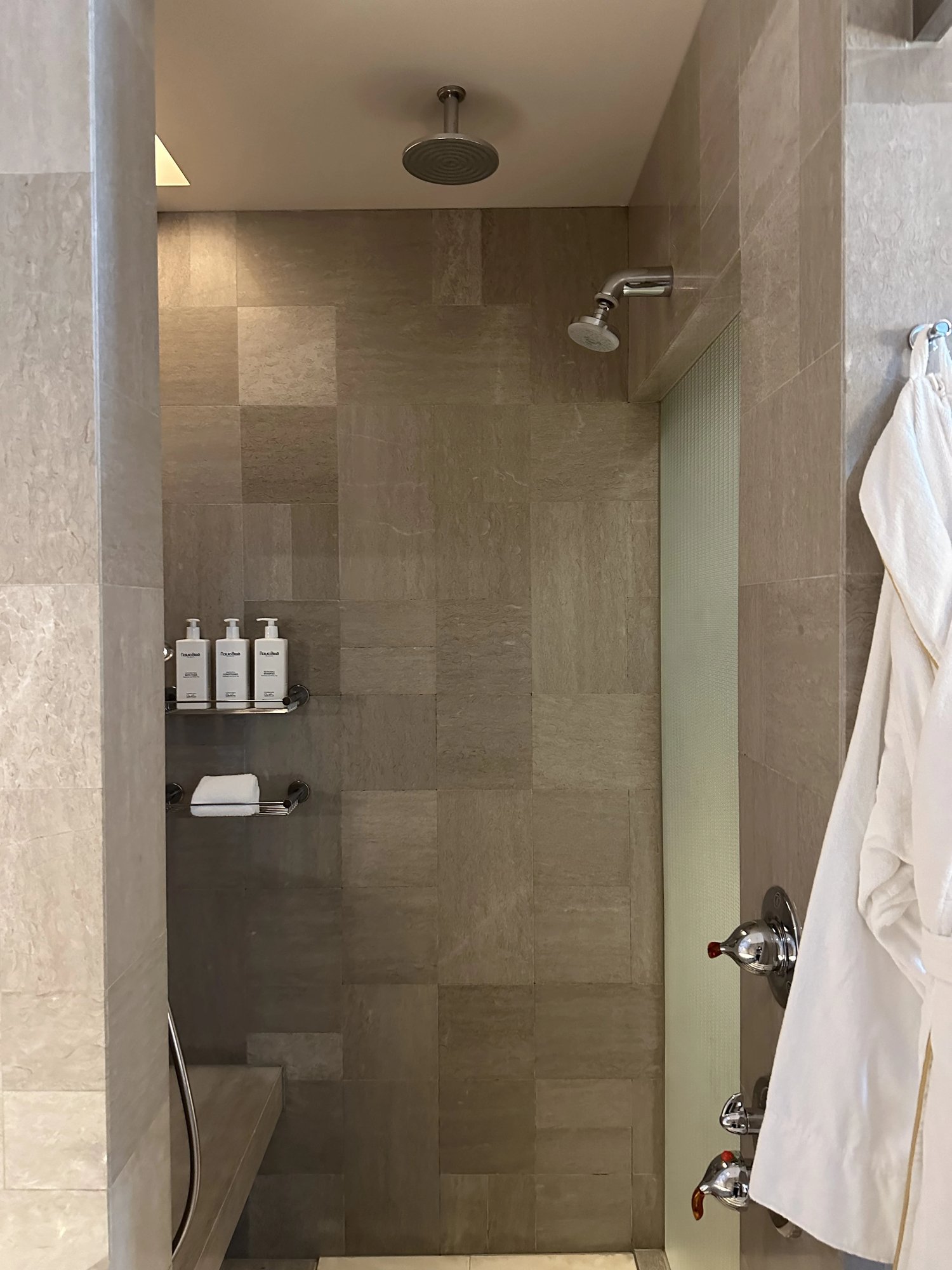
There's no swimming pool.
For a lot of people this is the deal-breaker. The spa pools are for soaking, and outside that early-morning window you either book a treatment or pay for a day pass, which feels mean at this price. If a pool matters, the Peninsula and the Four Seasons at Otemachi both have a proper 20-metre one.
Breakfast.
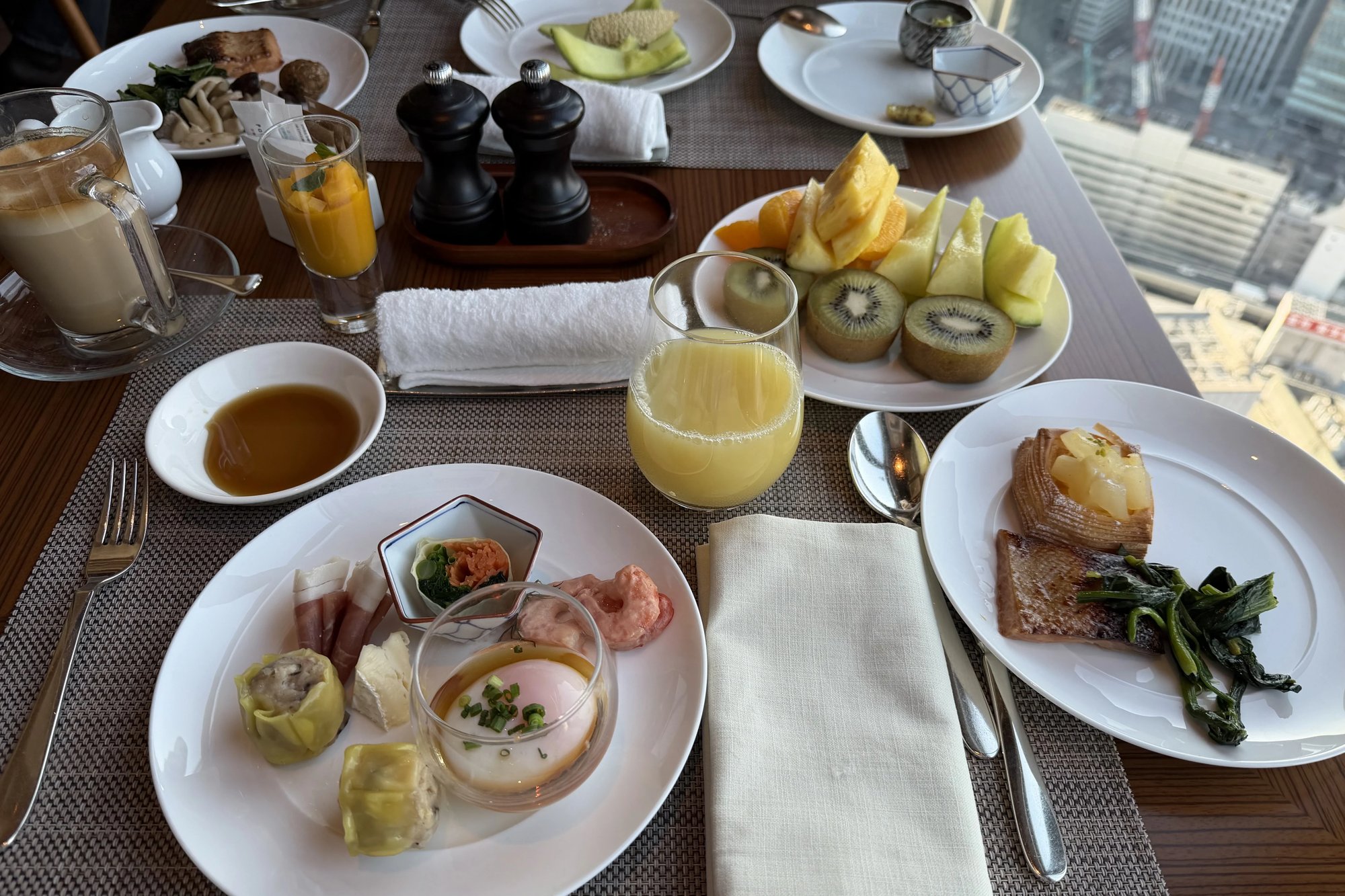
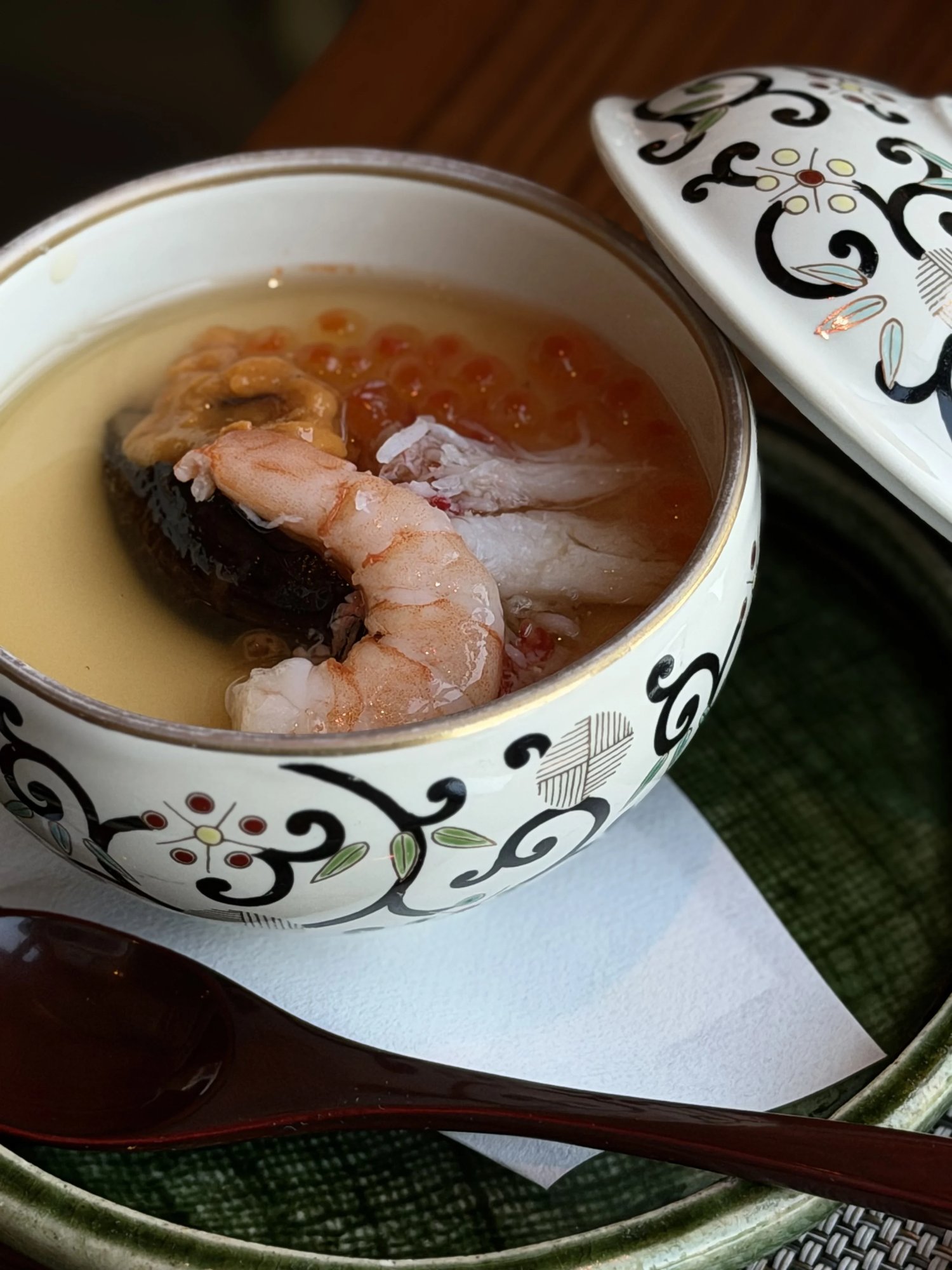
Breakfast at K'shiki is a buffet plus one dish cooked to order. The chicken ramen and the seafood chawanmushi were both good, but one hot dish each felt a little stingy at a hotel that does food this well.
The concierge and the hard restaurants.
The concierge is great for most things, but don't count on them for the hardest counters in town. Book the famous sushi and tasting-menu places yourself the minute they open, and use the concierge for everything else.
Nihonbashi is quiet.
It's a business and department-store district, with Mitsukoshi and the Coredo malls on the doorstep. But the streets empty out at night and at weekends, Ginza is a 20-minute walk or a few stops on the subway, and Shibuya and Shinjuku are 30 minutes or more away.
Mandarin Oriental or the Peninsula?
These are the two big Hong Kong-born luxury brands in central Tokyo, and they're very different hotels.
I'd pick the Mandarin Oriental. The rooms are newer, the views are far better, the food is better (the Pizza Bar alone puts it ahead), and it usually costs a little less. The Peninsula wins on location, with Ginza and the palace gardens on foot, it has a lovely pool, and Peninsula Time (ask ahead and you can check in at 6am and leave at 10pm) is a big deal on a long-haul arrival. The service is excellent at both.
So book the Mandarin Oriental for the views and the food, and the Peninsula if you want to walk everywhere or need a pool. For the full side-by-side, see my Mandarin Oriental Tokyo vs The Peninsula Tokyo comparison, and for the newer rival, Four Seasons Otemachi vs Mandarin Oriental Tokyo.
Overall
I think Mandarin Oriental Tokyo is right for couples, food lovers and anyone who wants their hotel to feel like a big part of the trip, with a view to come back to every night. It's great for bullet-train days out of Tokyo Station, too. It's the wrong pick if you need a pool, want nightlife outside the door, or want the newest room in town.
For a newer room on the palace gardens with a proper pool, book the Four Seasons at Otemachi. To walk to Ginza, the Peninsula. And for the palace view for a bit less, the Palace Hotel.
So here's my bottom line. I gave it 8.1 out of 10. The view, the Pizza Bar and the service are the best things about it, the plain rooms and the missing pool are the worst, and I'd go back just to sit in that window with a cup of tea.
If you're booking it
Book a Deluxe or Deluxe Premier room (both 50 square metres; the Premier is on a higher floor for a little more) and ask for the Skytree side, high up. For more space, the Mandarin Grand is the first step up (it still has one basin). Fuji is only on the west side and only on clear days, so don't count on it from your room. Choose a rate that includes breakfast. Book the Pizza Bar when you book the room and ask for a guest seat, and book the sushi and tasting counters yourself. Set an alarm for the spa at 6:30. Mitsukoshimae station is under the building, Tokyo Station is about ten minutes on foot, and Haneda is about 23 kilometres away.
More on the area: Japan guide.